
PHILIP RUNDELL - An exceptional George III Fruit/Bread Basket made in London in 1820 by Philip Rundell.
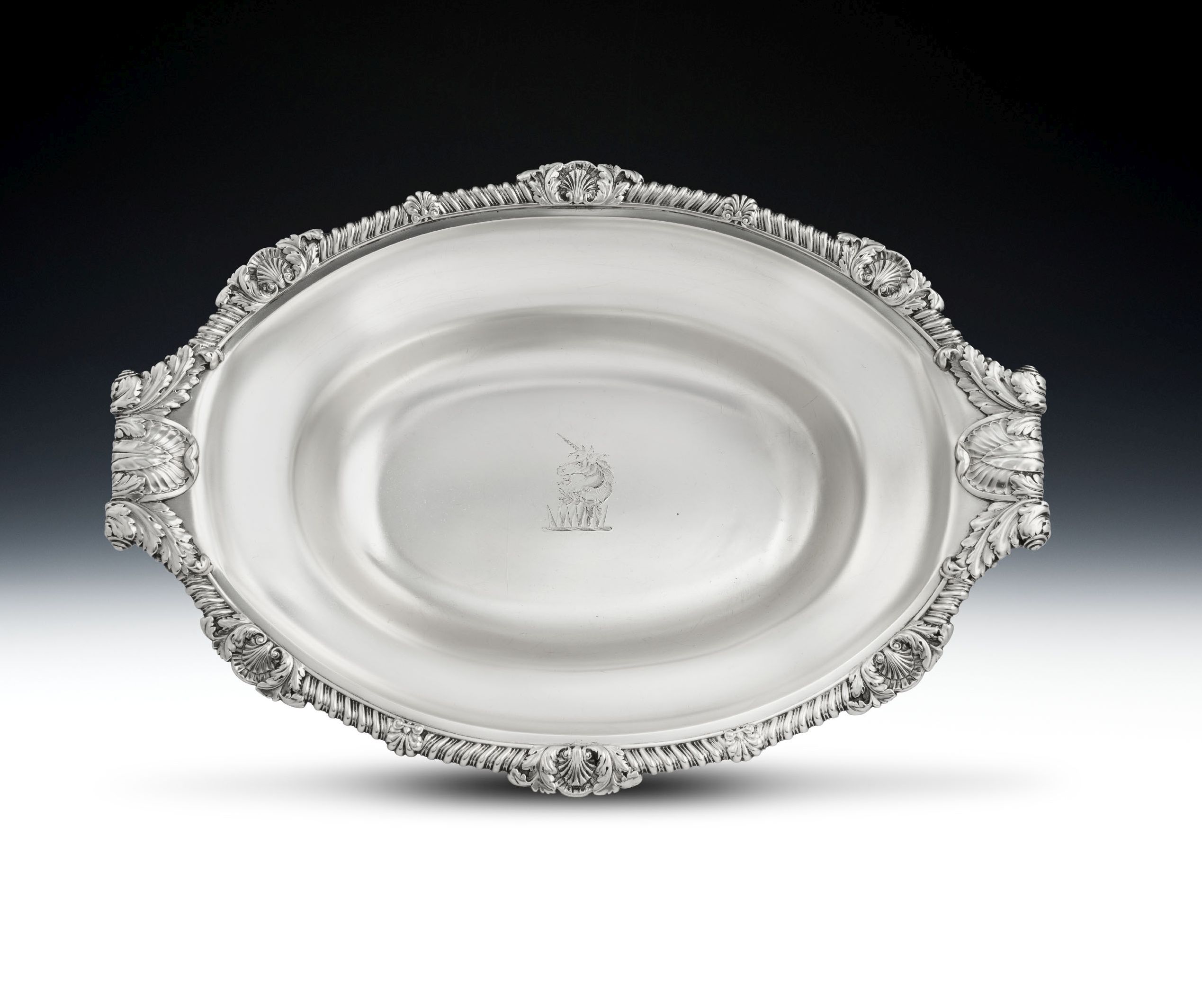
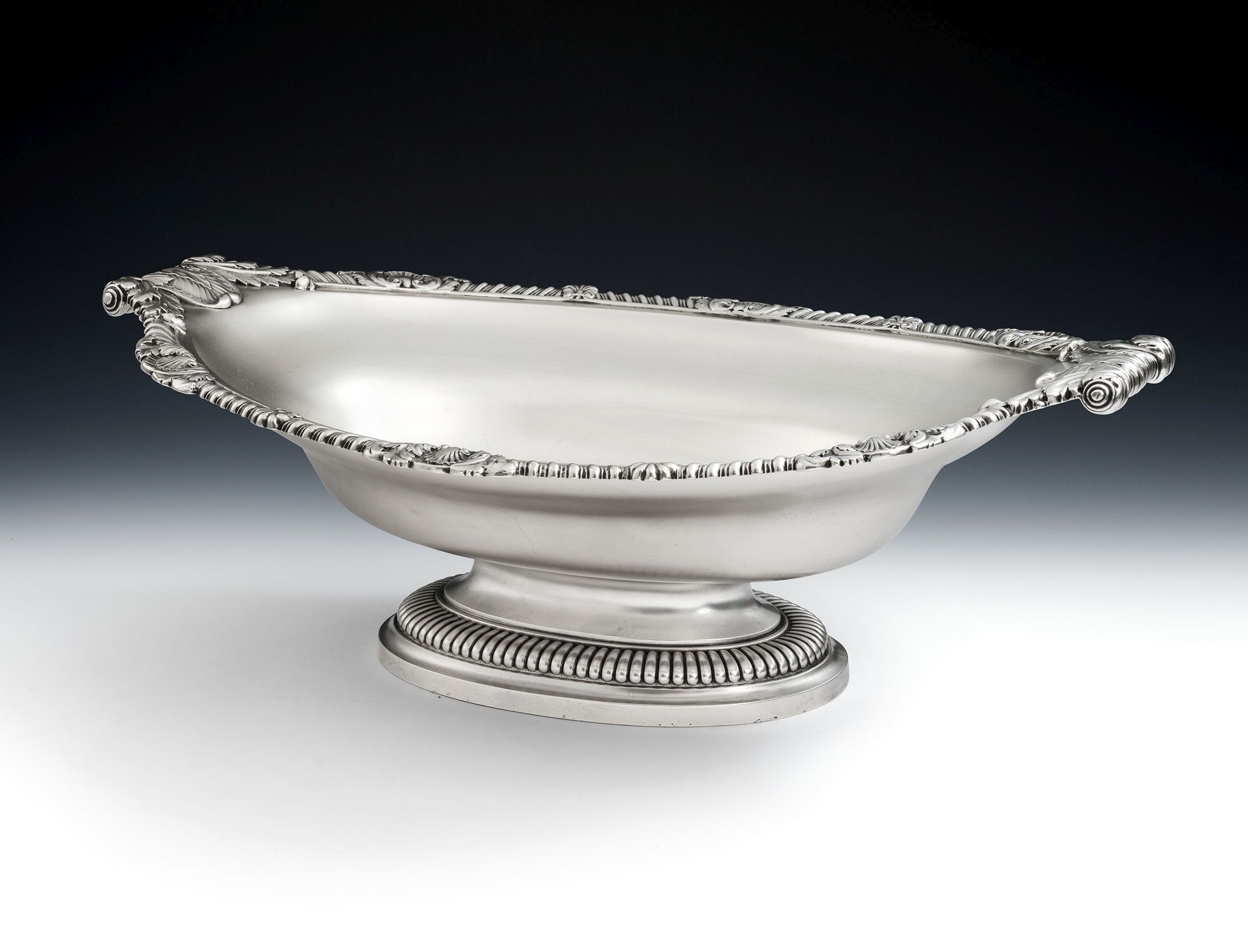
PHILIP RUNDELL - An exceptional George III Fruit/Bread Basket made in London in 1820 by Philip Rundell.
375735
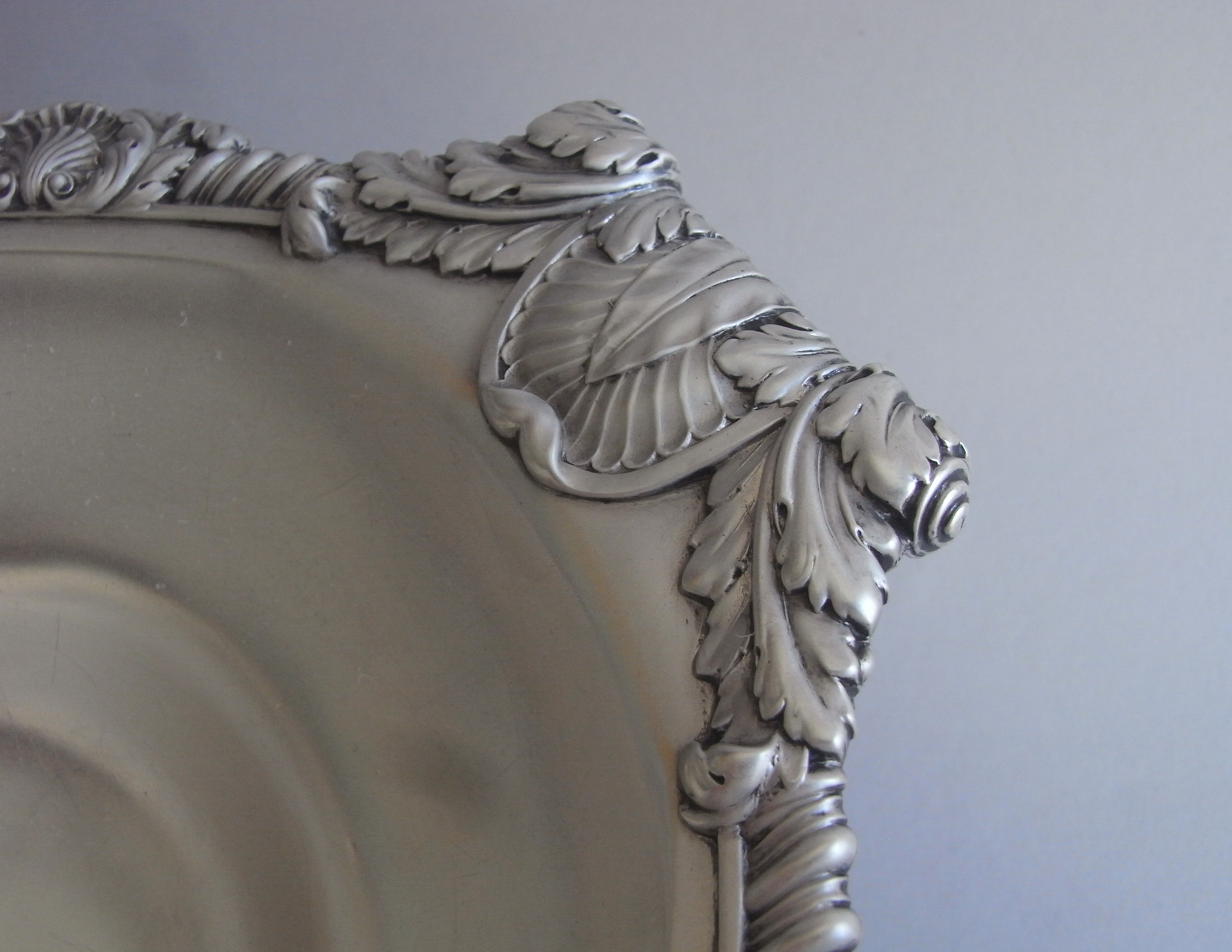
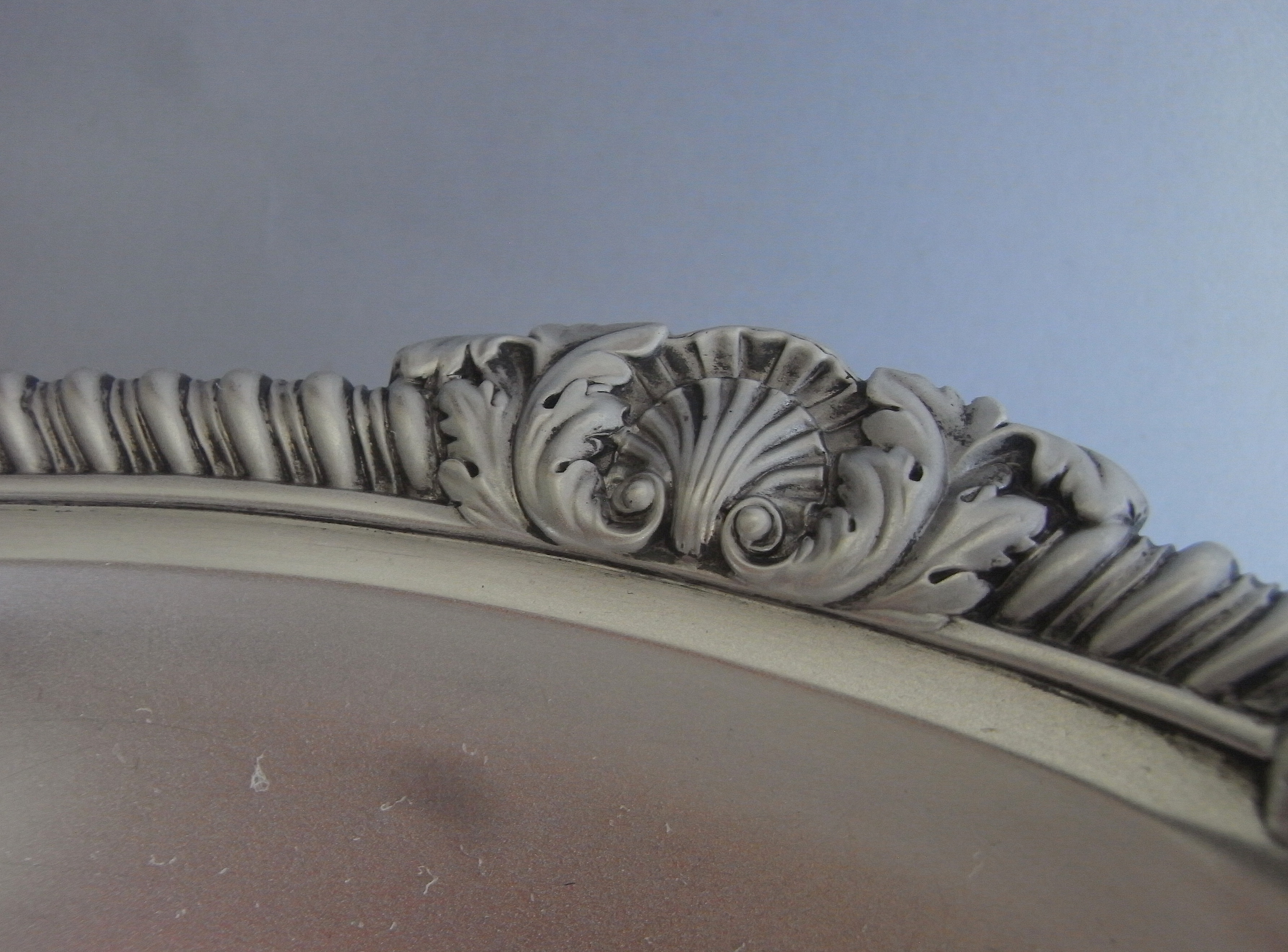
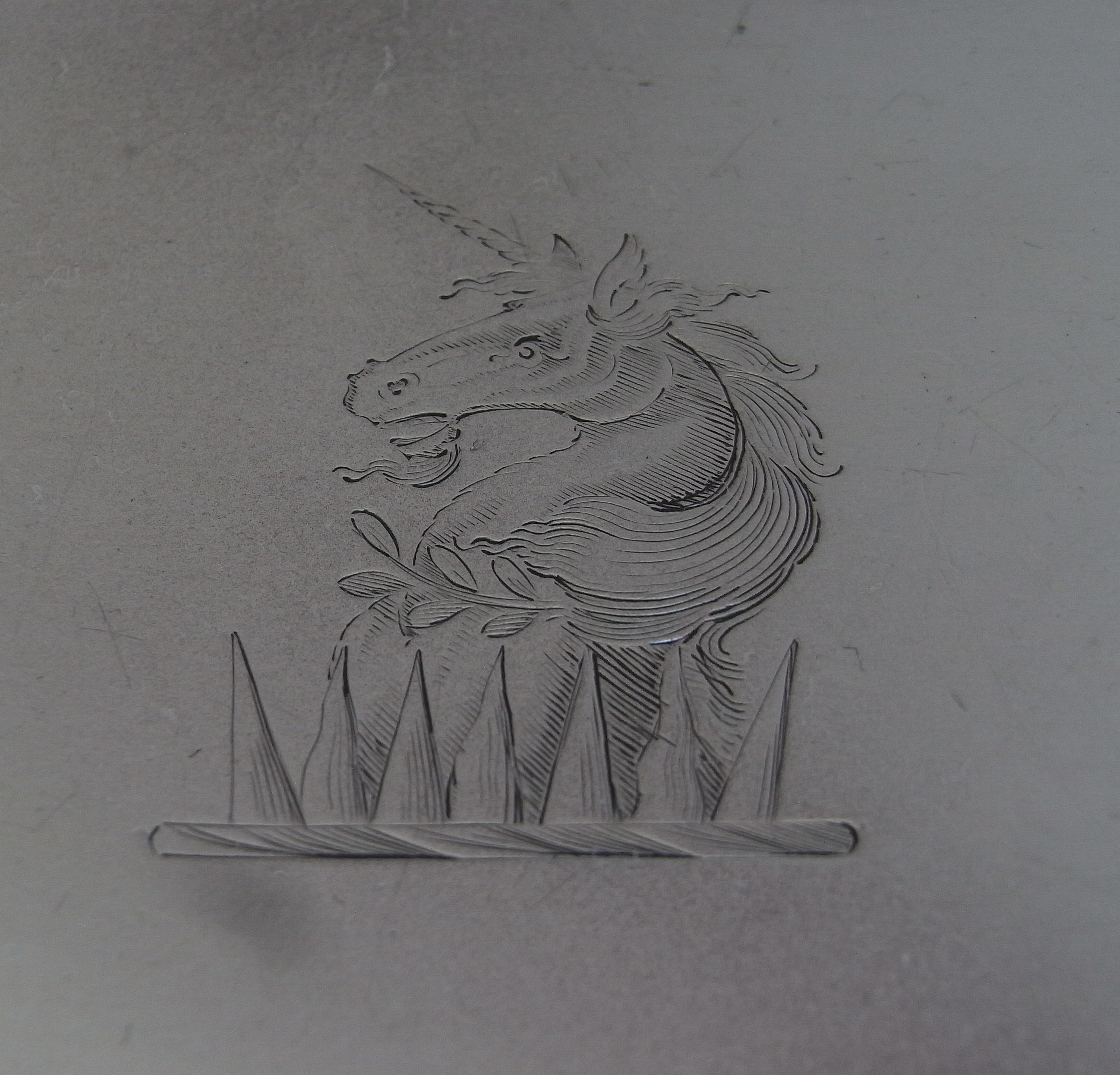
The Basket is of an unusual oval form, without a handle, and stands on an oval applied foot decorated with bold lobing. This design is not seem often and is much more practical with side handles to carry, rather than a central one. The large main body is plain in design, with a slightly baluster form, which rises to an everted rim decorated with gadrooning, anthemions and Rococo shells, flanked by acanthus leaves. Each end also displays a scroll handle, decorated with a central palmette, flanked by acanthus leaves. The centre of the bowl is engraved with an unusual unicorn Crest and the basket is of an excellent weight. The Crest is that of Smith, of various locations.
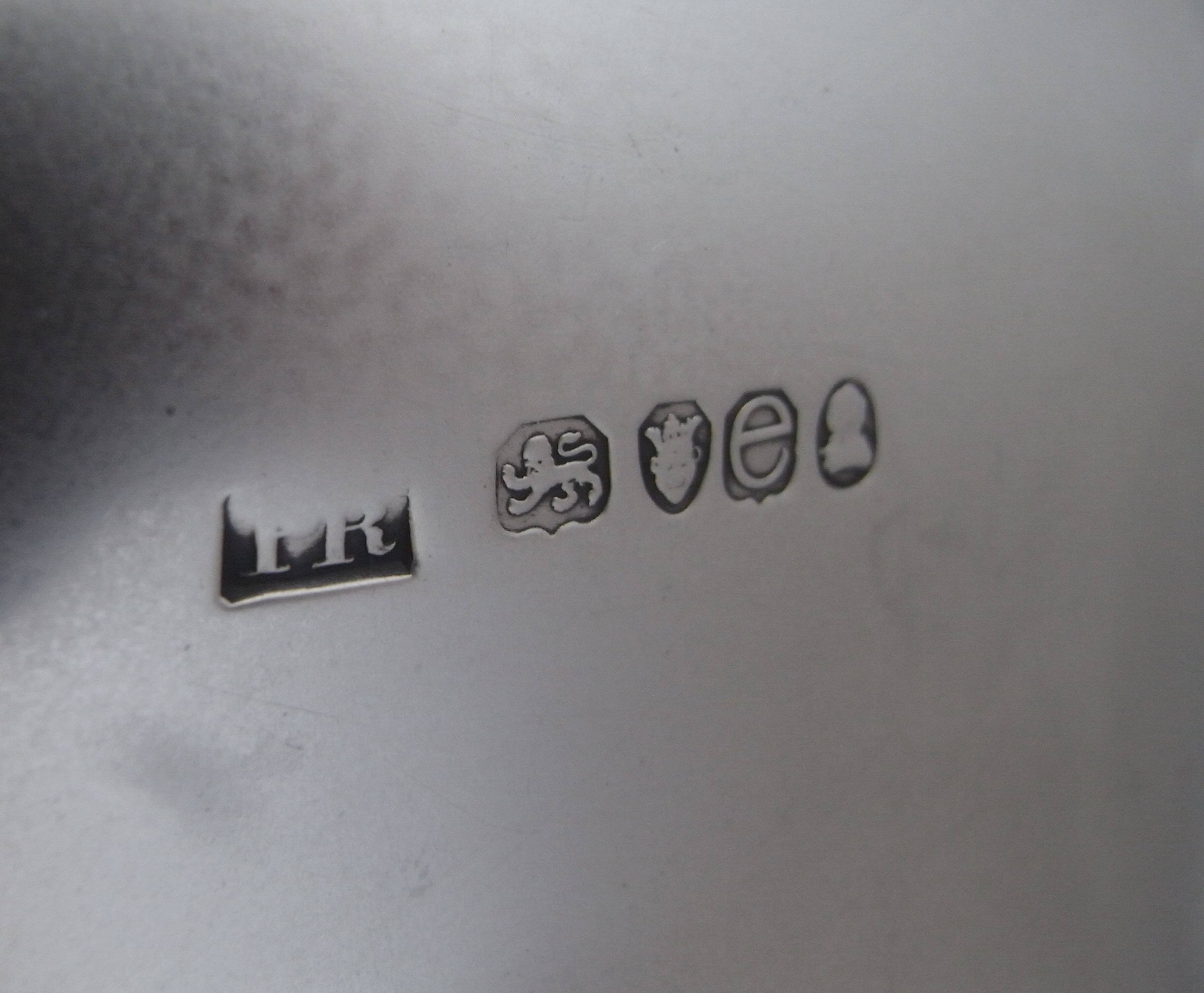
The Basket is of the finest quality in both design and production, as to be expected from this Royal silversmith. It is fully marked on the main body under the right hand side handle.
Height: 5.4 inches.
Length: 16. inches.
Width: 11.4 inches.
Weight: 50 oz.
PHILIP RUNDELL
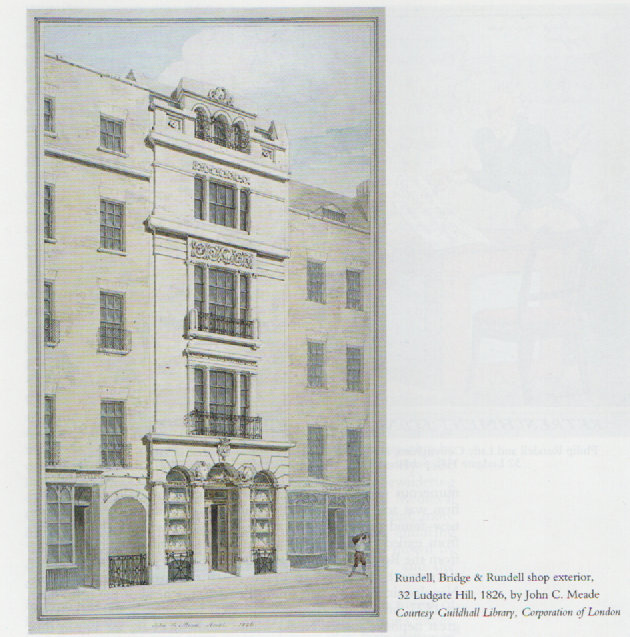
Philip Rundell was apprentice to Joseph Rogers of Bath, arriving in London in 1767 as shop man to Theed and Pickett of Ludgate Hill. He was made a partner in 1772 and acquired sole ownership of the business in 1785-6. He took John Bridge into partnership in 1788 and his nephew Edmund Walter Rundell by 1803, the firm being styled Rundell, Bridge & Rundell from 1805. Rundell's was the largest silver retailer of the Regency period. They set the standard during the nineteenth century for both the organisation of the silver trade and its promotions of artistic designs. A print of the shop exterior of Rundell, Bridge & Rundell is shown, which was situated by St. Paul's Cathedral at the top of Ludgate Hill. They were appointed Goldsmith and Jeweller to the King in 1797 and took Paul Storr into working partnership in 1807, an arrangement which lasted until 1819, when Rundell entered his own mark from workshops in Dean Street, Soho. He died in 1827, leaving his fortune of £ 1.25 million to his nephew Joseph Nield, one of the largest estates ever proved. When Neild died he left his entire estate to Queen Victoria, which hugely increased the wealth of the British Monarchy.
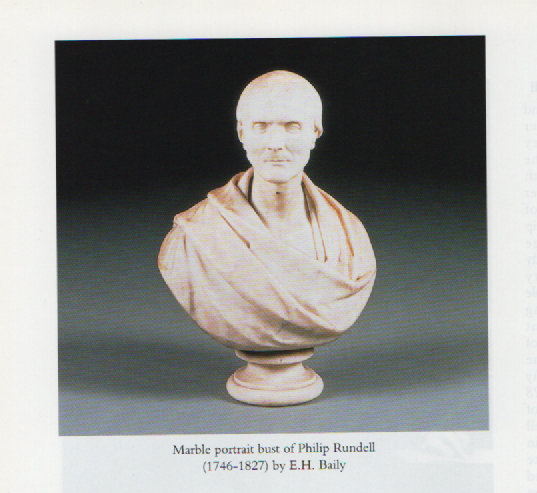
He was held in great admiration by King George IV and he asked him to make the crown jewels for his coronation in 1821. The state diadem, worn frequently by the late Queen, was also from Rundell's workshops. A marble bust of Rundell is shown in the image stream, as well as a drawing of the premises of Rundell, Bridge and Rundell in Ludgate Hill.
RELATED ITEMS


