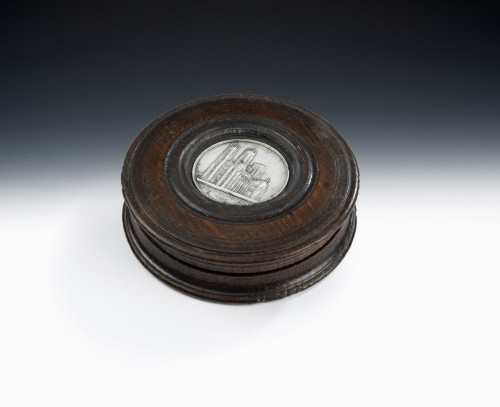
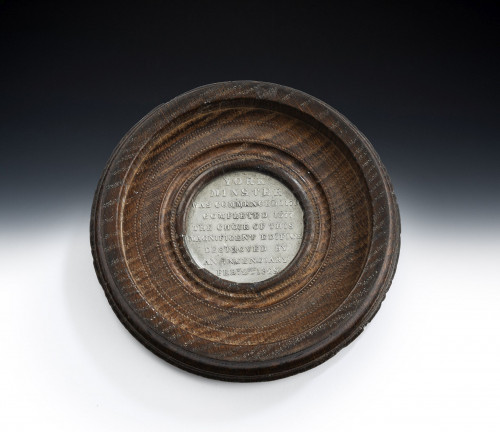
STOURHEAD INTEREST. a VERY FINE gEORGE iii aRGYLE MADE IN lONDON IN 1784 BY wILLIAM pLUMMER.
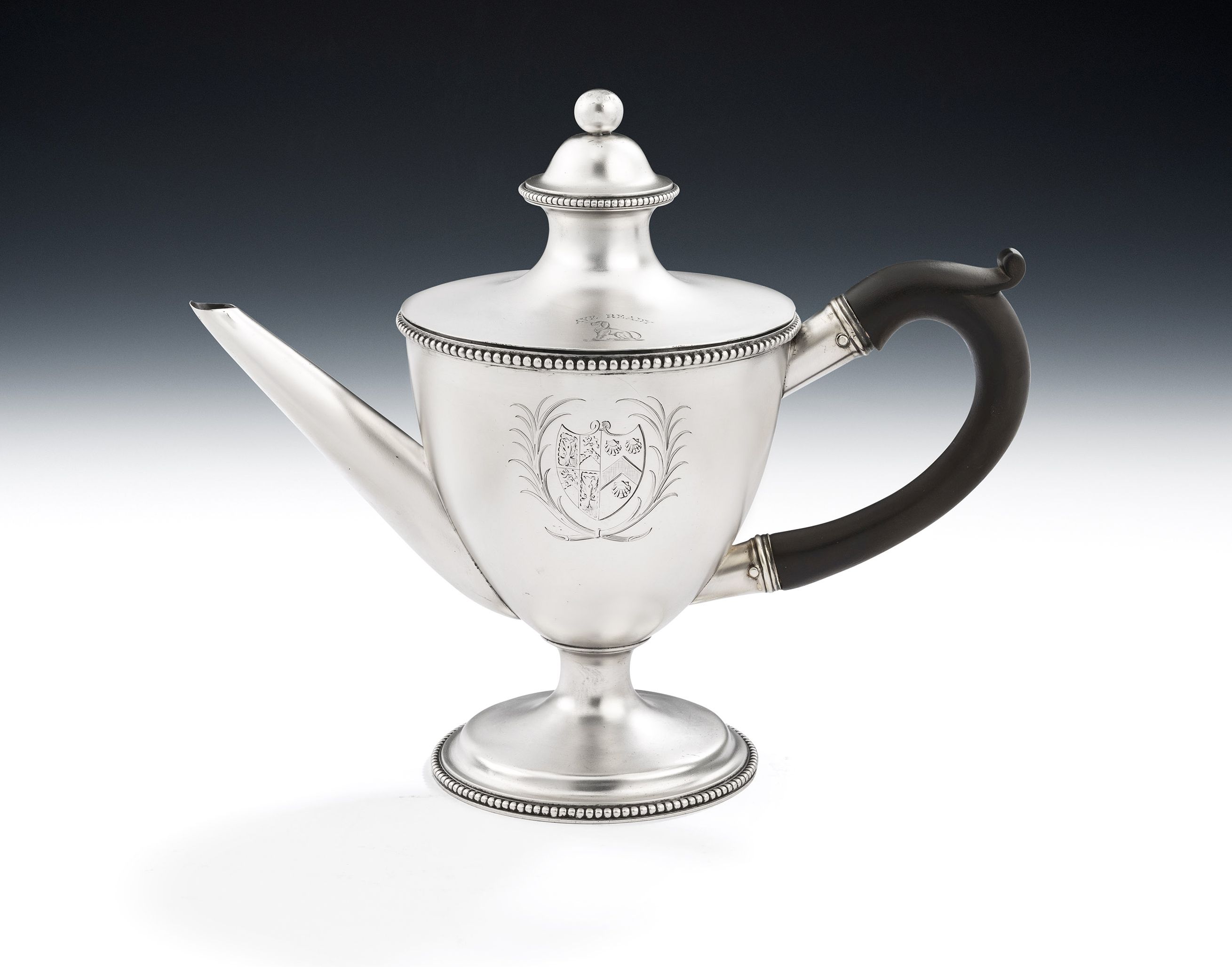
STOURHEAD INTEREST. a VERY FINE gEORGE iii aRGYLE MADE IN lONDON IN 1784 BY wILLIAM pLUMMER.
375682
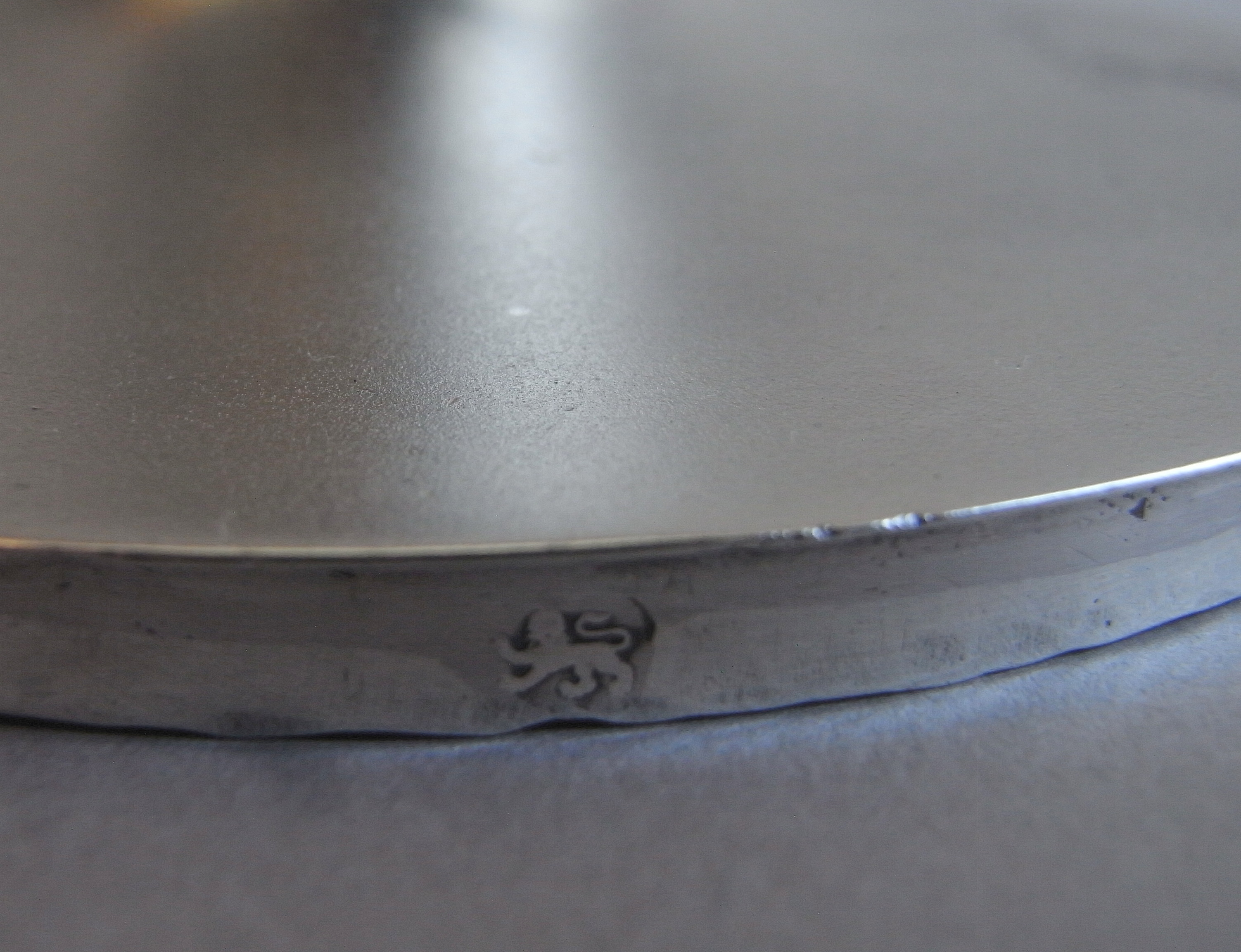
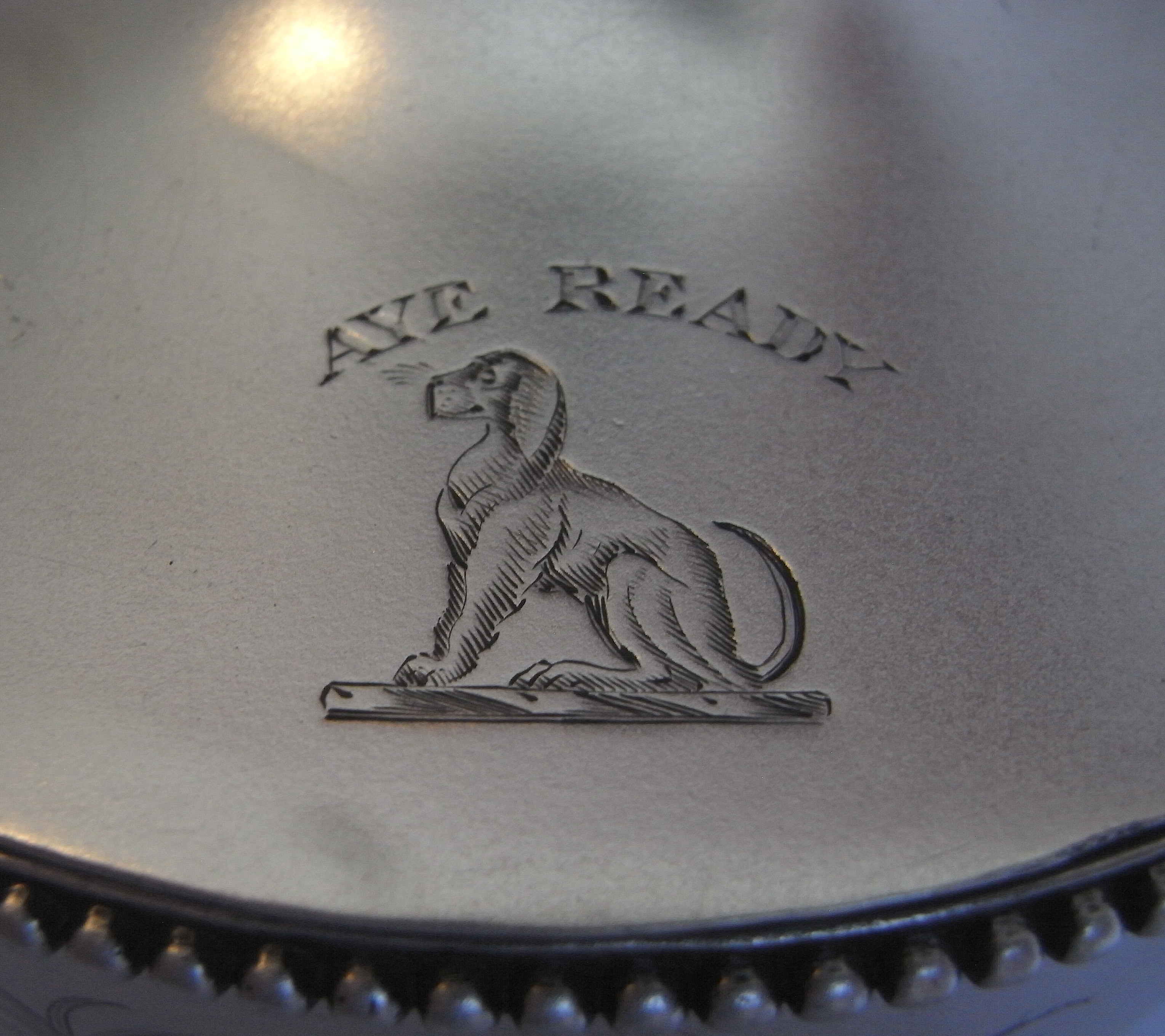
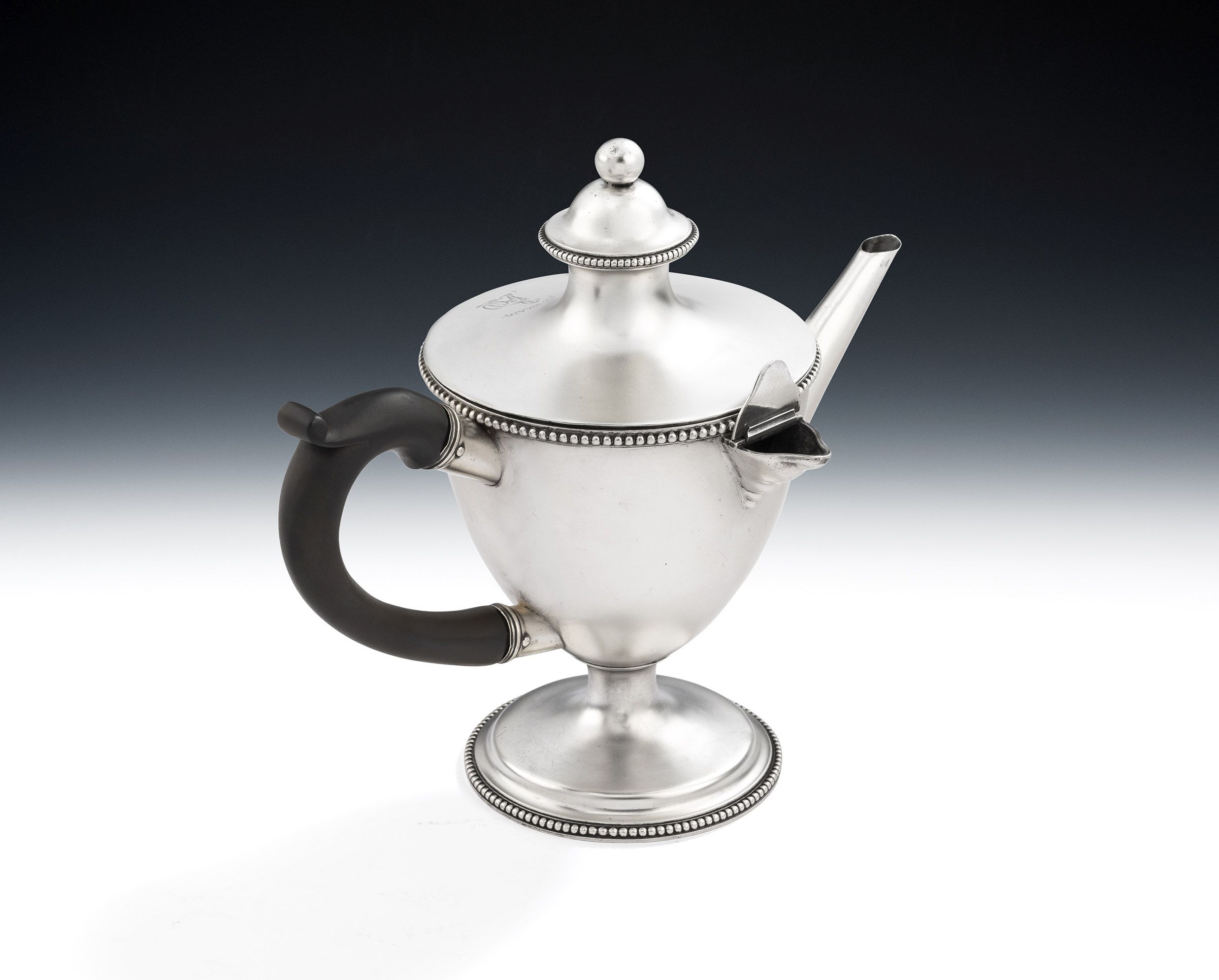
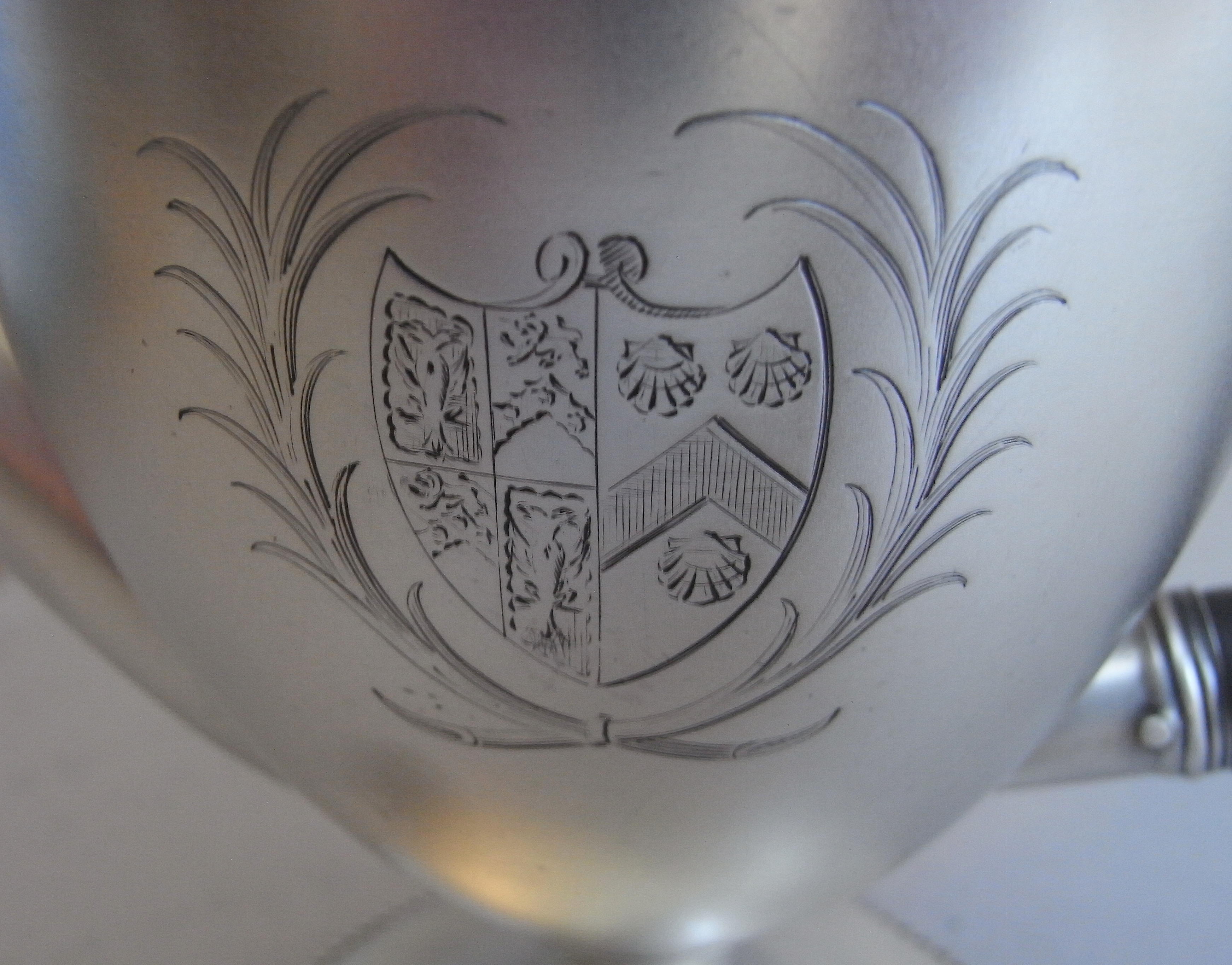
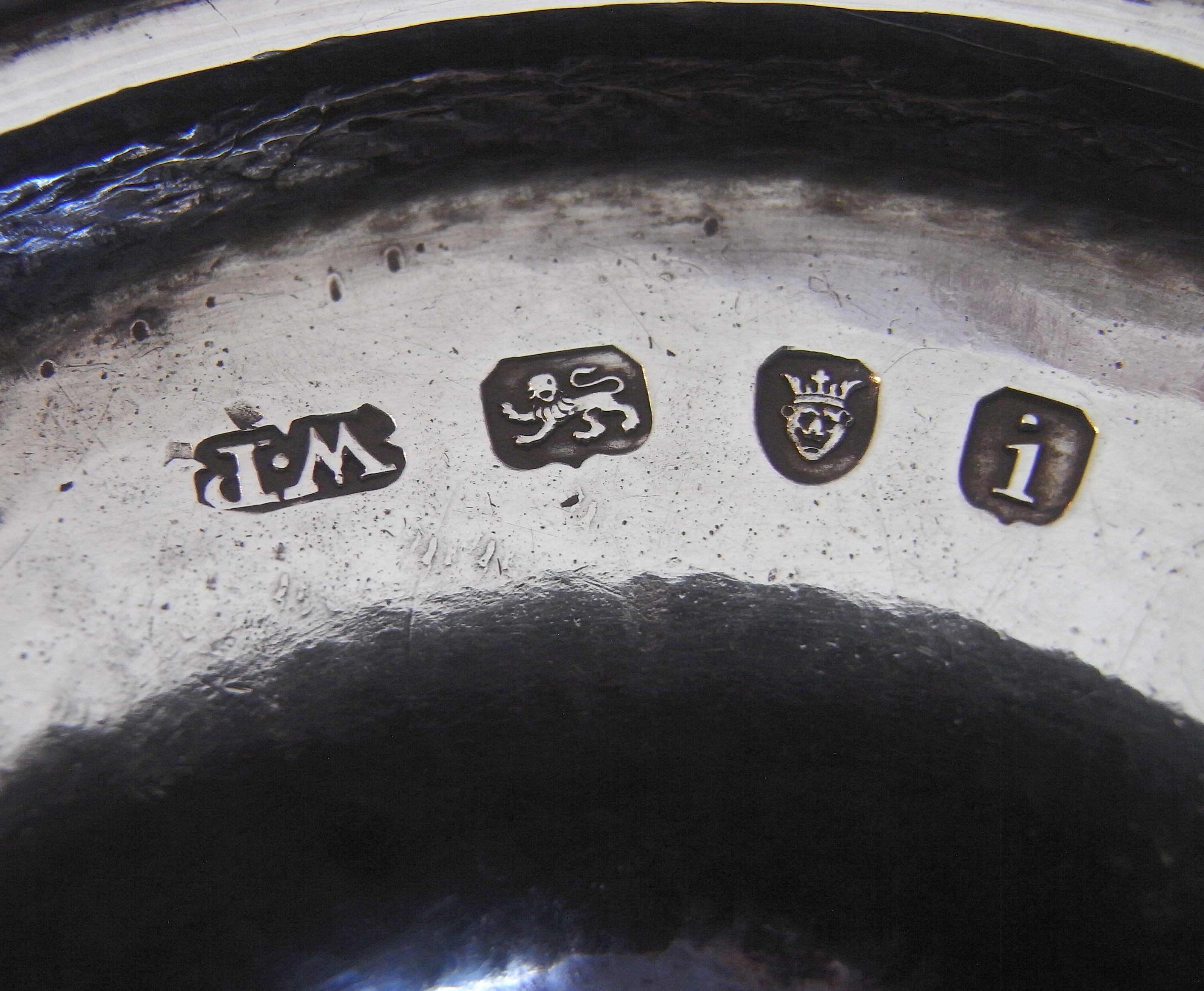
The Argyle stands on a round pedestal foot which is decorated with beading. The vase shaped main body also has a beaded rim and the pull off high domed cover terminates in a ball finial, and has a beaded border below. This example has a tapering straight spout and scroll handle, which is attached to the main body with reeded tubular sockets. The Argyle has an outer water jacket, which can filled by a side section, with hinged cover, which would have kept the contents warm. It is fully marked in the foot and with the sterling mark on the cover. The front of the main body is engraved with a shield shaped Armorial with crossed branch cartouche. The cover is engraved with a Crest with Motto above. The Arms are those of Sir Richard Colt Hoare, 2nd Baronet 1758-1838 FRS an English antiquarian, archaeologist, artist, and traveller of the 18th and 19th centuries, the first major figure in the detailed study of the history of his home county of Wiltshire.
Hoare was born in Barnes, Surrey, and was descended from Sir Richard Hoare, the Lord Mayor of London, the founder of the family banking business, Hoare's Bank. His parents were Sir Richard Hoare, 1st Baronet, and Anne Hoare. His half sister was Henrietta Anne Hoare, who was also a talented artist. He was educated at preparatory school at Mr. Devis's school, Wandsworth, and afterwards at Samuel Glasse's school at Greenford, and was taught the Classics by the Rev. Joseph Eyre.
In 1783 Hoare married Hester, daughter of William Lyttelton, 1st Baron Lyttelton. In 1785 he inherited the large Stourhead estate in Wiltshire from his grandfather, Henry Hoare II, which enabled him to pursue his interests including the archaeological studies for which he had already shown an inclination. His inheritance came with the condition that he left the family's banking business, since Henry Hoare II wished to ensure the survival of the estate if the family's other business suffered eventual hardships. The Crest is that of Hozier, which may indicate that this was a gift from a member of the Hozier family to Sir Richard.
Argyles are generally accepted to have been containers for gravy or sauce, the design incorporating some form of heat preserving element. The credit for inventing these pieces goes to the 3rd Duke of Argyll, as he and his Duchess became tired of their sauces arriving cold at the dining table at Inverary Castle. Their greatest period of popularity was from 1765-1820. This is a particularly attractive Classical design. William Plummer, the maker, was a prolific silversmith specialising in pierced saw cut pieces such as cake, sugar and cream baskets. He has workshops at 47, Gutter Lane, when this piece was made.
Height: 7.3 inches.
Length, handle to spout: 8.5 inches.
Weight: 19oz
RELATED ITEMS