
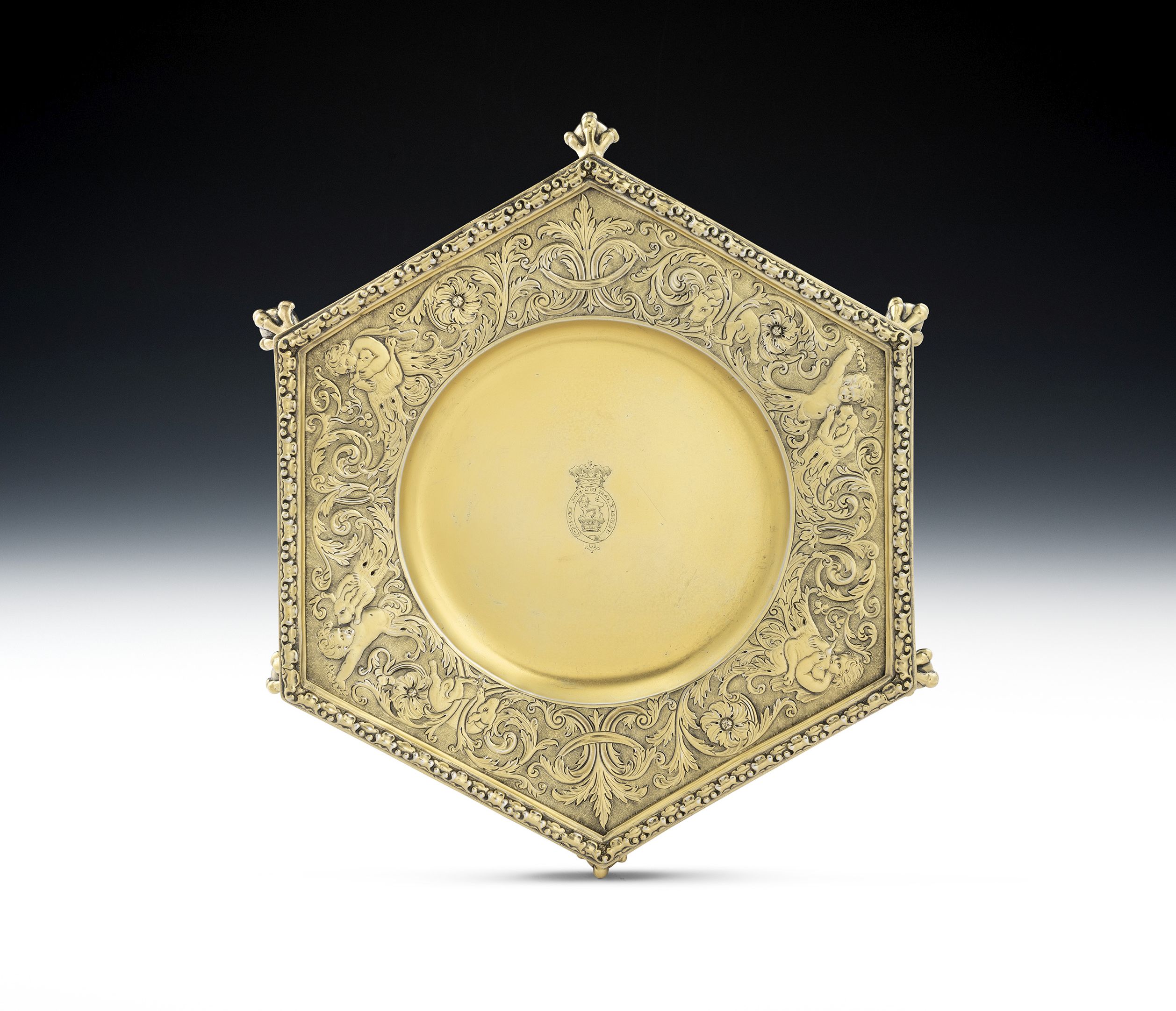
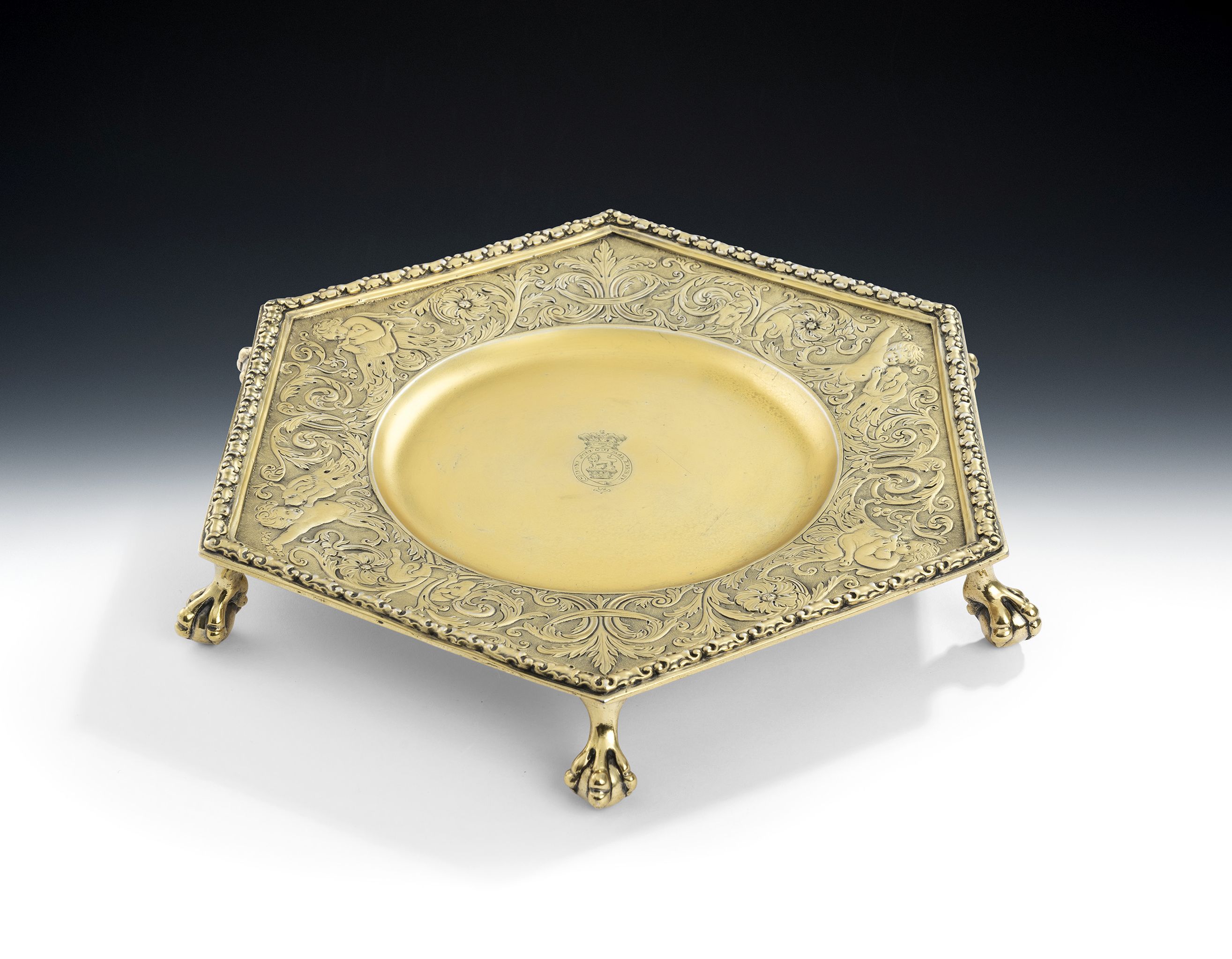
ROYAL - An important George IV Silver Gilt Hexagonal Salver made in London in 1825 by Edward Farrell.
ROYAL - An important George IV Silver Gilt Hexagonal Salver made in London in 1825 by Edward Farrell.
375703
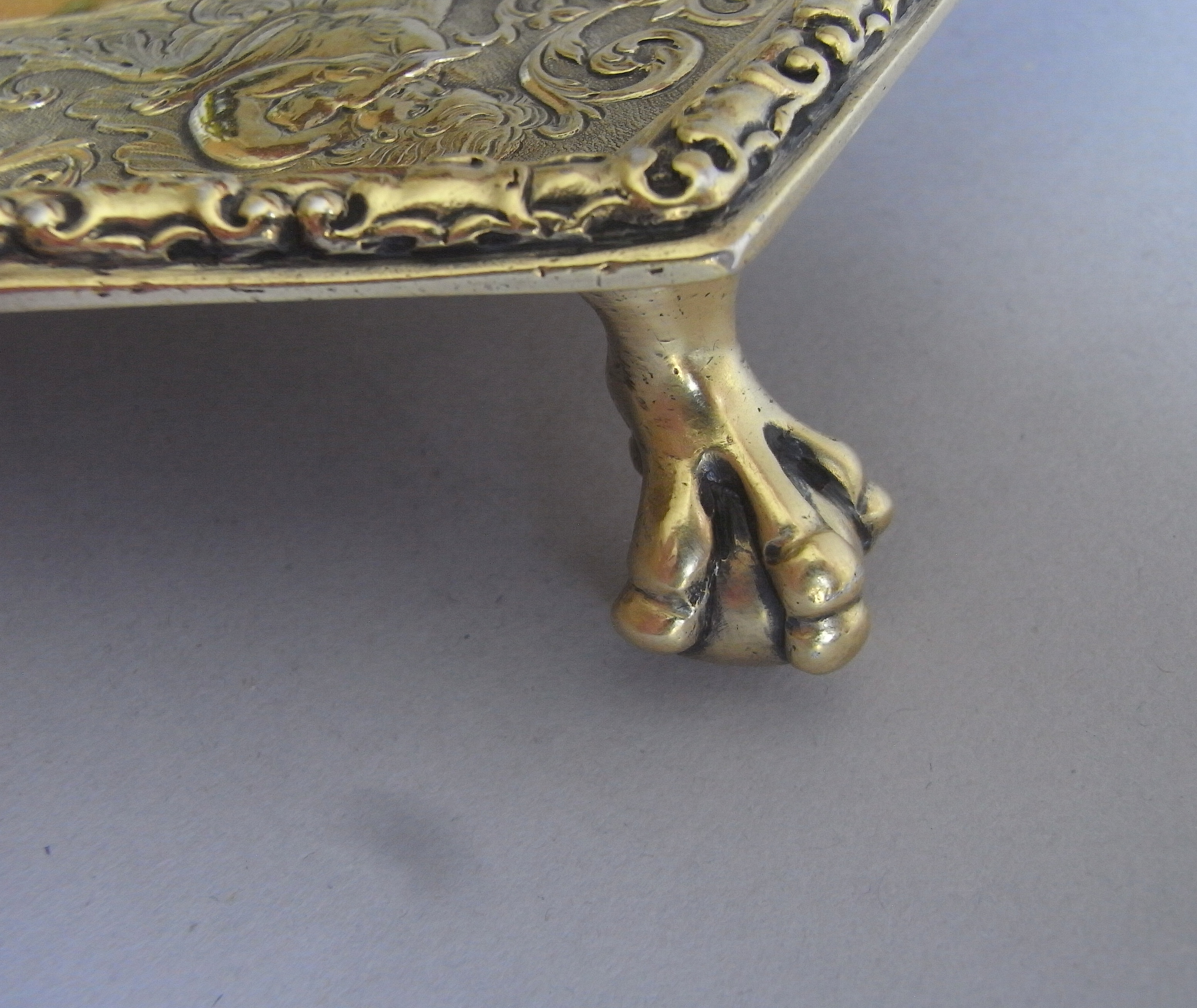
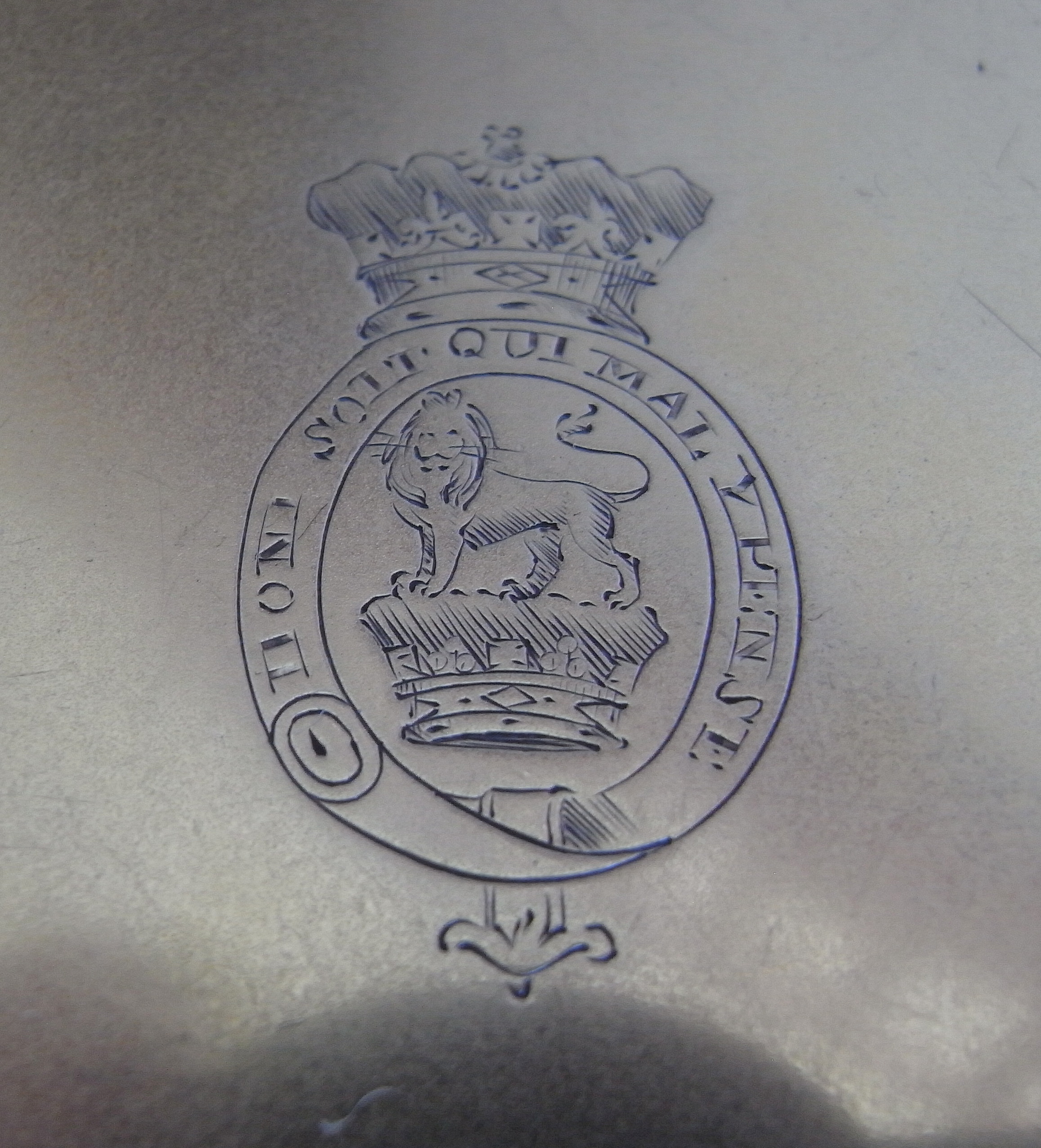
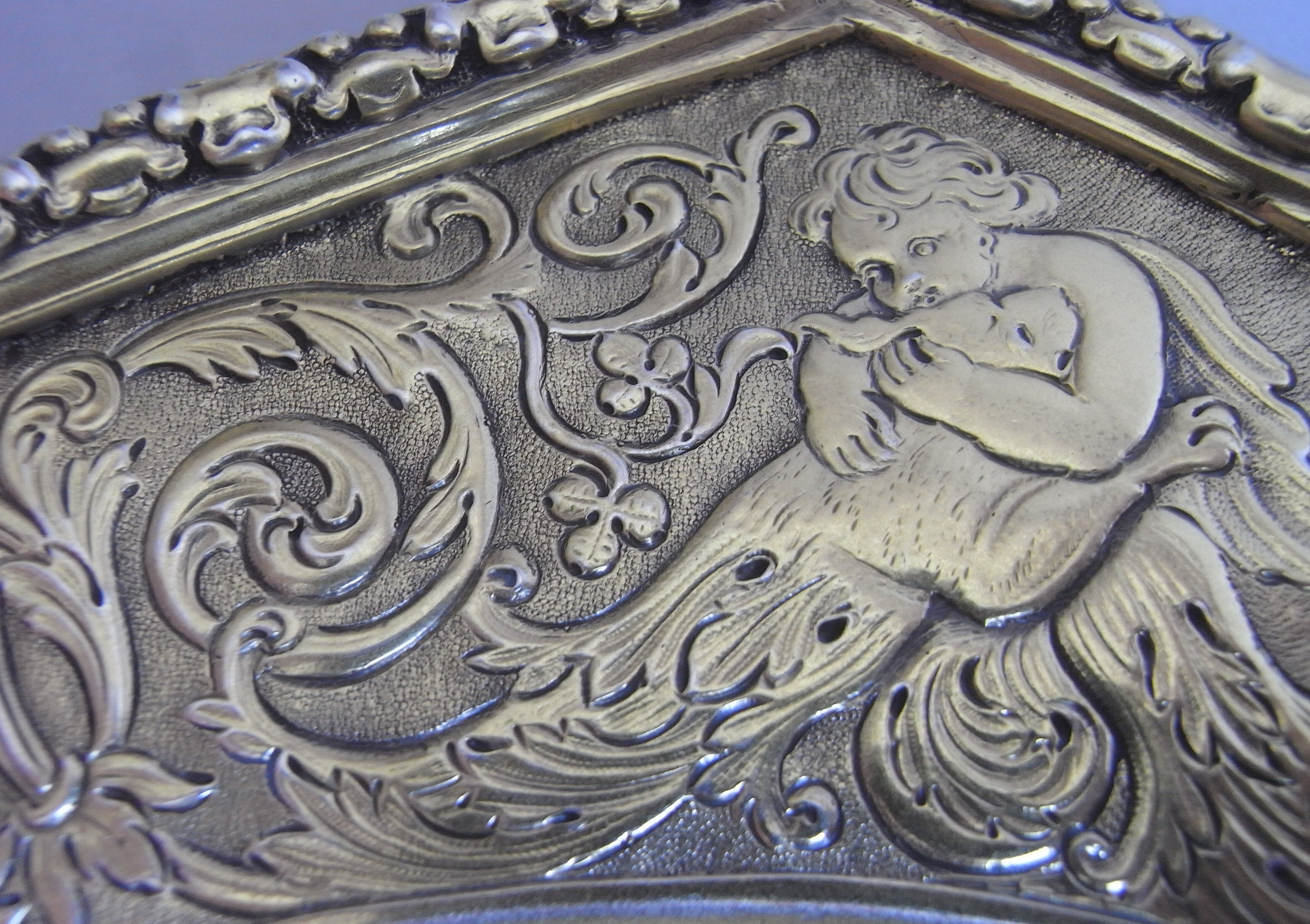
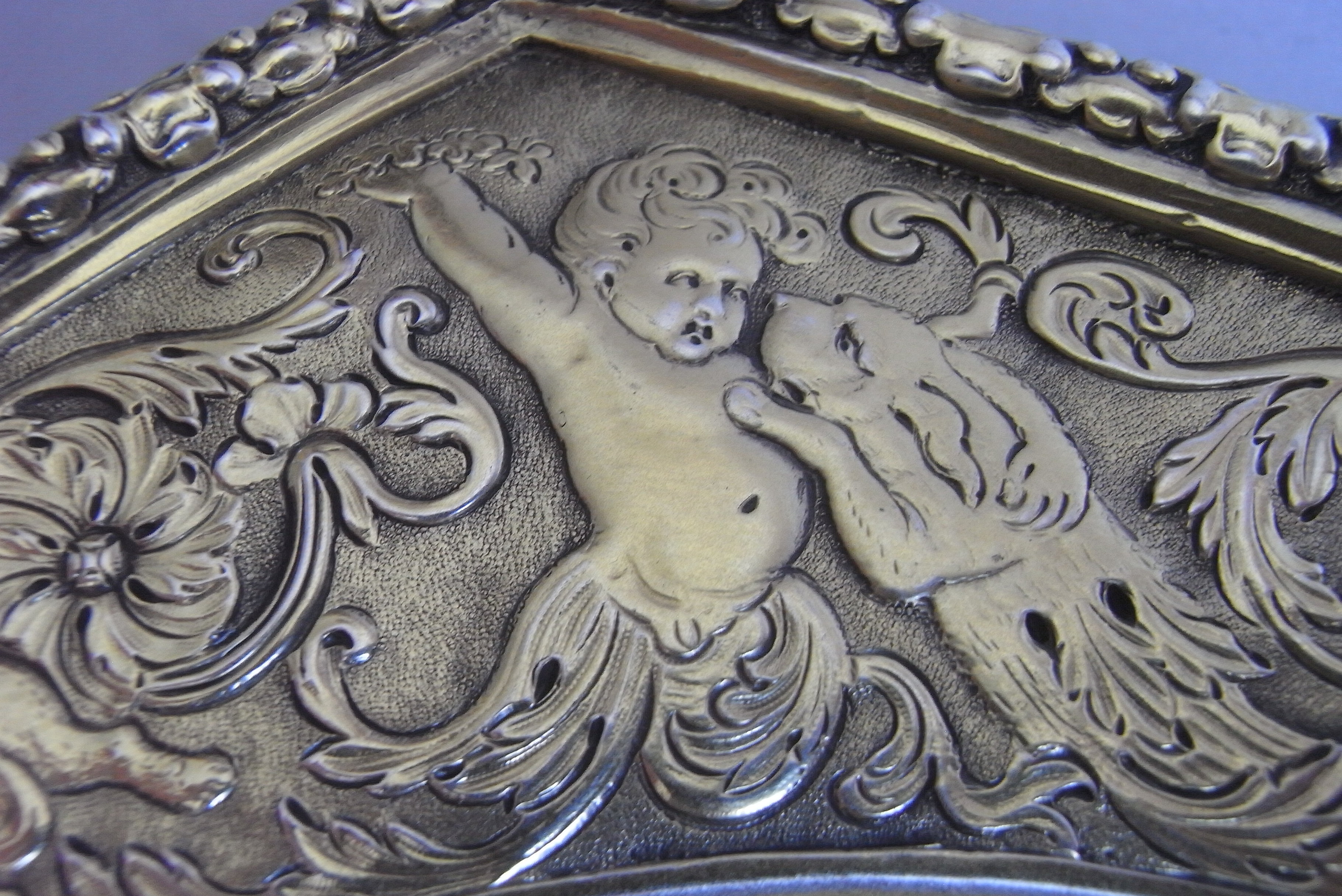
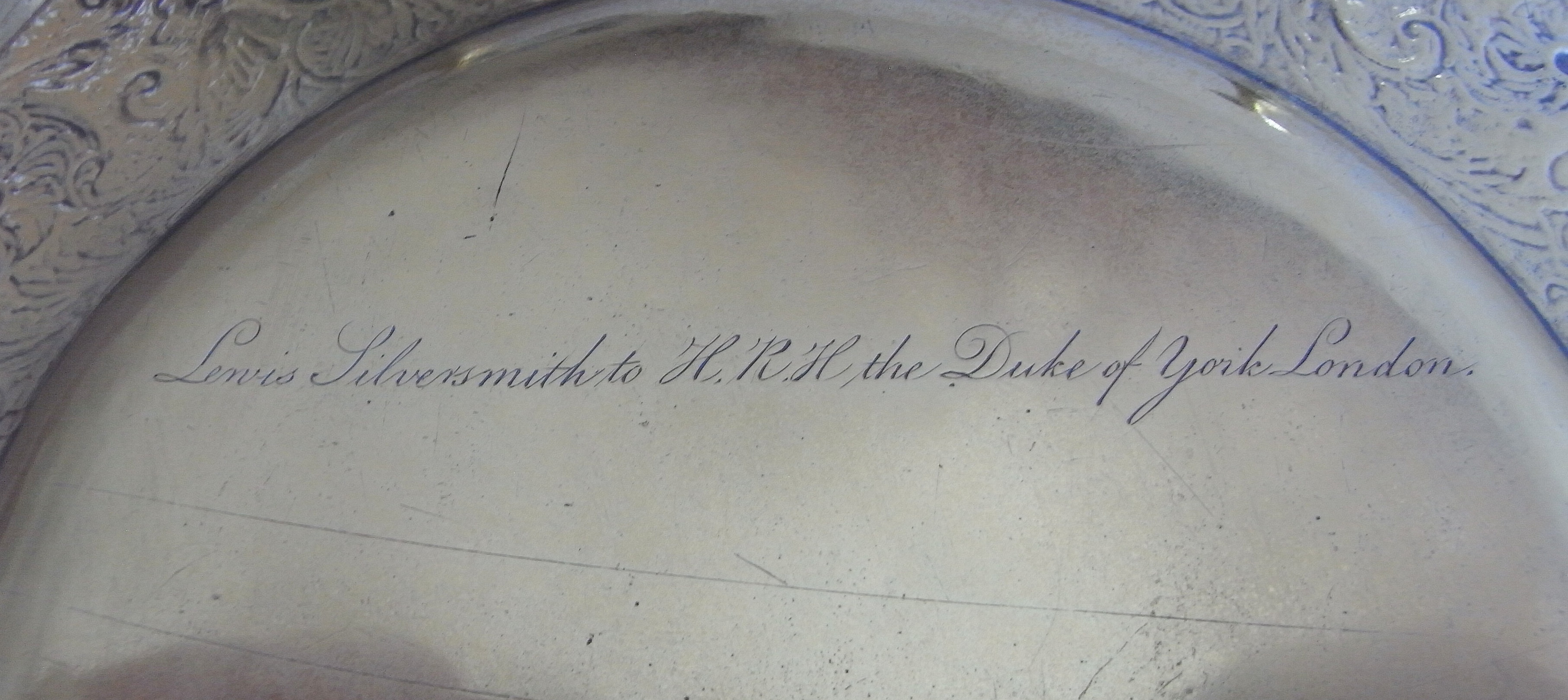
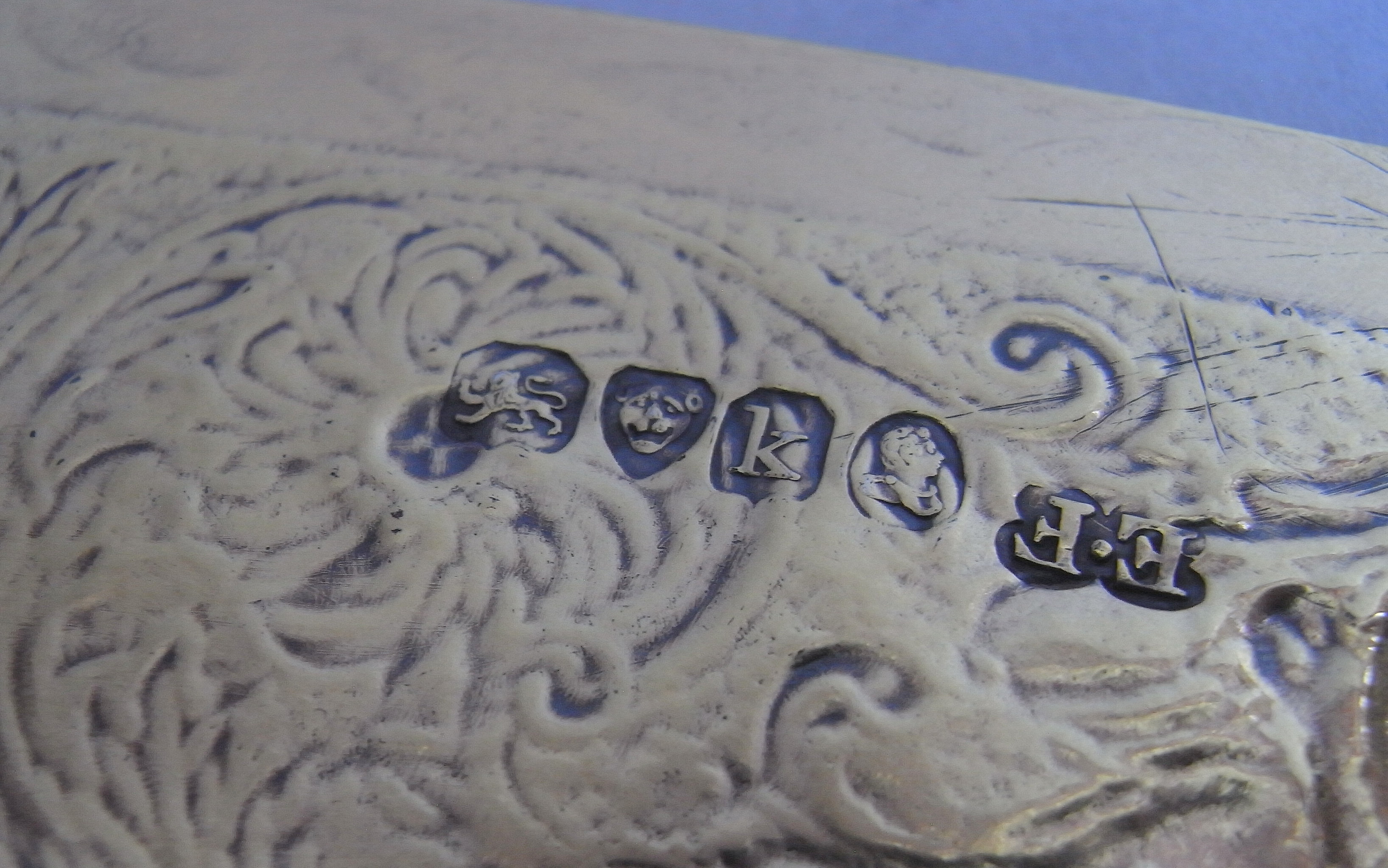
The Salver has a very unusual hexagonal form and stands on six cast claw and ball feet. The raised rim is decorated with stylized palmettes enclosing a chased border depicting demi cherubs playing with dogs, the lower part of the bodies of each terminating in acanthus foliage. Two dogs also appear amongst the foliage as well as pluming foliate scrolls and flower heads, all on a matted ground. The sunken centre is engraved with the Royal Crest, Motto and Coronet of a son of King George III & Queen Charlotte. The reverse is very well marked and is also is also engraved with “Lewis, Silversmith to H.R.H, The Duke of York, London.” The Salver is in quite excellent condition and is of a very good weight.
Hexagonal Salvers in English Silver are extremely rare and the influence for this piece is a pair of Salvers in the highly important Gilbert Collection at the Victoria & Albert Museum which were made by Benjamin Pyne in 1698. The design of border is based on a frieze from a set of engravings entitled “Ornamenti difregi e fogliami” by Stefano della Bella, Paris 1648/49, pl.12.
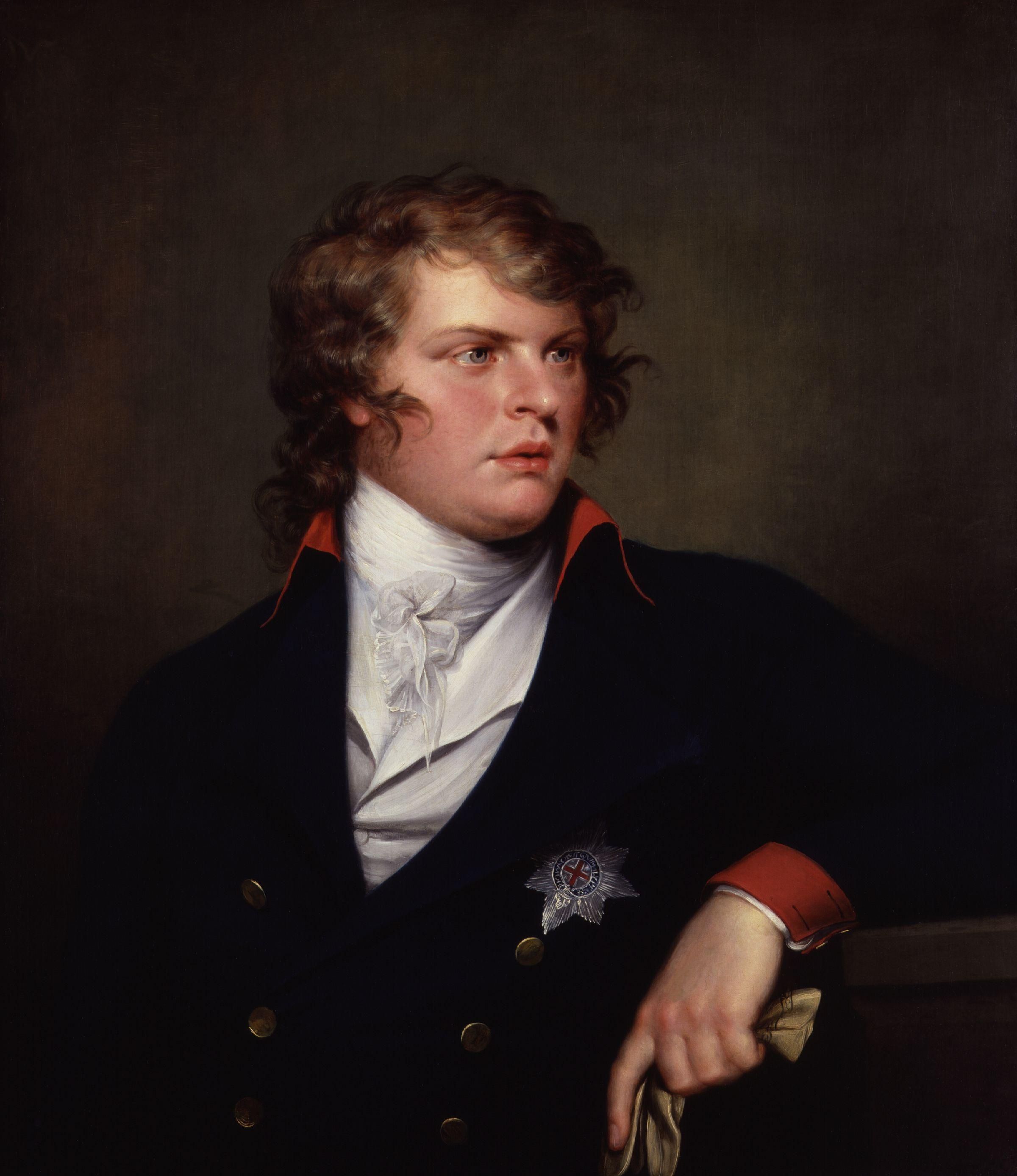
The Crest is specifically that of Prince Augustus Frederick, Duke of Sussex (27 January 1773 – 21 April 1843), the sixth son and ninth child of King George III and his queen consort, Charlotte of Mecklenburg-Strelitz. He was the only surviving son of George III who did not pursue an army or navy career. A Whig, he was known for his liberal views, which included reform of Parliament, abolition of the slave trade, Catholic Emancipation, and the removal of existing civil restrictions on Dissenters. We know that these were from his collection as Christie’s held sales for his estate on 22nd, 23rd, 26th and 27th June, 1843. On page 8 of the 22nd June sale, Lot 118 consisted of :
“A pair of hexagonal dishes, on feet, the borders chased with figures in arabesques, and royal cyphers engraved in the centres”. These were made by Edward Farrell, who was often influenced by designs of the antique and Kensington Lewis supplied large amounts of silver to his brothers, George IV & HRH The Duke of York.
Diameter: 10 inches, 25 cm.
Weight: 22oz.
KENSINGTON LEWIS
The name Kensington Lewis is associated with some of the most innovative silver of the early 19th century. This is particularly true with the extraordinary group of silver which he supplied to Prince Fredrick Augustus, Duke of York the second son of King George III. His work anticipates the full-blown historicism of the mid 19th century.
The Duke of York and his elder brother, the Prince Regent, later King George IV, were together the most influential collectors and patrons of silver of their time. The Duke of York’s silver, however, was based largely on baroque sources, and stands apart from the classical styles promoted by the Royal Goldsmiths, Rundell, Bridge & Rundell and supplied to the King.
Credit for the distinctive style of the Duke of York’s silver must be given to Kensington Lewis, whose passion for 17th century silver was demonstrated by his purchases in the Duke of Norfolk’s auction in 1816. Such objects in Lewis’s possession undoubtedly influenced his designs for new silver objects, executed for him by Edward Farrell. John Culme proposed this thesis in his important study “Kensington Lewis: A Nineteenth Century Businessman,” Connoisseur, September 1975”.
Lewis was an expert Salesman, and was able to channel the Duke of York’s profligate spending toward Farrell, a talented silversmith capable of creating new designs from a variety of historical sources. It was this phenomenal collaboration of patron, retailer and craftsman which resulted in these highly original objects.
RELATED ITEMS


, the sixth son and ninth child of King George III and his queen consort, Charlotte of Mecklenburg-Strelitz. He was the only surviving son of George III who did not pursue an army or navy career. A Whig, he was known for his liberal views, which included reform of Parliament, abolition of the slave trade, Catholic Emancipation, and the removal of existing civil restrictions on Dissenters. We know that these were from his collection as Christie’s held sales for his estate on 22nd, 23rd, 26th and 27th June, 1843. On page 8 of the 22nd June sale, Lot 118 consisted of : “A pair of hexagonal dishes, on feet, the borders chased with figures in arabesques, and royal cyphers engraved in the centres”. These were made by Edward Farrell, who was often influenced by designs of the antique and Kensington Lewis supplied large amounts of silver to his brothers, George IV & HRH The Duke of York.Diameter: 10 inches, 25 cm.Weight: 22oz.KENSINGTON LEWISThe name Kensington Lewis is associated with some of the most innovative silver of the early 19th century. This is particularly true with the extraordinary group of silver which he supplied to Prince Fredrick Augustus, Duke of York the second son of King George III. His work anticipates the full-blown historicism of the mid 19th century. The Duke of York and his elder brother, the Prince Regent, later King George IV, were together the most influential collectors and patrons of silver of their time. The Duke of York’s silver, however, was based largely on baroque sources, and stands apart from the classical styles promoted by the Royal Goldsmiths, Rundell, Bridge & Rundell and supplied to the King.Credit for the distinctive style of the Duke of York’s silver must be given to Kensington Lewis, whose passion for 17th century silver was demonstrated by his purchases in the Duke of Norfolk’s auction in 1816. Such objects in Lewis’s possession undoubtedly influenced his designs for new silver objects, executed for him by Edward Farrell. John Culme proposed this thesis in his important study “Kensington Lewis: A Nineteenth Century Businessman,” Connoisseur, September 1975”. Lewis was an expert Salesman, and was able to channel the Duke of York’s profligate spending toward Farrell, a talented silversmith capable of creating new designs from a variety of historical sources. It was this phenomenal collaboration of patron, retailer and craftsman which resulted in these highly original objects. )