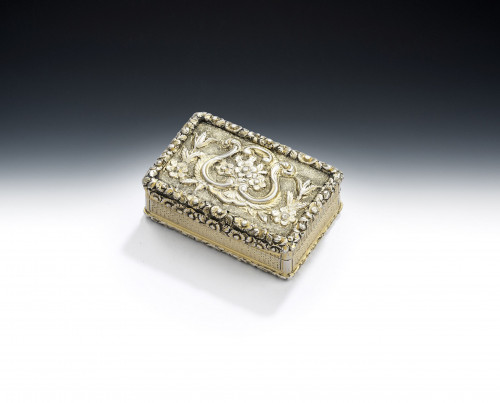
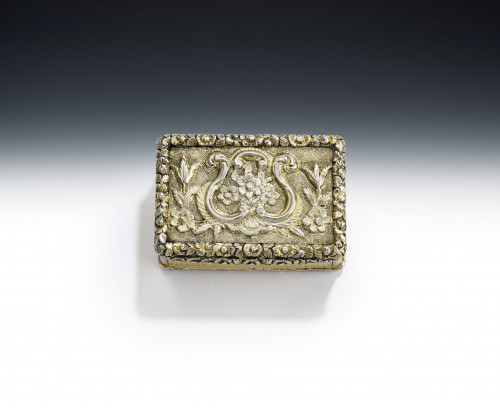
An important pair of George III Silver Gilt Sugar Vases & Covers made in London in 1810 by Benjamin & James Smith.
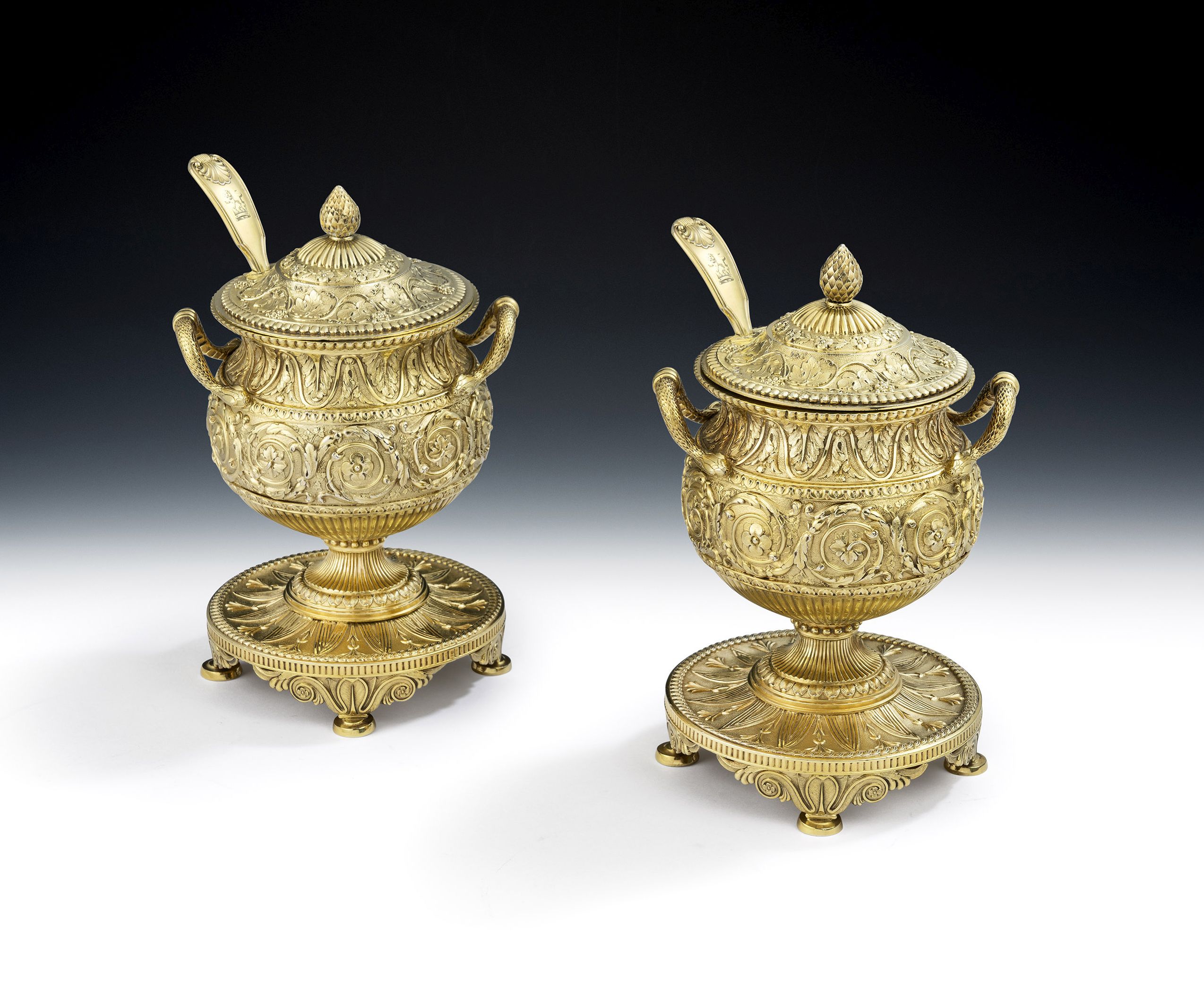
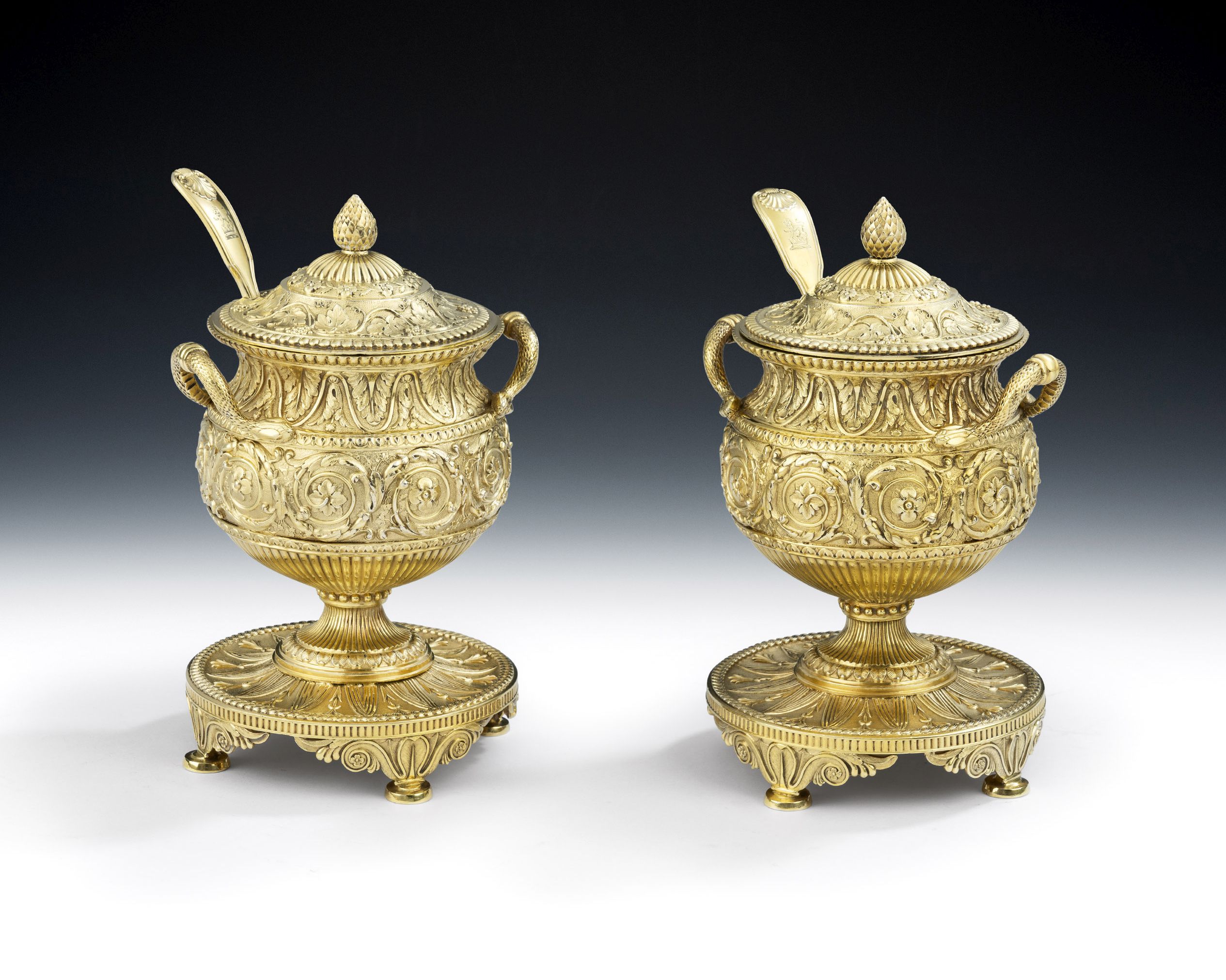
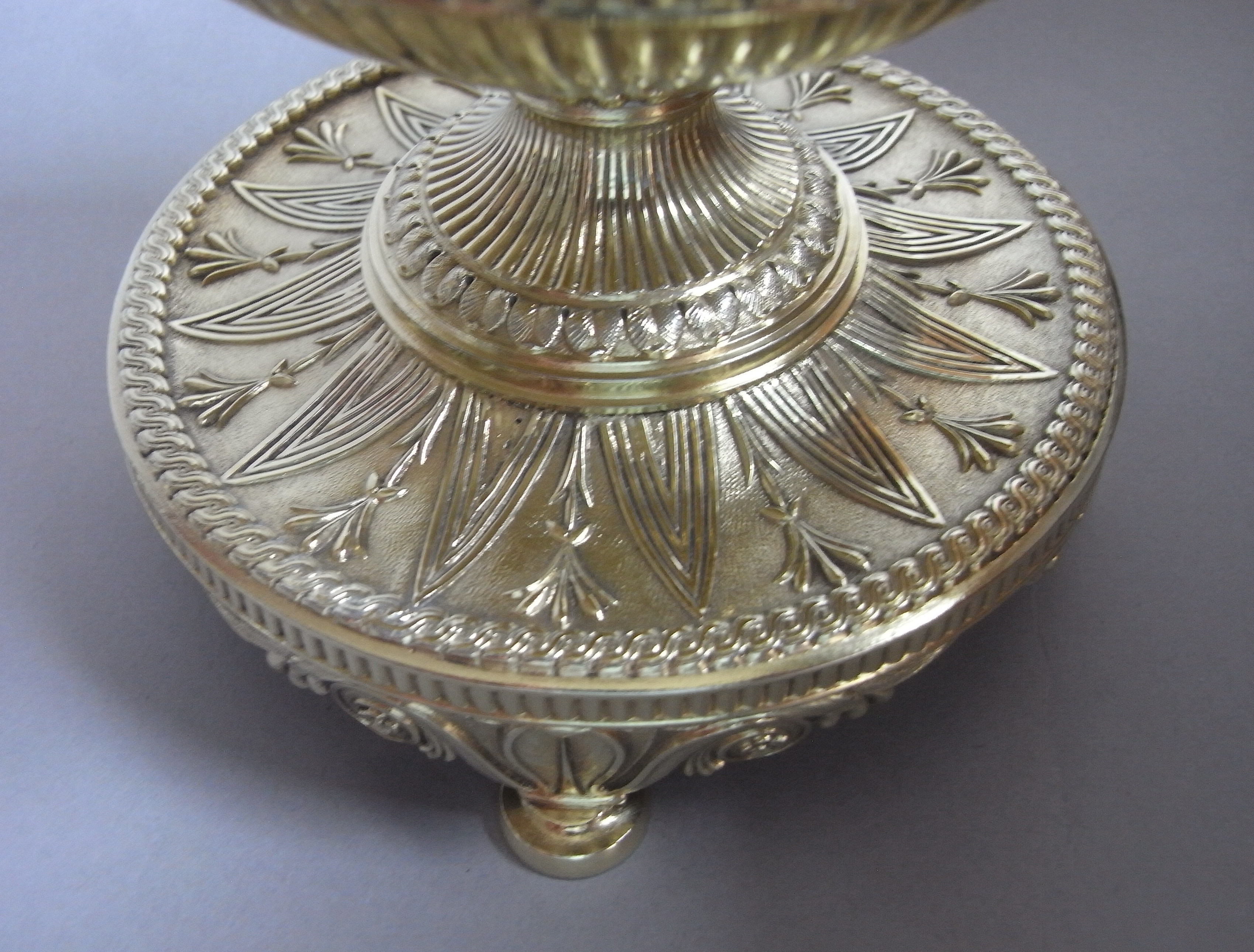
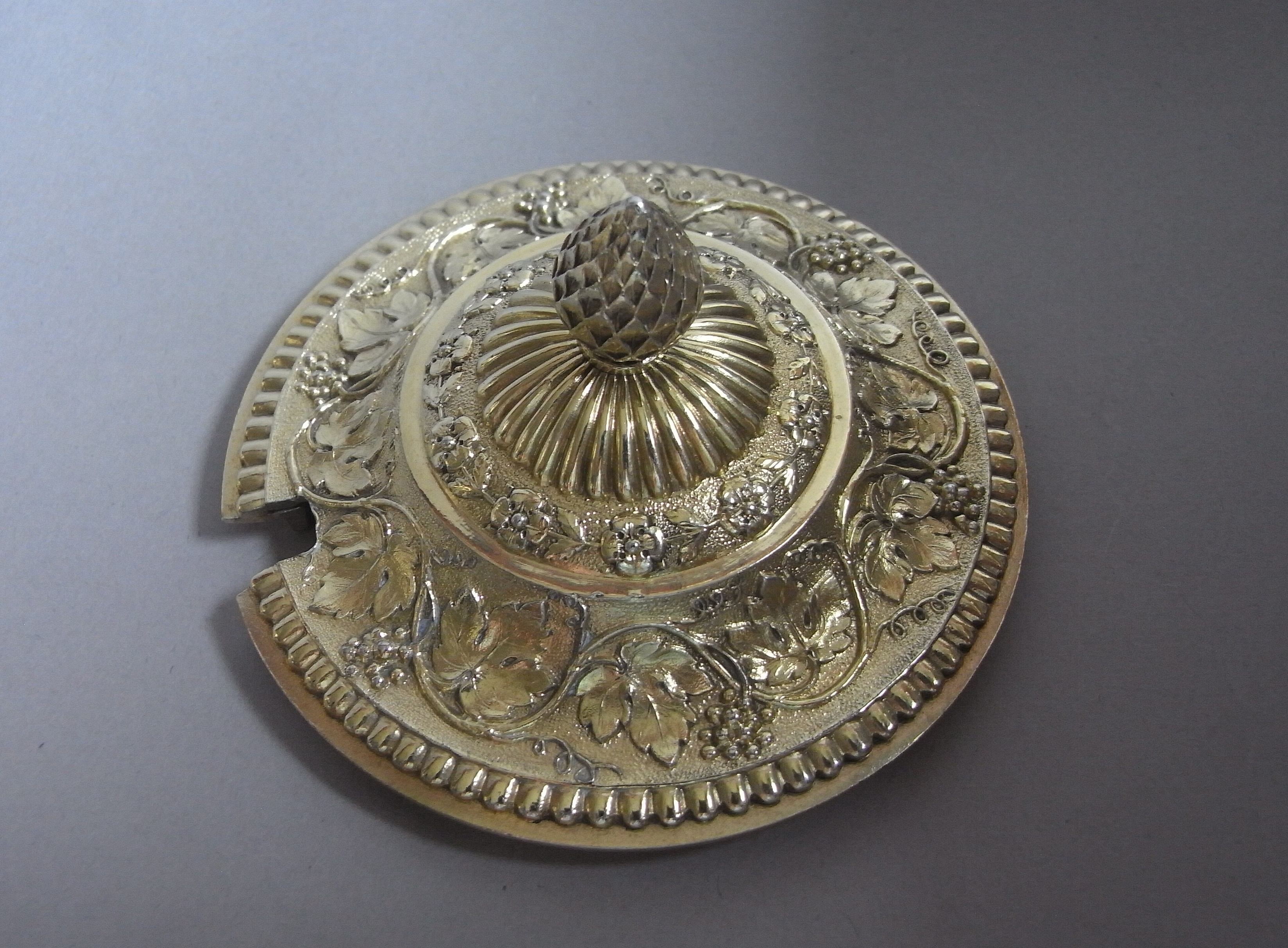
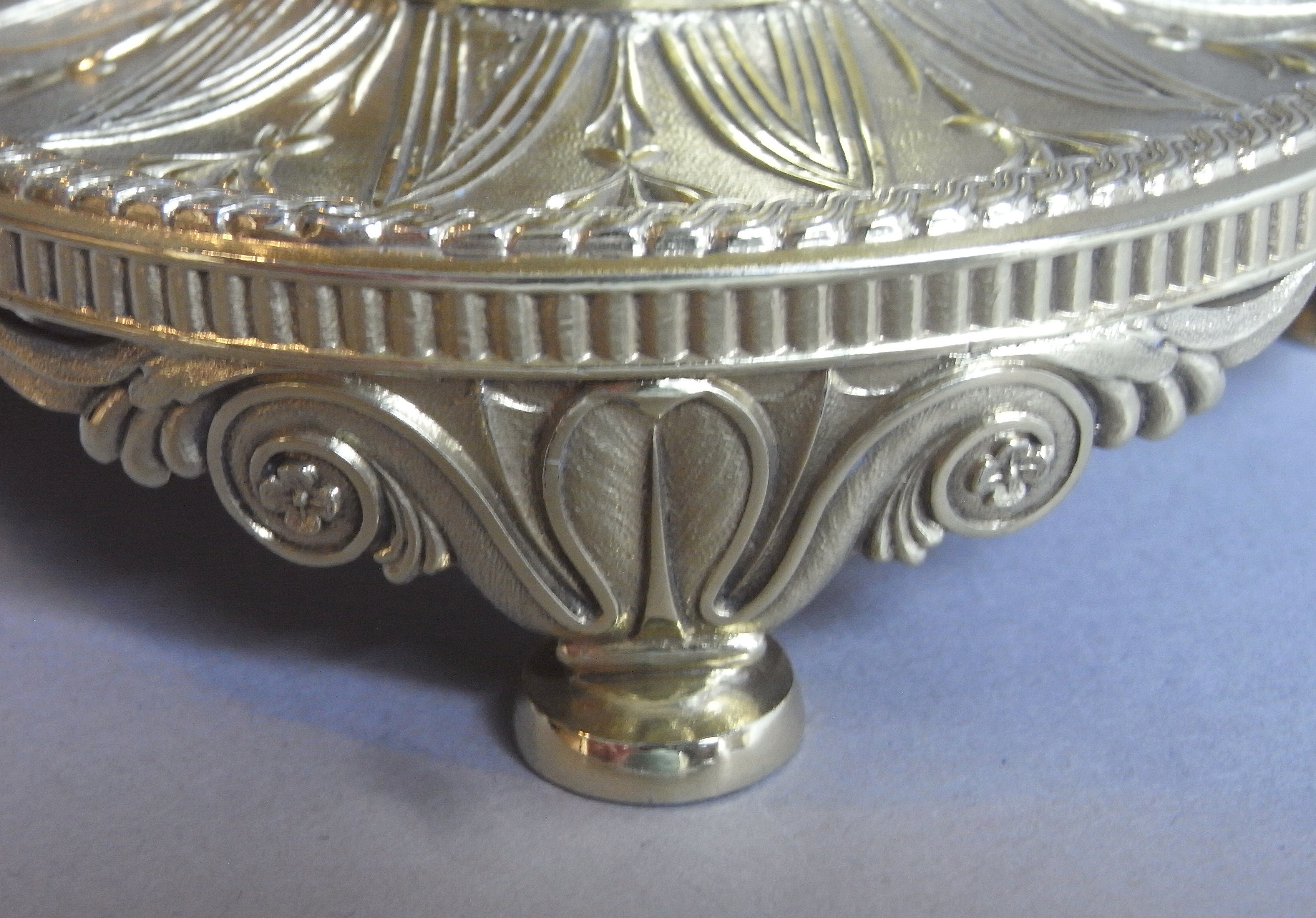
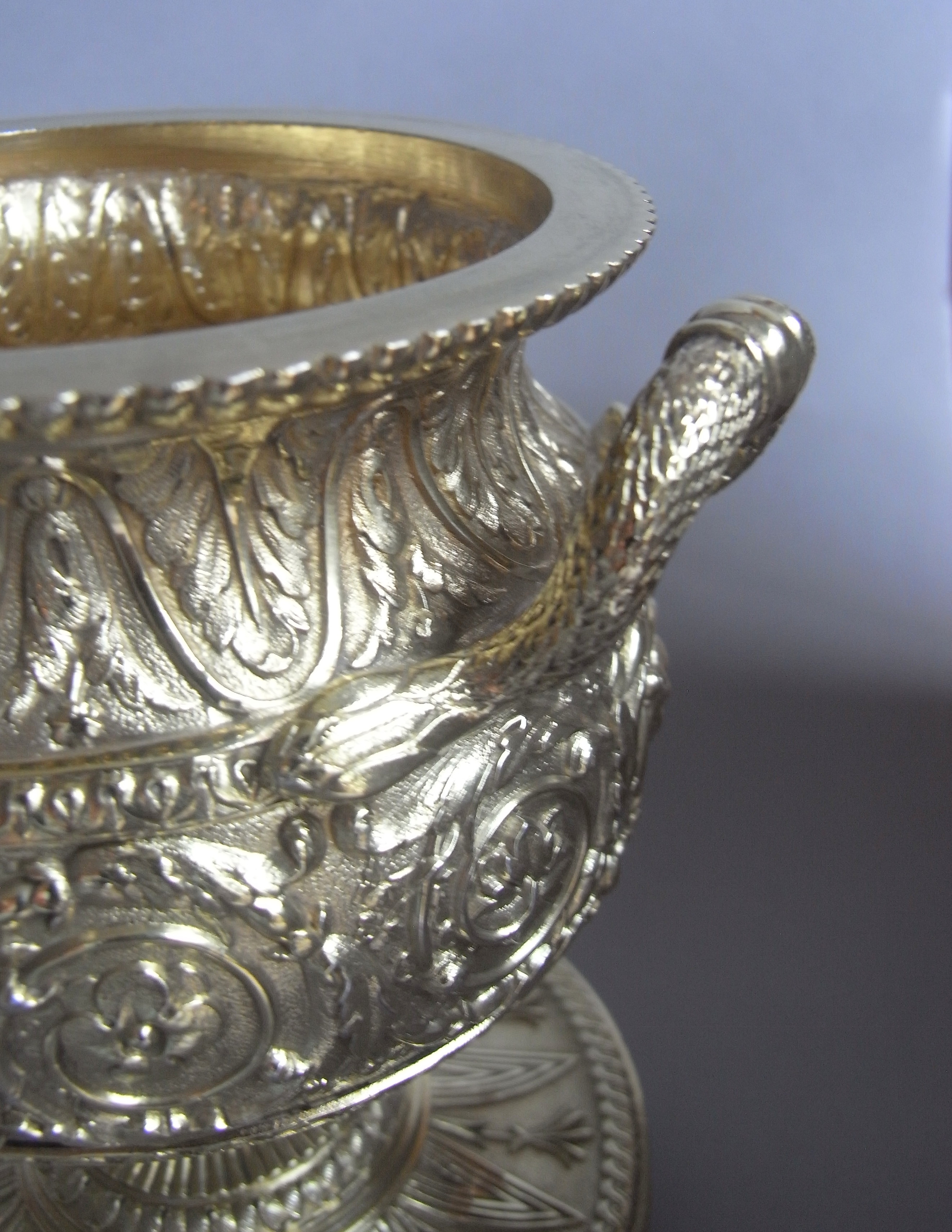
An important pair of George III Silver Gilt Sugar Vases & Covers made in London in 1810 by Benjamin & James Smith.
375650
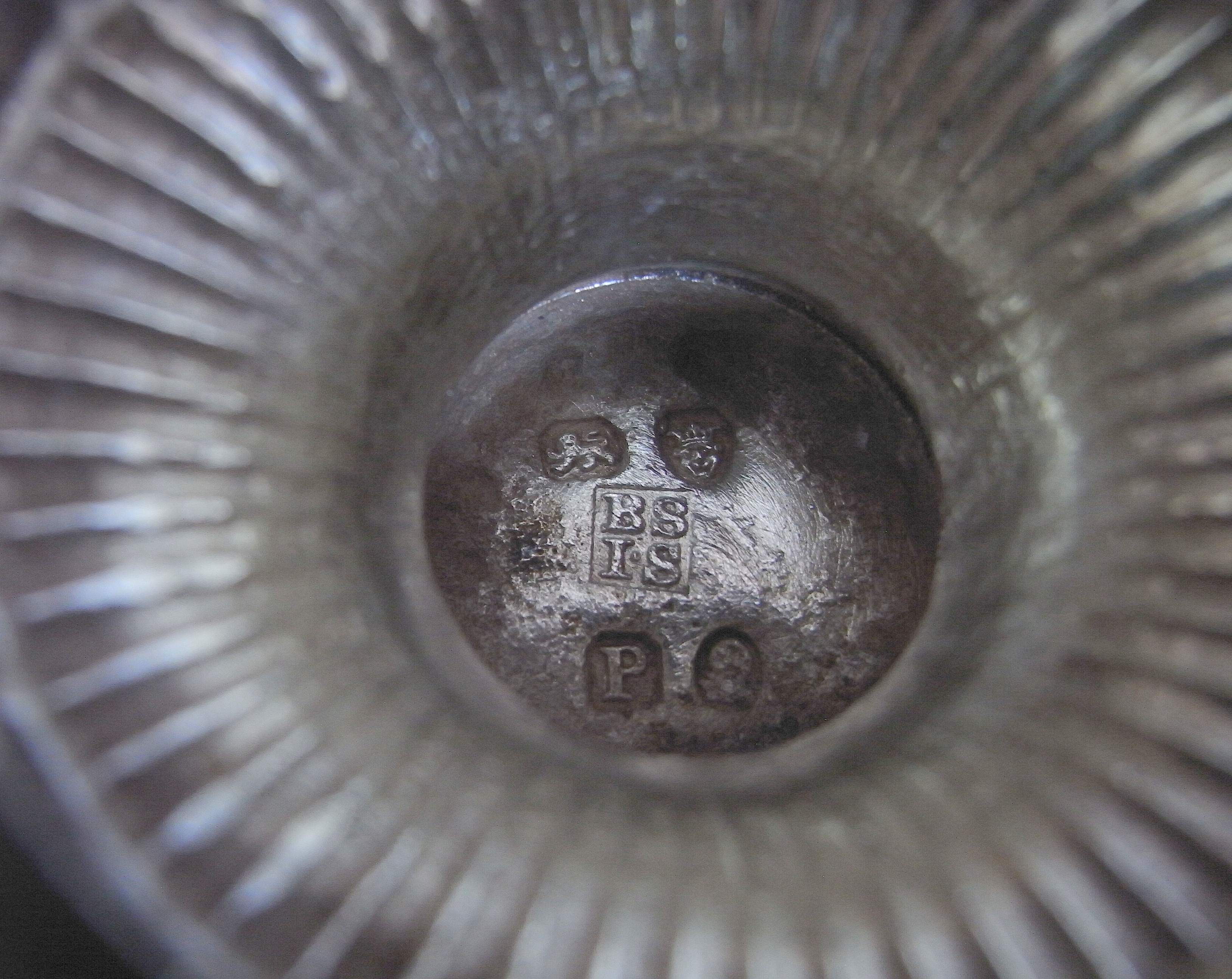
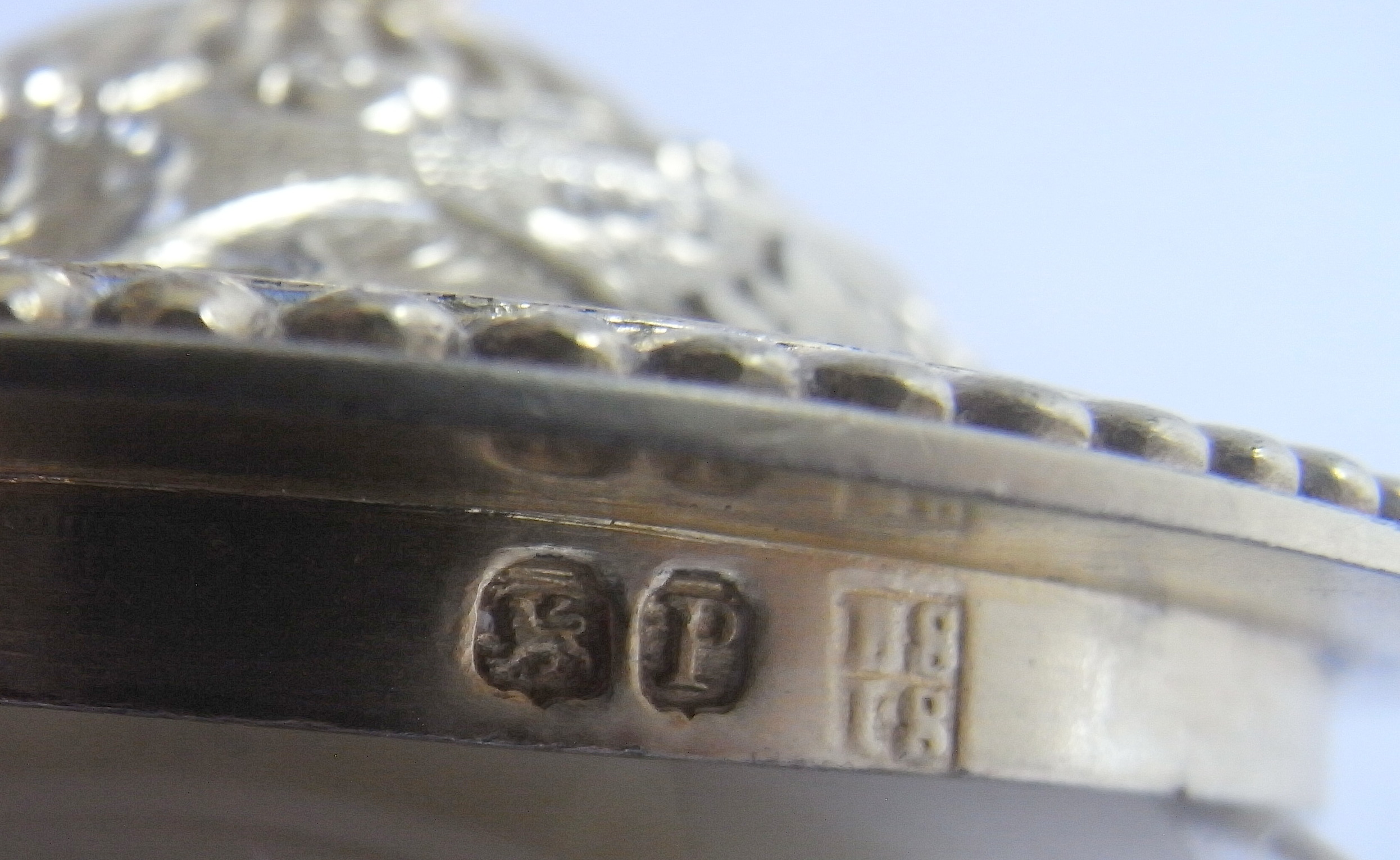
Each is of vase-form standing on a circular platform base with four feet decorated with foliate motifs and floral rosettes. The base is cast and chased with stiff leaves and bell-flowers with a guilloche band on the rim. The pedestal foot and lower body is decorated with lobing and the shoulder with a band of scrolling foliage enclosing rosettes against a matted ground all under a band of inverted flower heads and acanthus leaves. The side handles modelled as bound serpents and the slightly-domed covers with gadrooning and displaying a band of trailing grapevine below a band of rosettes, surmounted by a bud finial. Both in outstanding condition and fully marked in the base and on the cover.
The source for the design of these sugar vases is a Roman funerary urn in the celebrated antique sculpture collection of the 1st Marquess of Lansdowne, identified by David Udy in "Piranesi's Vasi, the English Silversmith and his Patrons", Burlington Magazine, December 1978, p. 837, fig. 55-57. Unlike the Warwick Vase, which had been popularized by Piranesi's engravings of the eighteenth century, the Lansdowne urn apparently was reproduced directly in silver before John Duit engraved it around 1813. The design in silver is attributed to the sculptor John Flaxman, who used a variation of the urn in his tomb monument for Sir Thomas Burrell in 1796. Flaxman became Rundell's most important designer around the time the firm became Royal Goldsmiths in 1804. In this period, Scott and Smith ran Rundell's workshop, executing the designs and models supplied by the firm in silver and silver-gilt.
A set of eight vases of this design, made for George IV as Prince of Wales at a cost of £376 4s, are in the Royal collection, illustrated in Carlton House: The Past Glories of George IV's Palace, 1991, cat. no. 95, p. 133. Manufactured by Benjamin Smith and Benjamin and James Smith in 1808 and 1809, the Royal vases pre date the present examples, indicating that the design was already in production for several years before being acquired by the Prince of Wales.
The first known examples were produced by Scott and Smith probably no earlier than 1805. A set of four vases of the same year by Digby Scott and Benjamin Smith sold at Christie's, London, July 1, 1953, lot 111 from the collection of Earl Howe. Paul Storr also produced the design, manufacturing a set of four for the 1st Earl of Harewood in 1814 which was sold at Christie's, London, June 30, 1965, lot 101. Another set of four by Paul Storr of 1816/17 is illustrated in J. Bliss, The Jerome and Rita Gans Collection of English Silver, n.d., pp. 132-35.
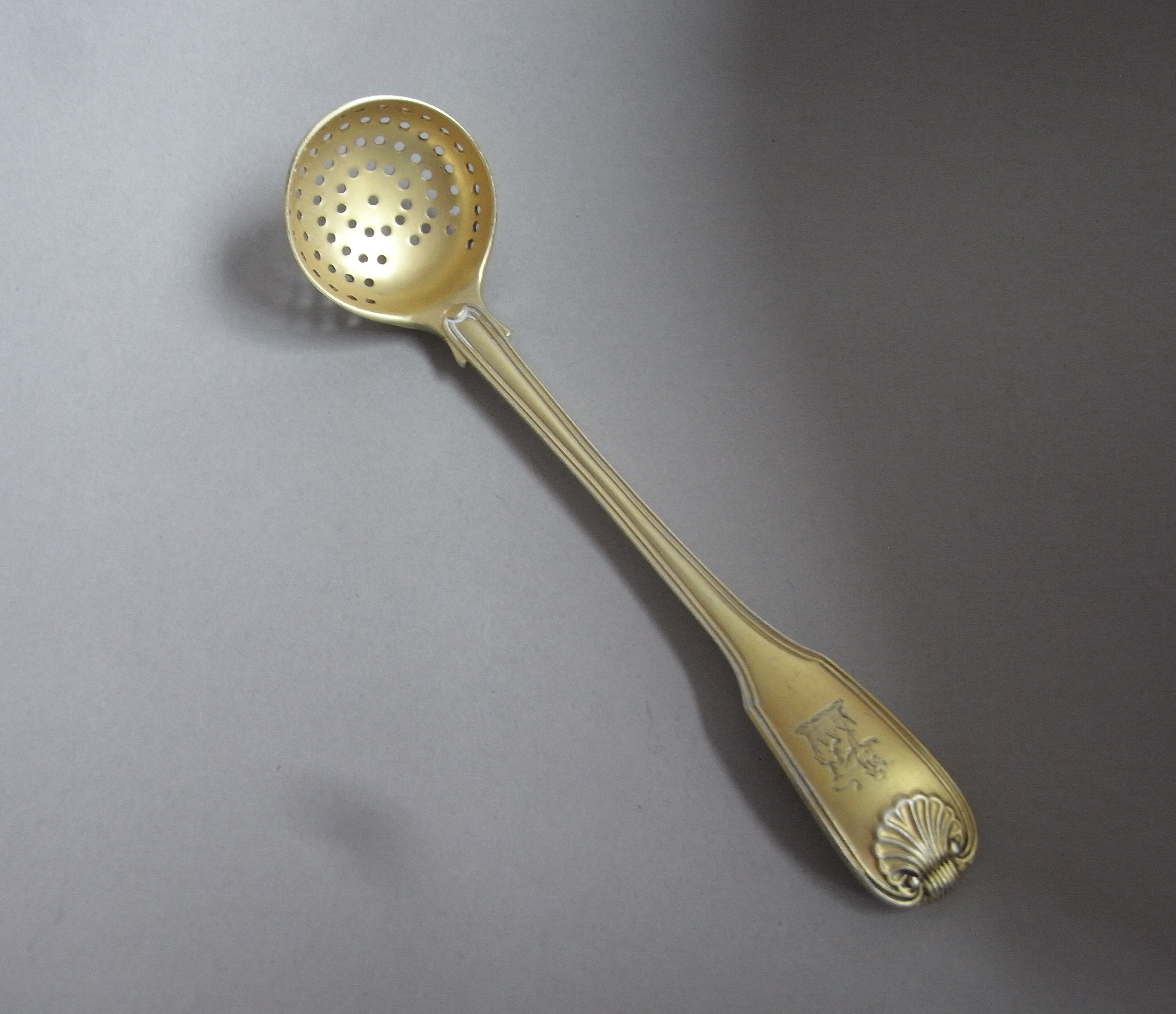
The vases come with a pair of associated sifter spoons made in the fiddle thread and shell pattern, with pierced bowls and engraved with a contemporary Crest.
Height: 6.75 inches, 16.88 cm.
Length, handle to handle: 4.45 inches, 11.13 cm.
Weight: 53oz in total, the pair.
RELATED ITEMS