
A very fine George III Teapot made in London in 1774 by John Robins.
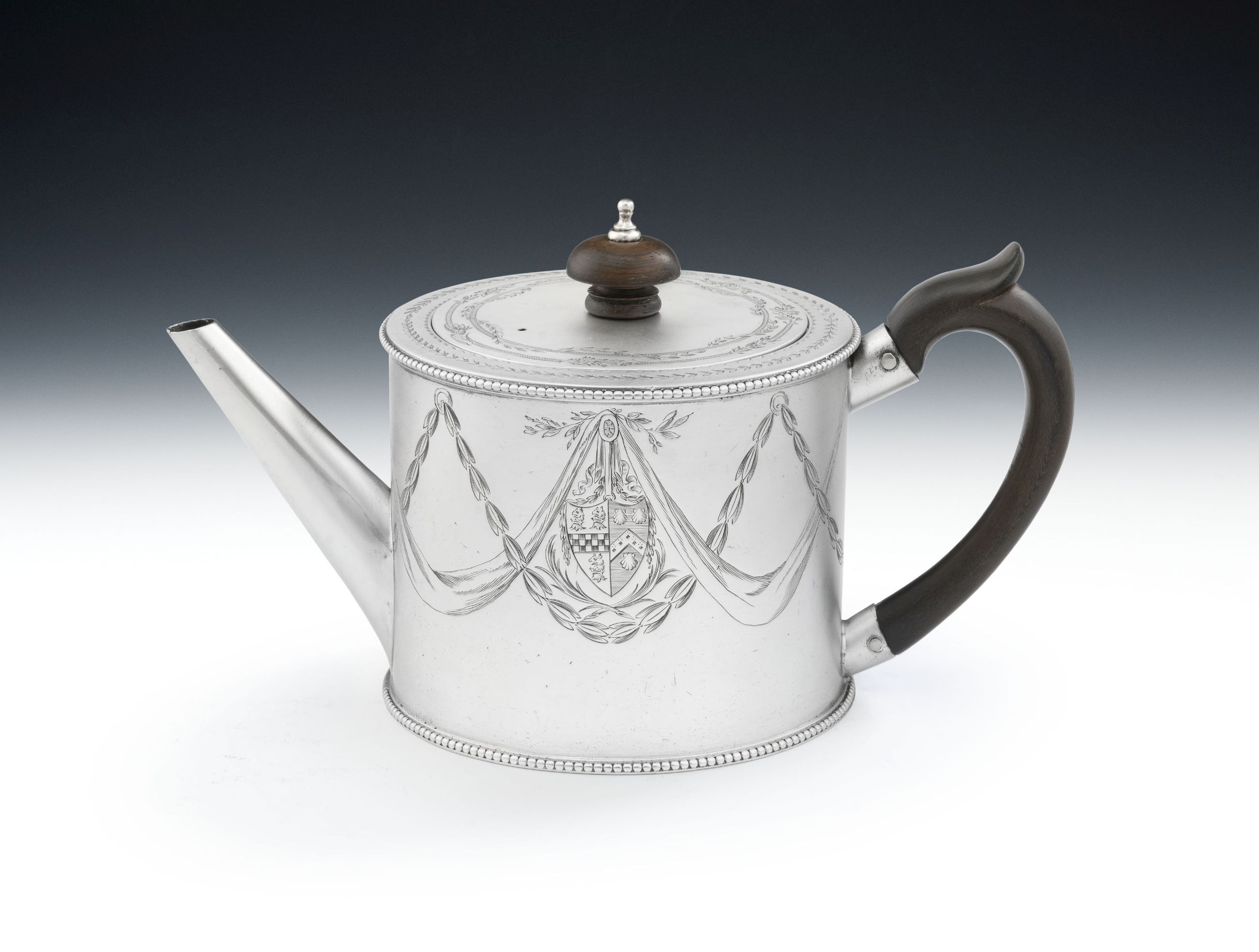
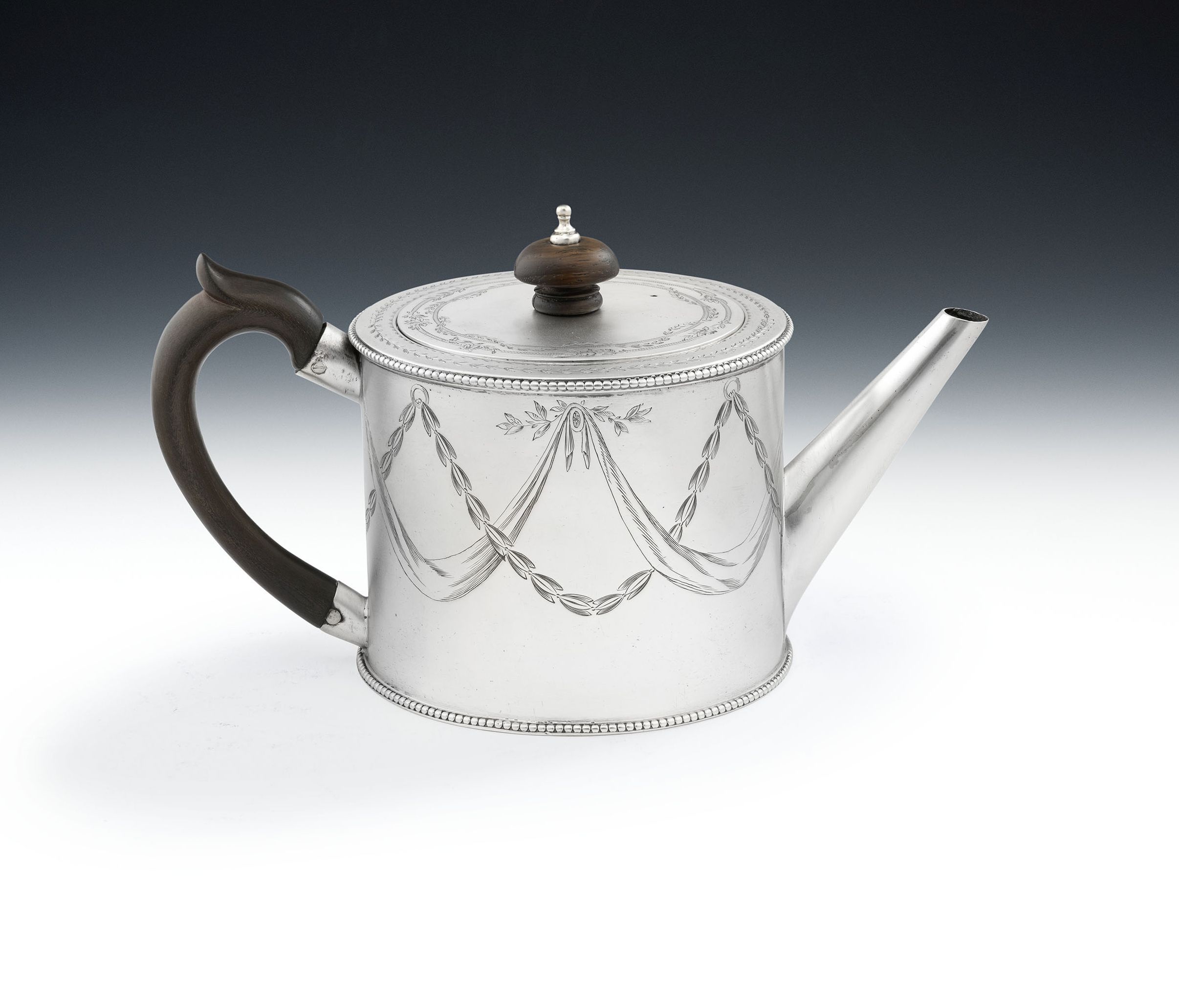
A very fine George III Teapot made in London in 1774 by John Robins.
375151
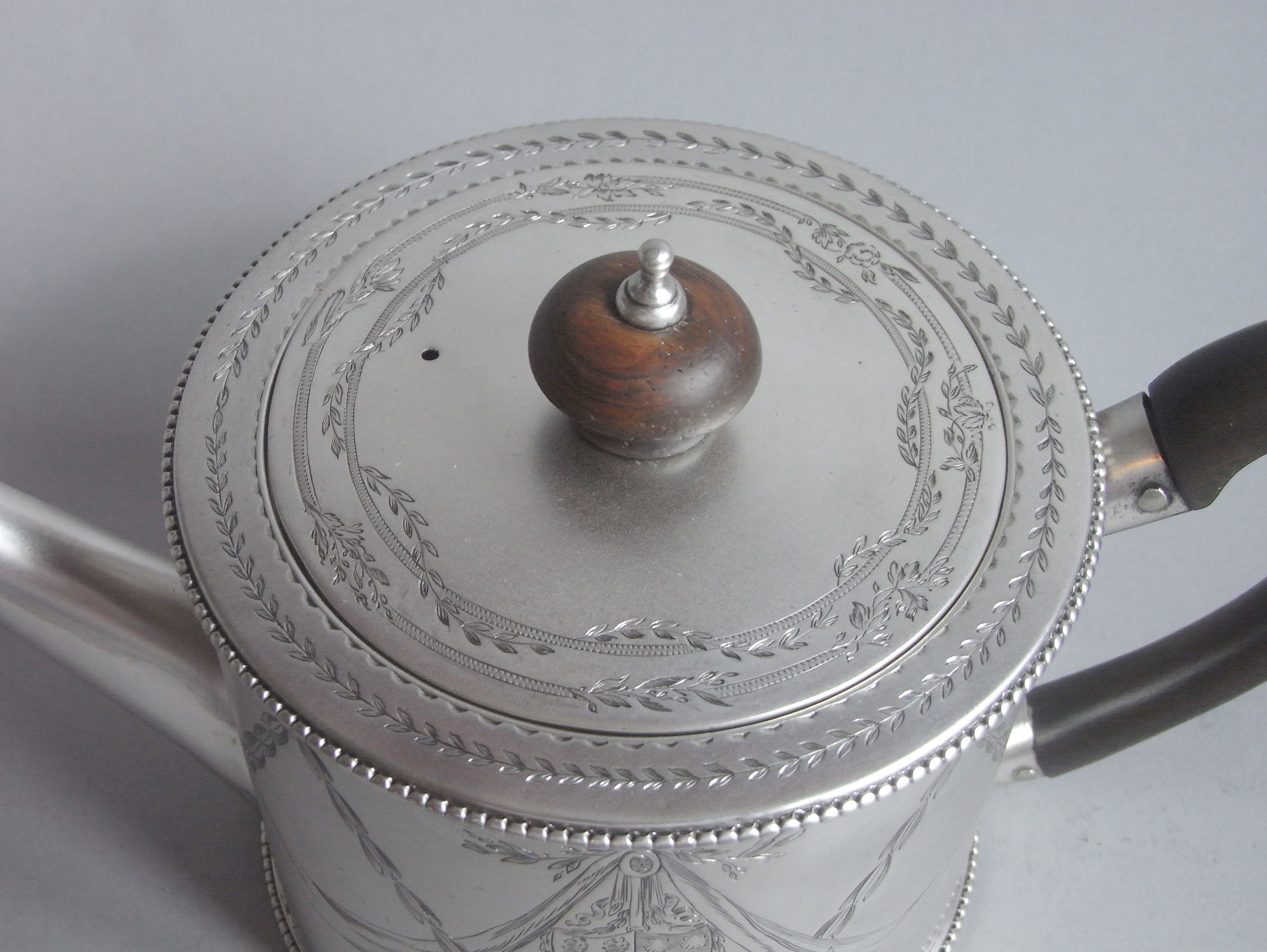
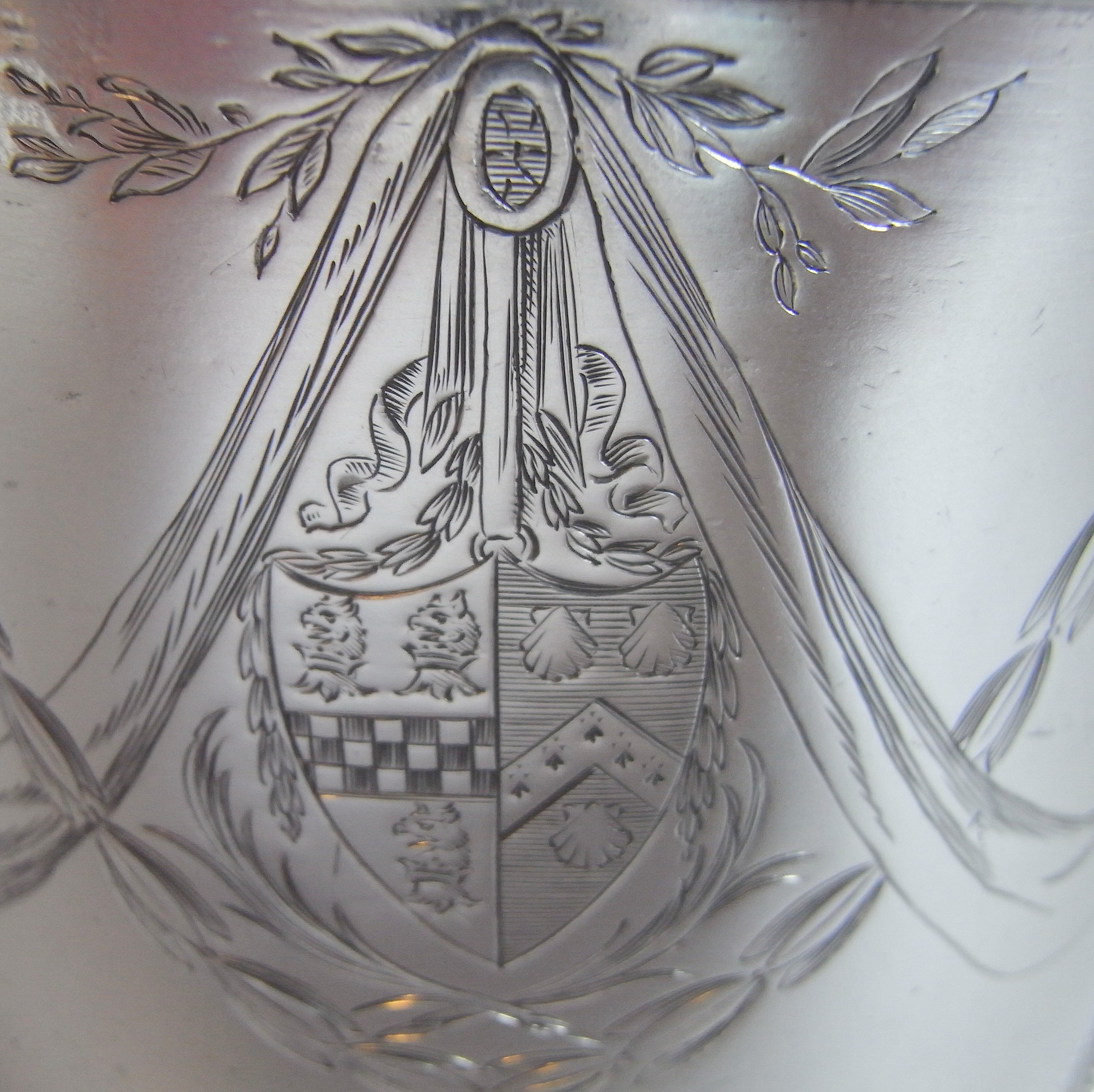
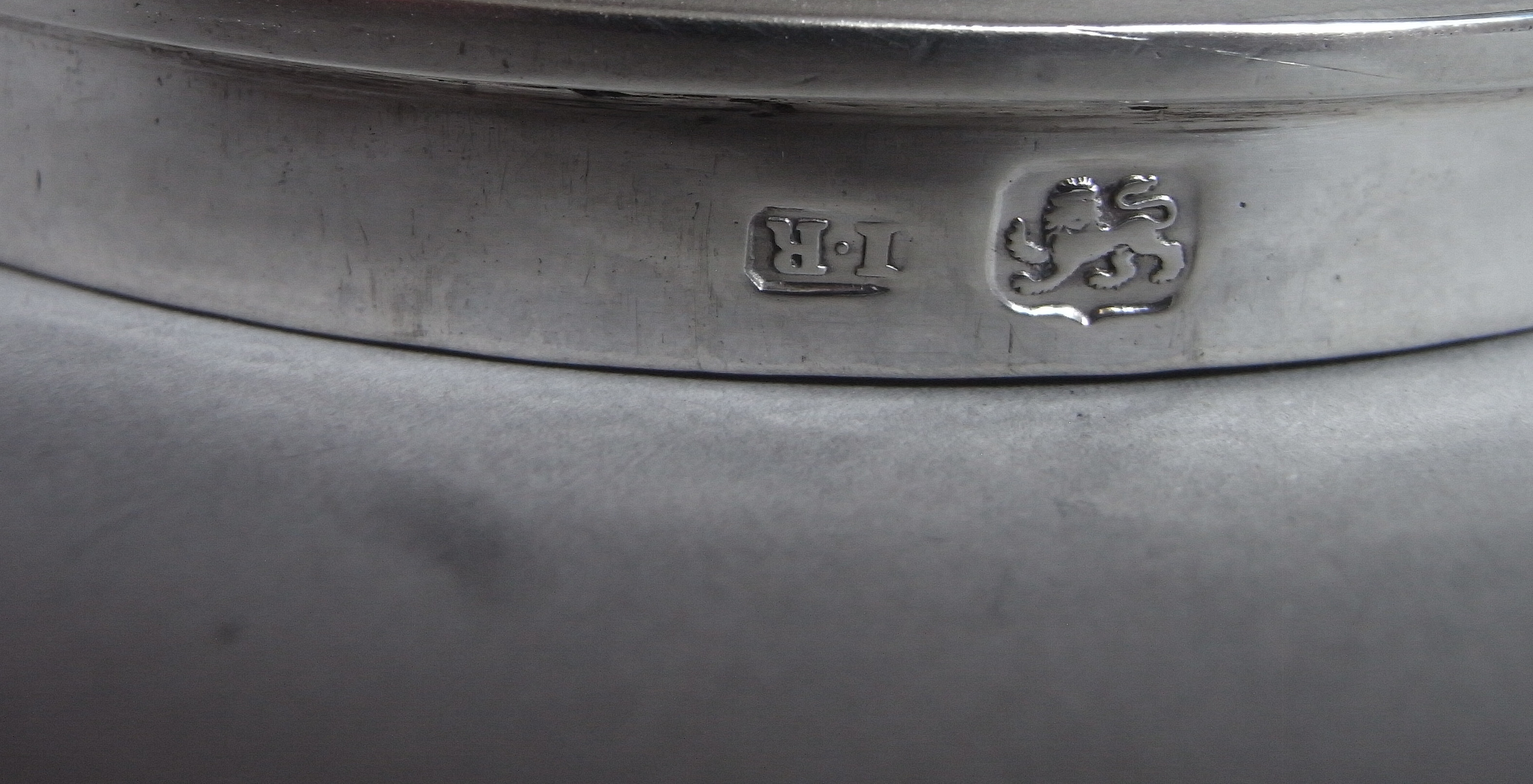
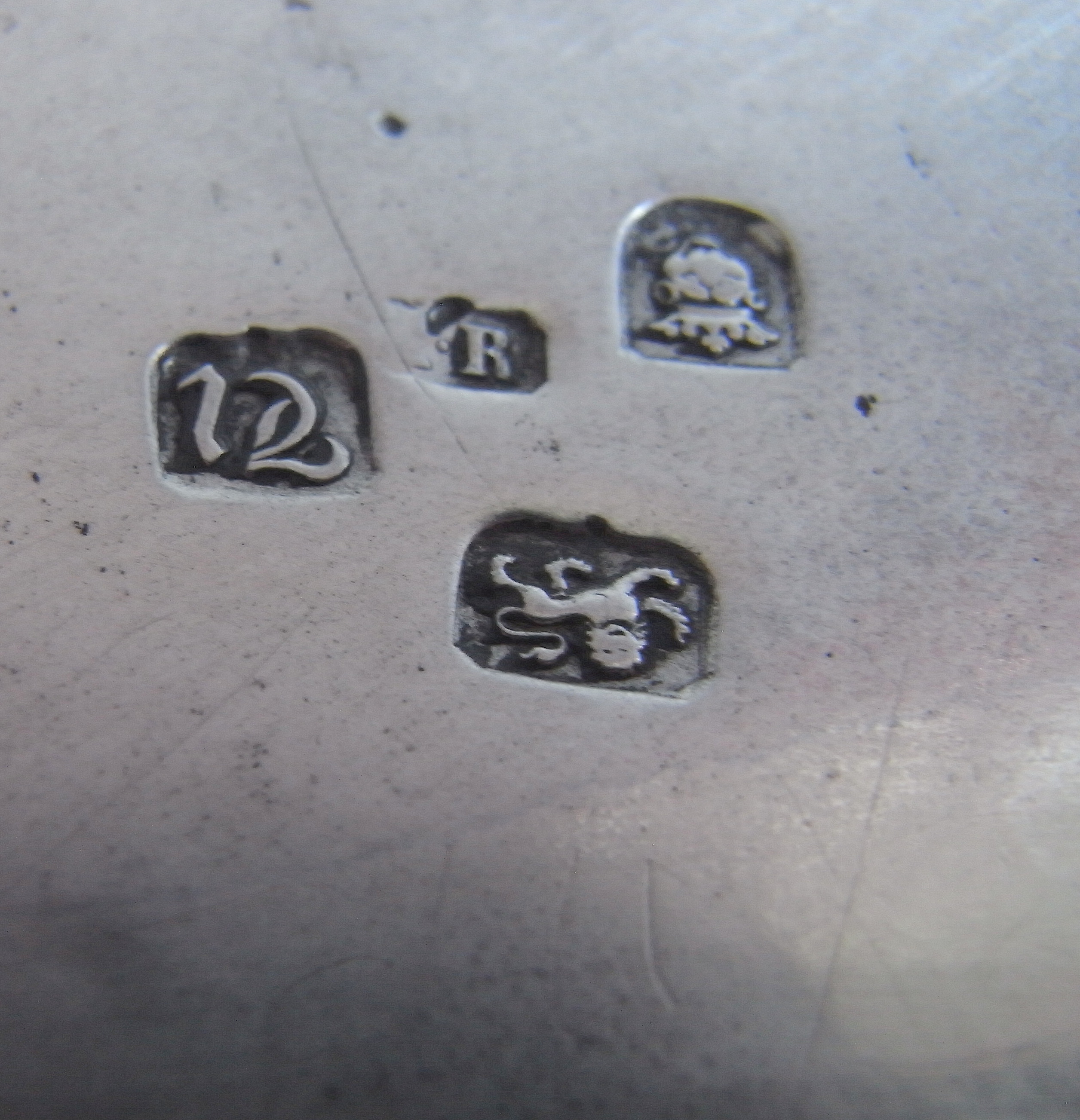
The Teapot is modelled in the rare “Drum” form and displays an applied beaded band at both the base and the rim. The sides of the main body are most unusually engraved with Neo-Classical bluebell and drapery swags, hanging from rings and paterae. The front of the main body is engraved with a contemporary shield shaped Armorial surrounded by a bluebell and crossed branch cartouche. The pull off cover is beautifully engraved with trailing foliate bands and floral sprays and displays a fruitwood finial. The teapot has a typical straight spout and fruitwood handle. This rare piece is fully marked on the base and with the maker’s mark and sterling mark on the cover. As you will appreciate, Drum Teapots are rare, especially engraved in the Neo-Classical manner. The decoration displayed on this piece is some of the finest we have ever seen executed at this date. Jonathan Robins was a very fine maker, who had a reputation for producing excellent Tea wares in the Neo-classical tradition and was working at 5, St John Street when this teapot was made. His first mark was entered in 1774, therefore this piece represents an early example of his work. He made a number of items for William Beckford, the noted art collector, and wealthiest man in England at the end of the 18th century.
Height: 5 inches.
Length: spout to handle: 8.5 inches.
Weight: 17oz
ARMORIAL RESEARCH
The Arms are those of Williams of Carnanton, County Cornwall, impaling Townsend, for Colonel John Oliver Williams, of Carnanton, 1731-1809. He married, in 1772, Charlotte, daughter of Chaunsey Townsend, M.P., ( 1706-1779 ), a member of an eminent London merchant family, with prominent East India Company interests. The most prominent member of the Townsend family was Charlotte’s brother, the Reverend Joseph Townsend, 1739-1816. He was a geologist, MA Clare College Cambridge, before studying medicine at Edinburgh. Chaplain to the Duke of Athol and rector of Pusey. He was a prolific author, not only on geological subjects, and his works include “Journey Through Spain with Remarks in Passing Through France” and “The Physician’s Vade Mecum.” Interestingly, his brother-in-law, Colonel Williams, owned a number of mines and these were a great source of geological interest to Joseph. There is an entry on Joseph in the Dictionary of National Biography.
RELATED ITEMS




, a member of an eminent London merchant family, with prominent East India Company interests. The most prominent member of the Townsend family was Charlotte’s brother, the Reverend Joseph Townsend, 1739-1816. He was a geologist, MA Clare College Cambridge, before studying medicine at Edinburgh. Chaplain to the Duke of Athol and rector of Pusey. He was a prolific author, not only on geological subjects, and his works include “Journey Through Spain with Remarks in Passing Through France” and “The Physician’s Vade Mecum.” Interestingly, his brother-in-law, Colonel Williams, owned a number of mines and these were a great source of geological interest to Joseph. There is an entry on Joseph in the Dictionary of National Biography. )