
An important George II Rococo Helmet Shaped Ewer made in London in 1758 by Thomas Heming.
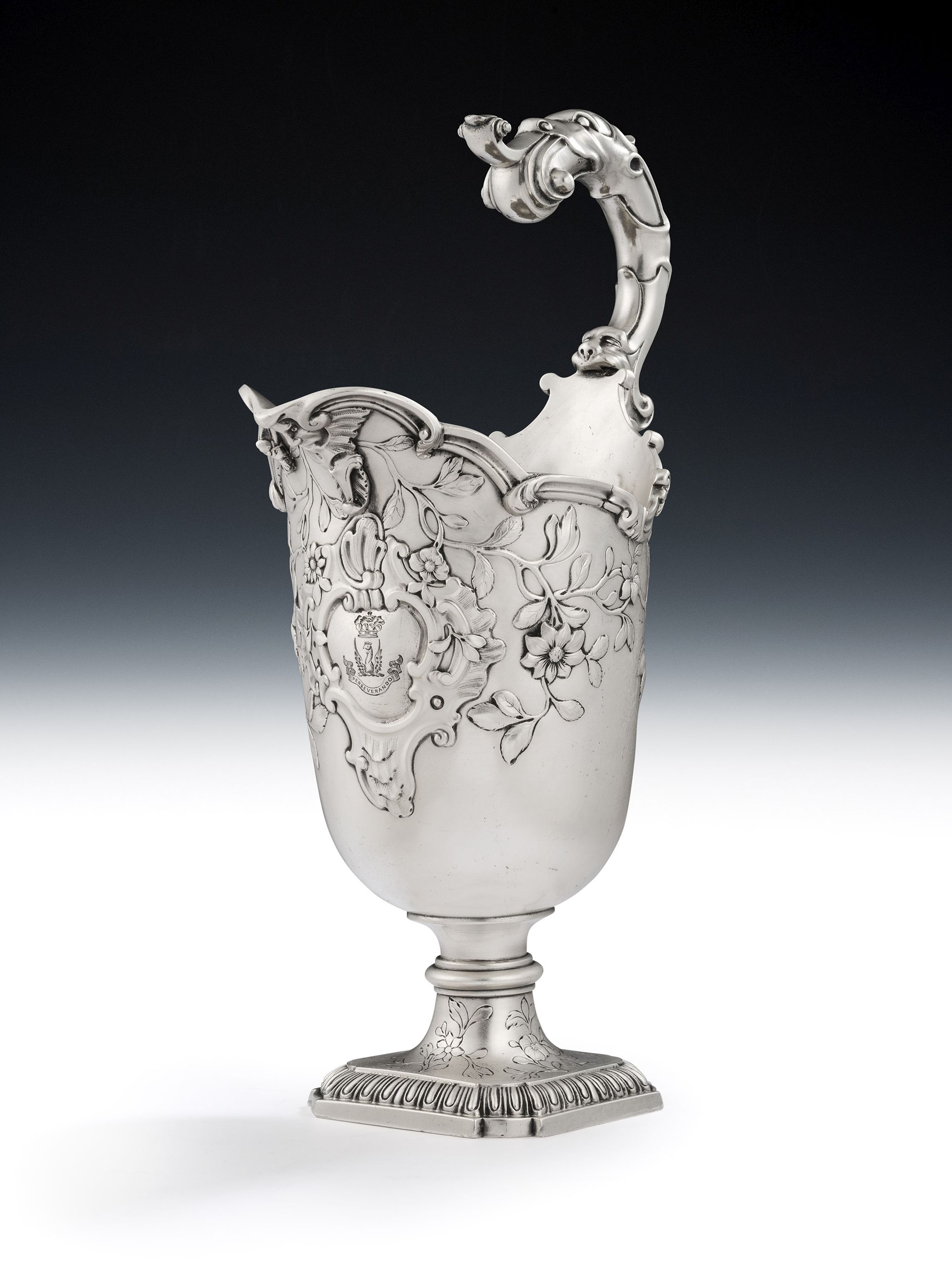
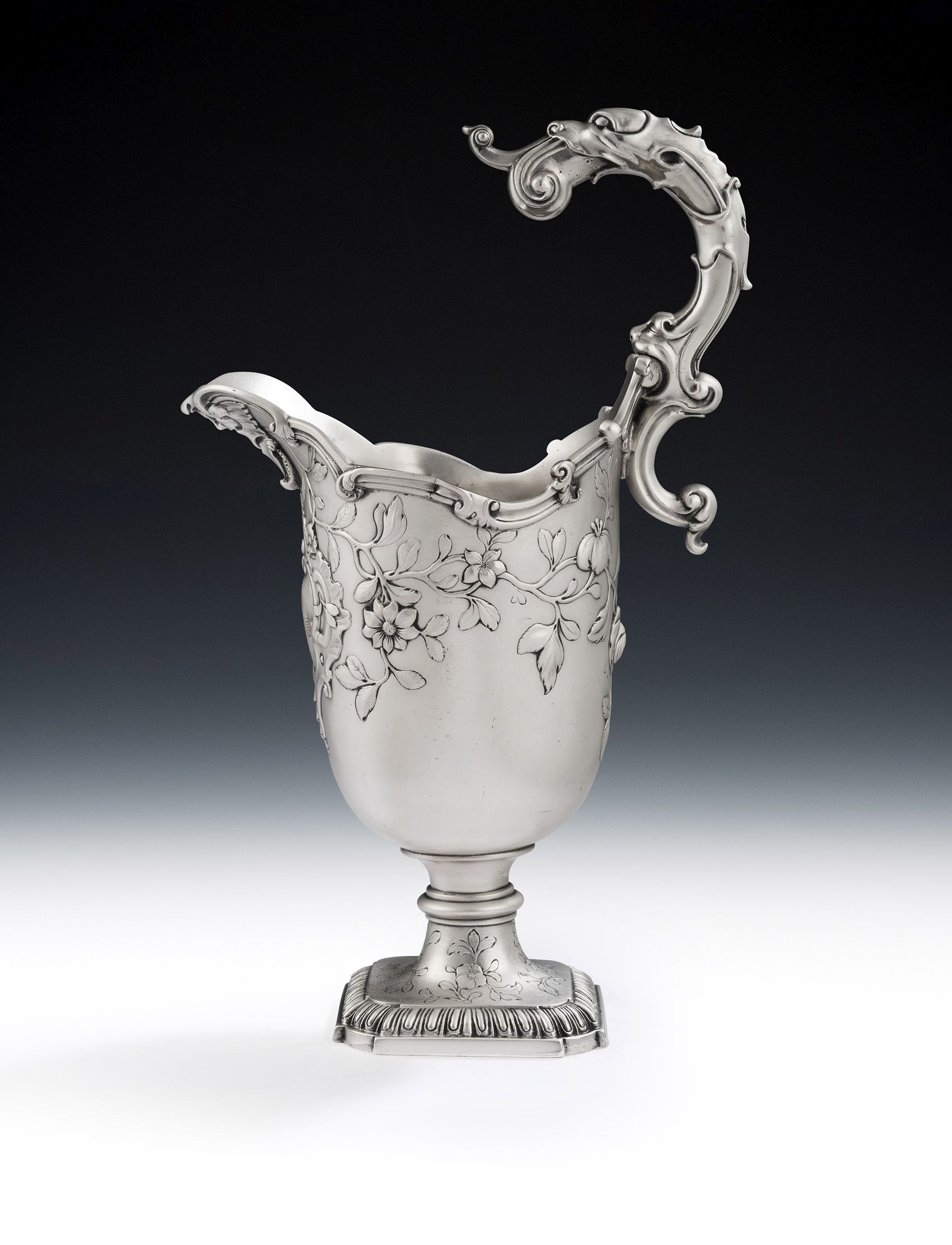
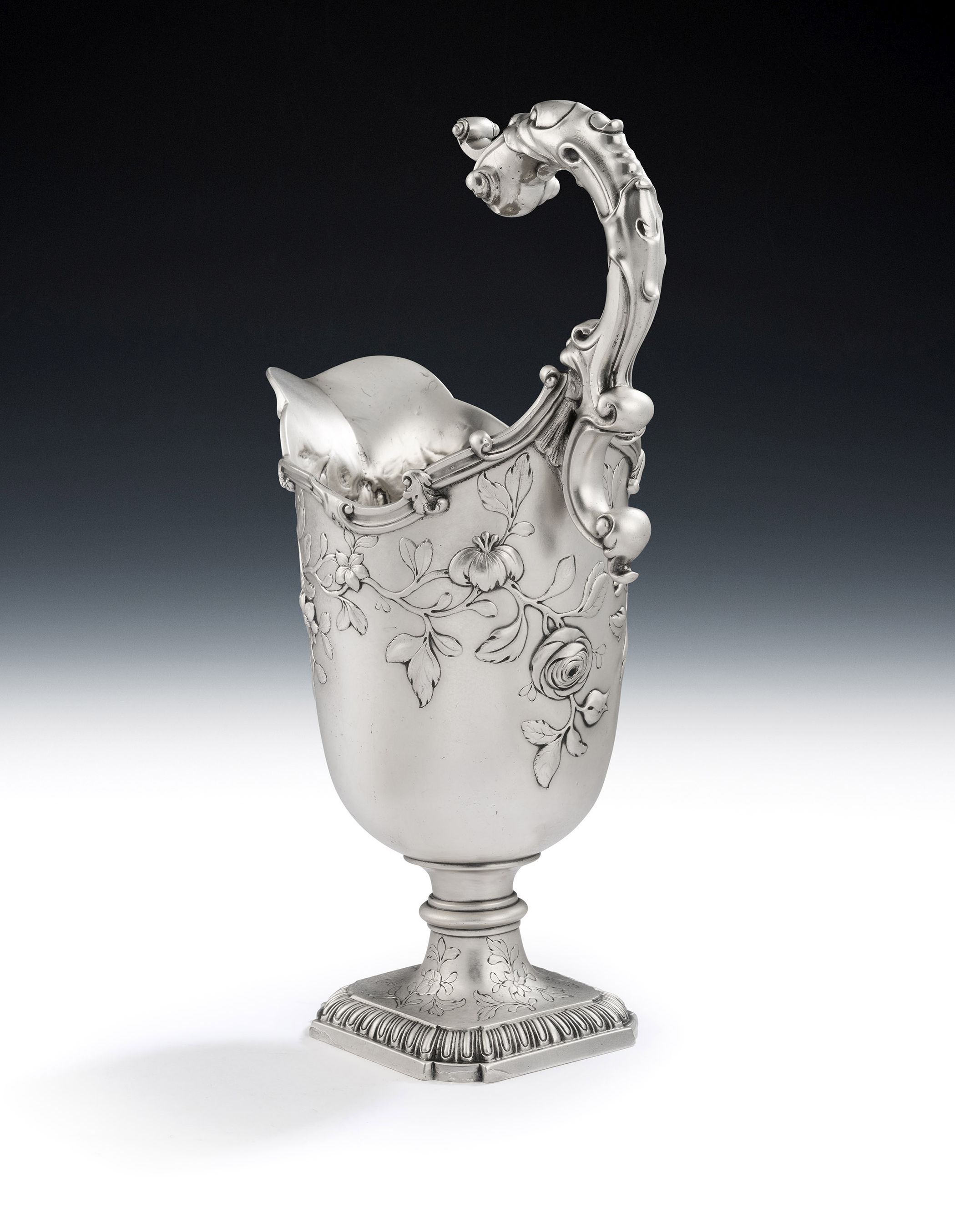
An important George II Rococo Helmet Shaped Ewer made in London in 1758 by Thomas Heming.
375594
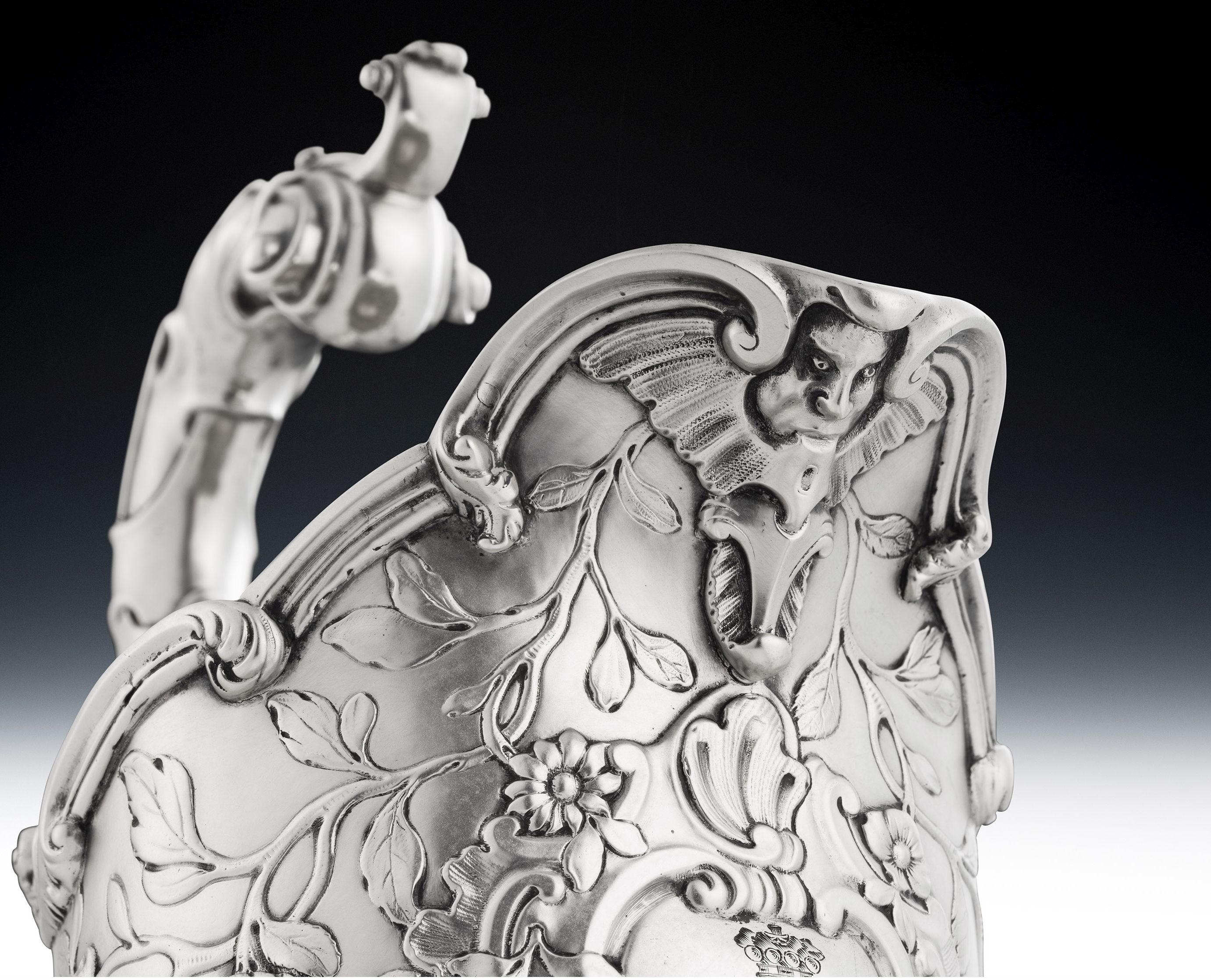
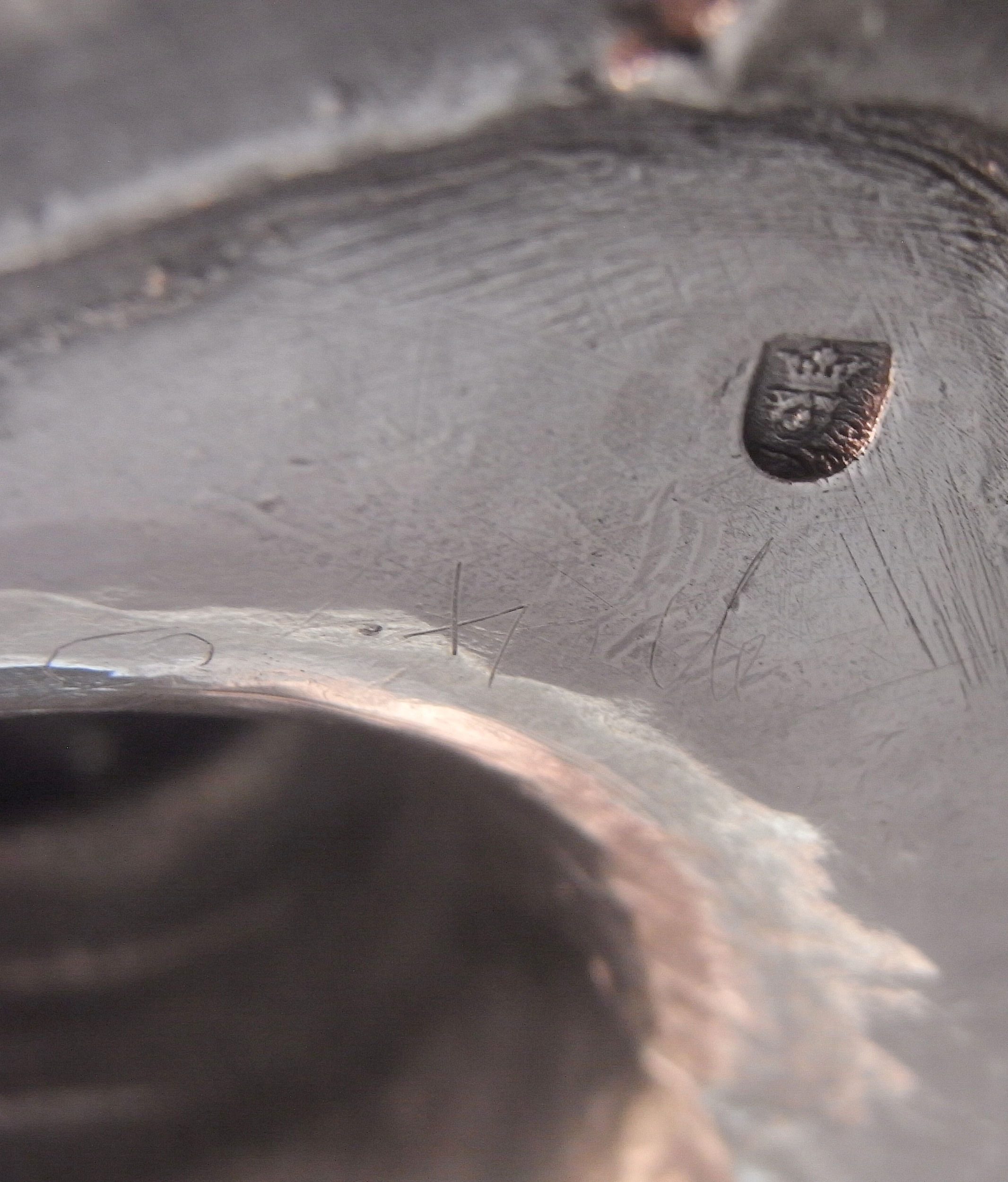
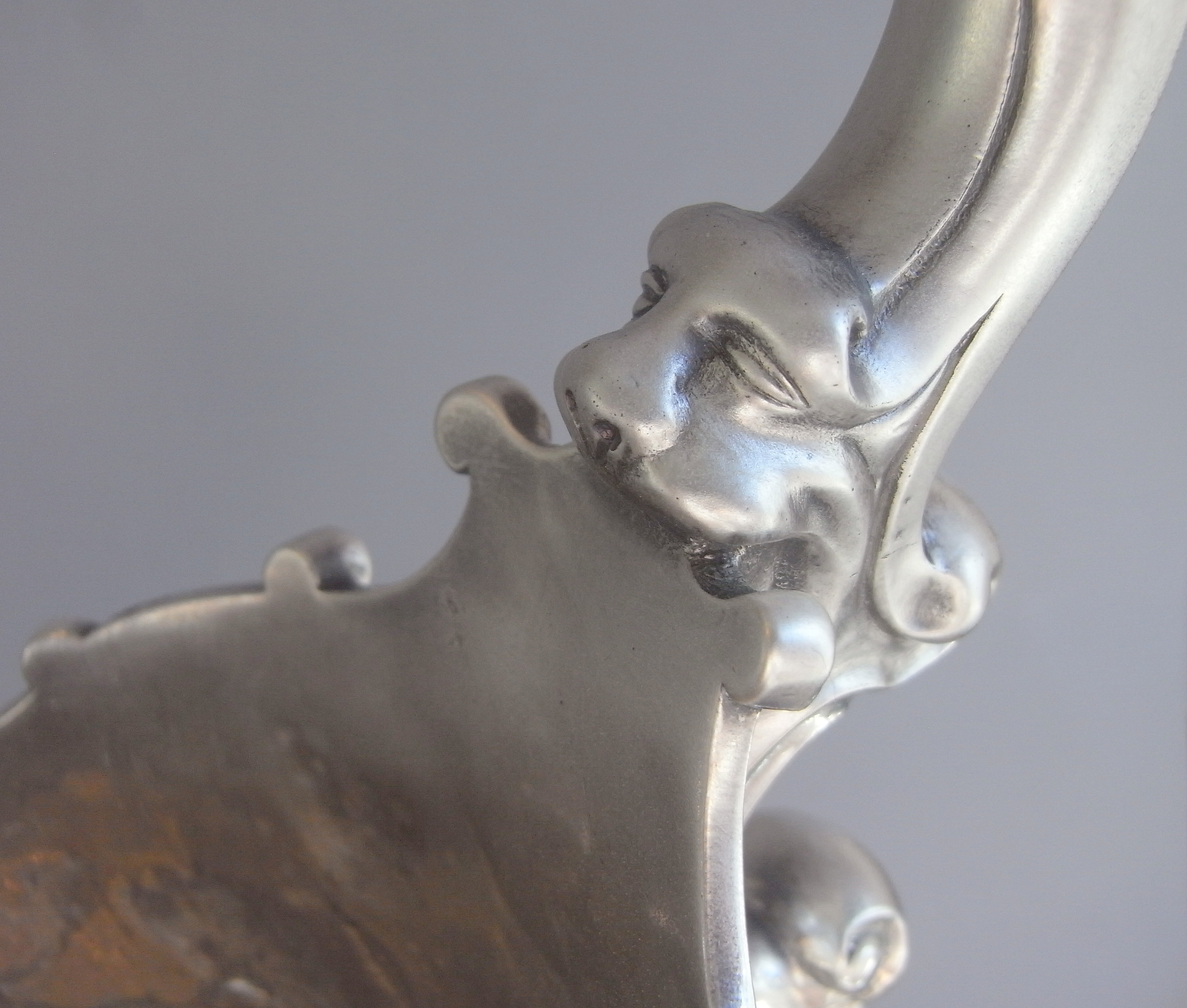
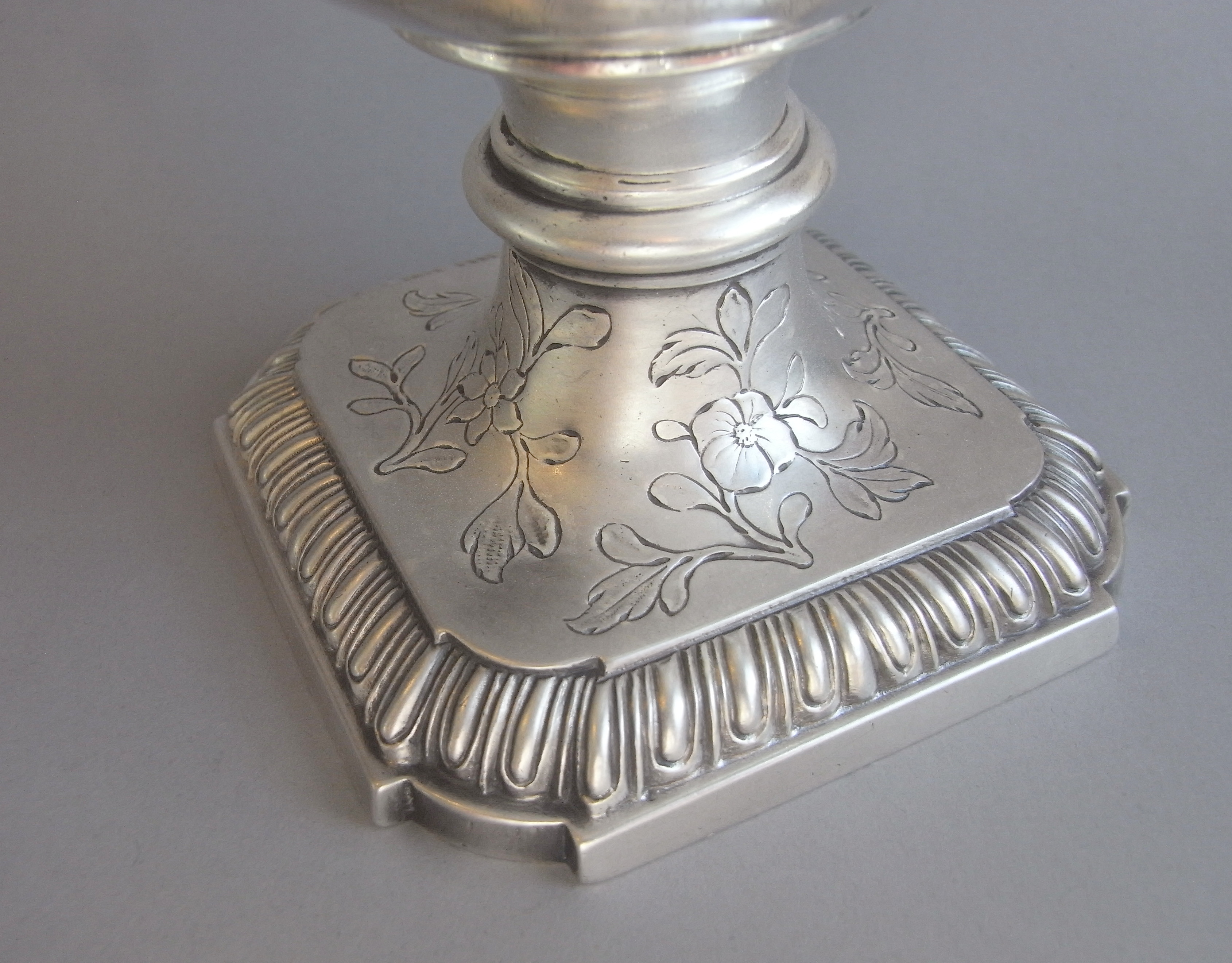
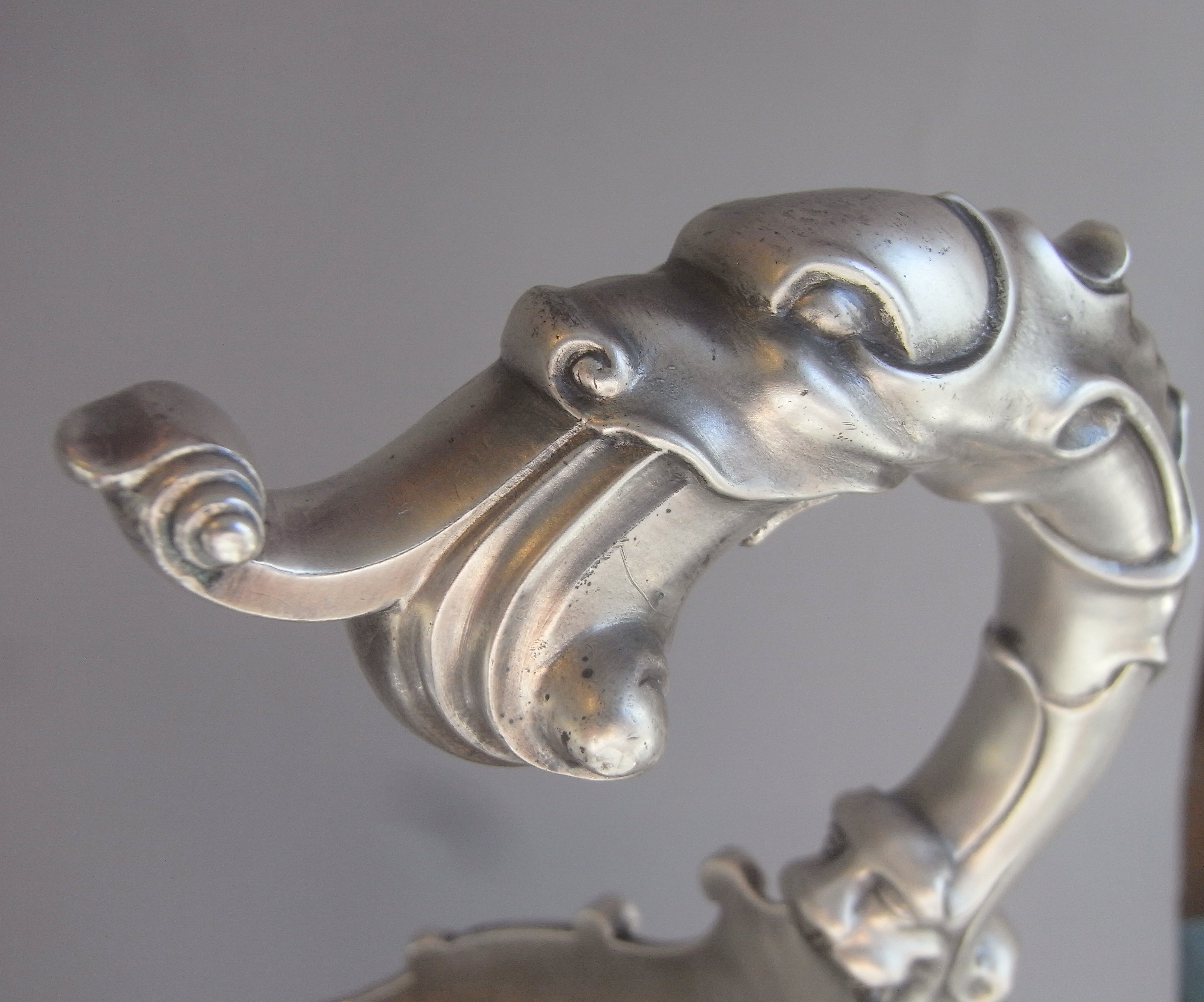
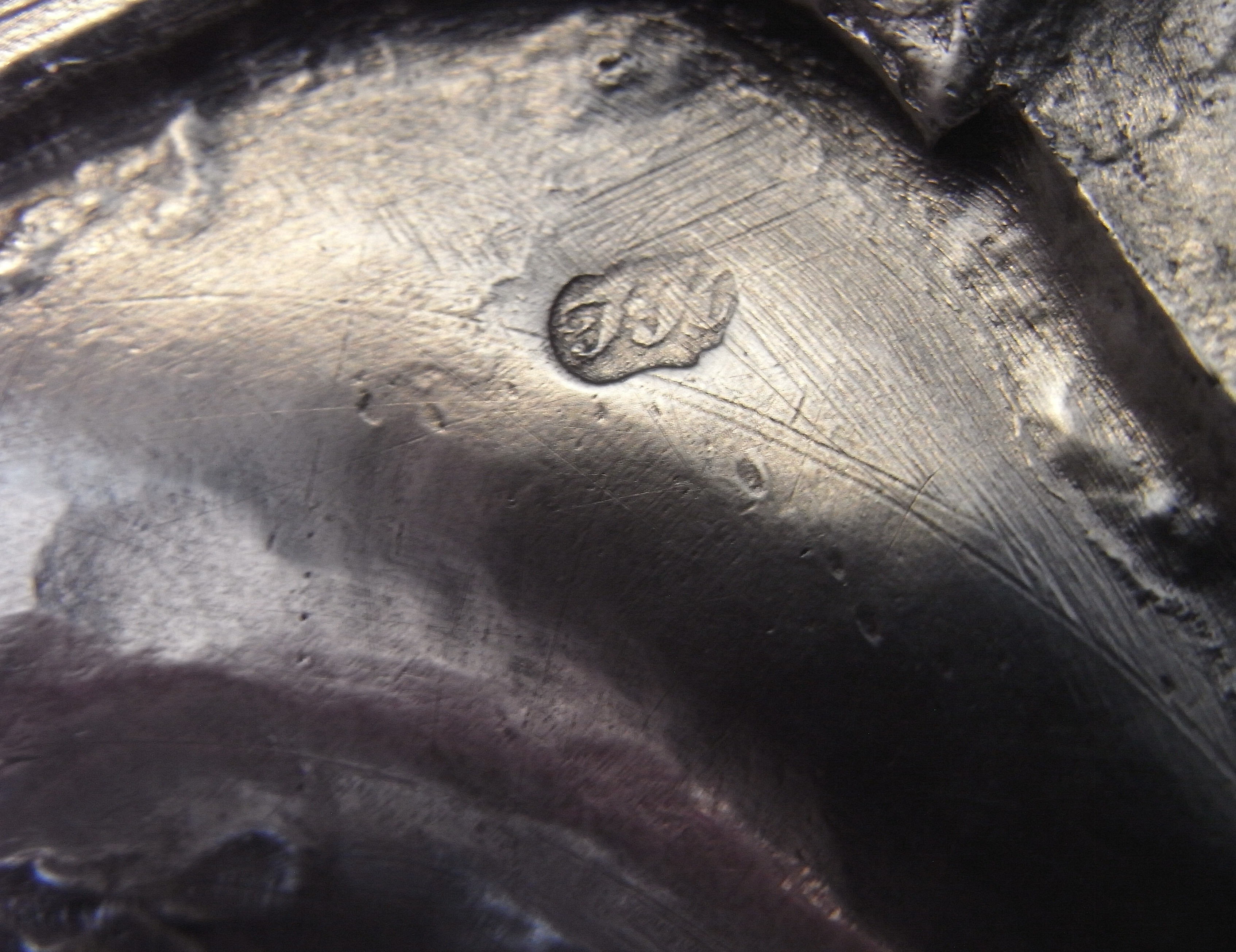
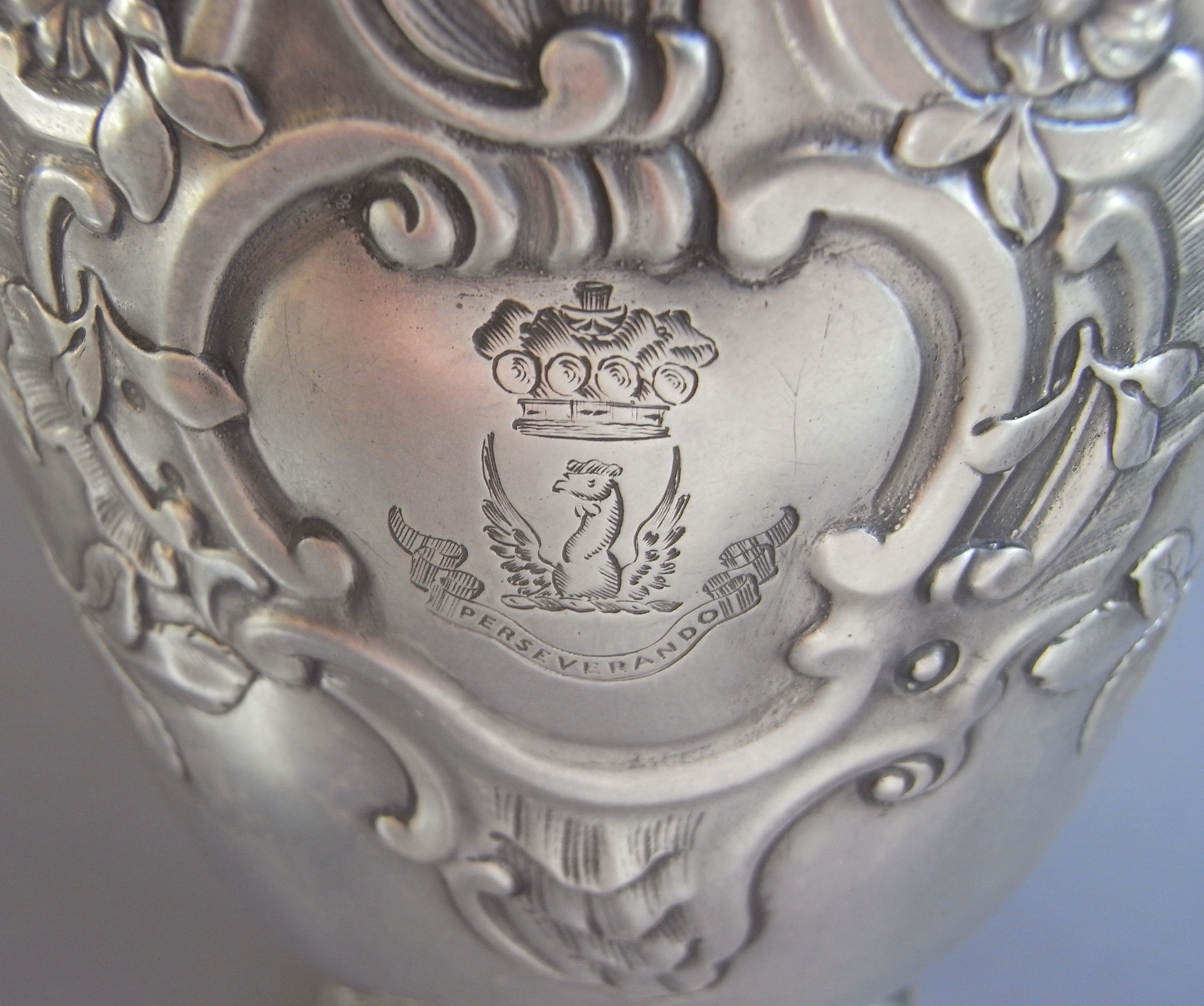
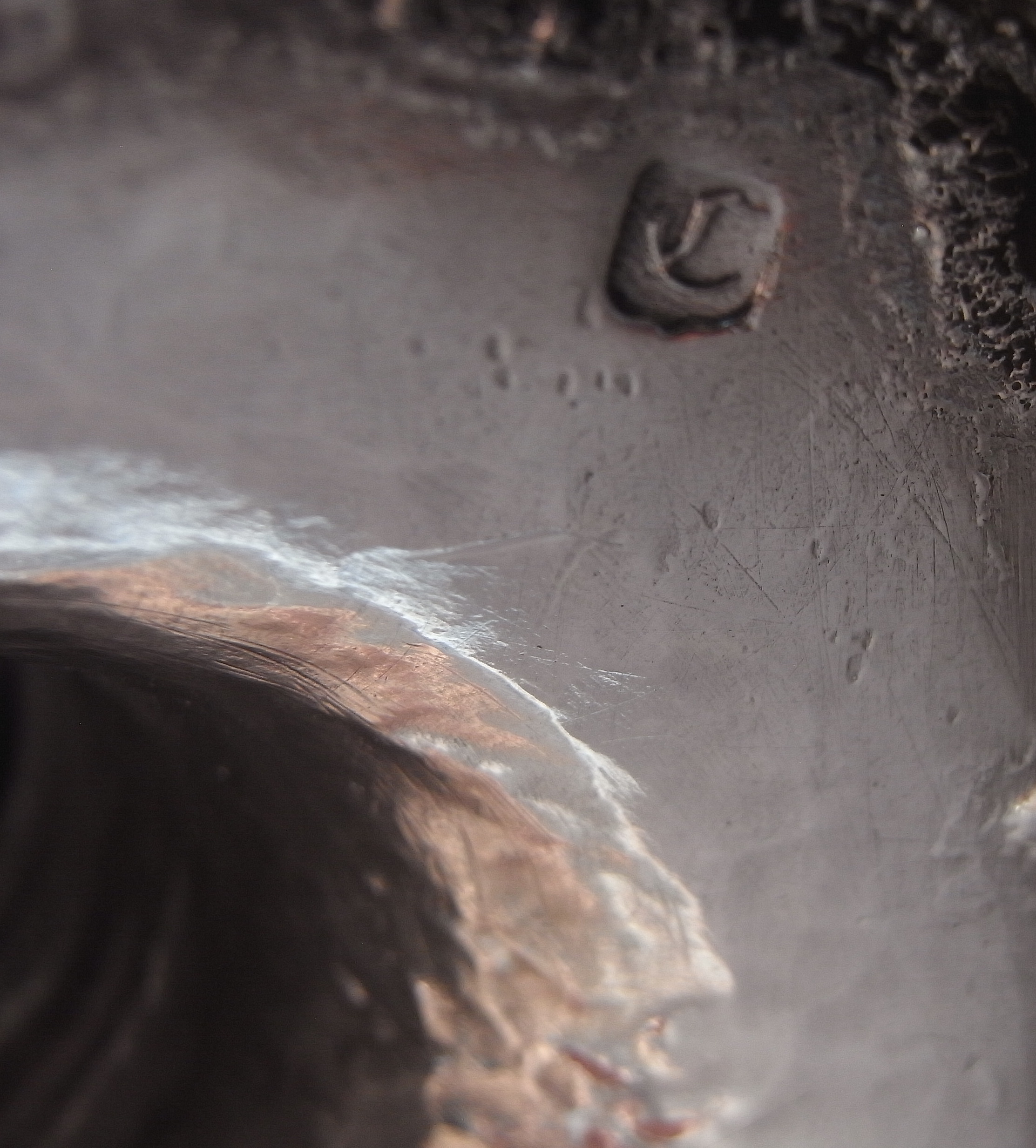
The Ewer stands on a stepped square foot, with inset corners, decorated with a band of gadrooning. The foot rises to plain baluster bands and displays engraved floral and foliate sprigs. The main body has a distinctive helmet form with shaped rim decorated with applied scrolls. The underside of the spout displays a winged mask, with leaf capped motif underneath. The main body is beautifully chased with trailing foliage and raying flower heads. The front displays a Rococo scroll, and shell detail, cartouche which is engraved with a Crest with the Motto " Perseverando" engraved on a banner below. This is all surmounted by the coronet of a Baron. The unusual double scroll handle is decorated with ribbing and the top section issues from the head of a fantastical sea monster and a dogs head moulding is shown where the bottom section of the handle is attached to the main body. The Jug is in quite excellent condition and is fully marked in the foot. It shows a French influence of design which was almost certainly inherited from Heming's Master, Peter Archambo. It is also interesting to see the dog and seamonster motifs which are seen in the highly decorated work of Heming. Considering its size and weight, the Ewer has a height, to the top of the handle, of 12 inches, a length, handle to spout, of 7 inches and a weight of 31oz.
The decoration of this ewer is almost identical to that of a ewer in the royal toilet service made by Thomas Heming in 1766 for Queen Caroline Matilda of Denmark, posthumous daughter of Frederick, Prince of Wales, and sister to George III. Now in the collection of Kunstindustrie Museum, Copenhagen, Queen Caroline's silver-gilt toilet service consists of thirty pieces in a fitted case. Arthur Grimwade surmised that Heming reused the mouldings of the Royal service for another toilet service that he made two years later, the Williams-Wynne service ("Royal Toilet Services in Scandinavia," The Connoisseur, April 1956, p. 175).
This present ewer was most likely part of a toilet service produced after the Danish Royal service and the Williams-Wynne service. An almost identically decorated silver-gilt vase-shaped powder pot by Heming, 1758, engraved with the Royal Crown and cypher of George II, sold at Christie's, London, March 20, 1963, lot 57. Another silver-gilt ewer by Heming, circa 1755, similarly decorated but only 11in. high, was in the Bernal Collection and sold at Christie's, London, May 3, 1910, lot 259.
As you will appreciate toilet services were not made in great numbers which would account for the very few known Ewers, made in this design, by Thomas Heming. With this one, we can only find four in existence. The crest on this ewer is that of Moreton beneath a Baron's coronet. The Moreton family married into the more prominent Ducie family in the 17th family. The Moreton family received Baronies of Ducie in 1720 and 1770 and they were further promoted to the Earldom of Ducie in 1837. At this time they also received the Barony of Moreton (to be used as a courtesy title by the Earl's eldest son in his father's lifetime). This crest therefore relates to one of the family Baronies, most likely that of Moreton. This Ewer was sold at Phillips, London, on 11th November 1977 was most recently in the collection of the late actor, Julian Sands Esq.
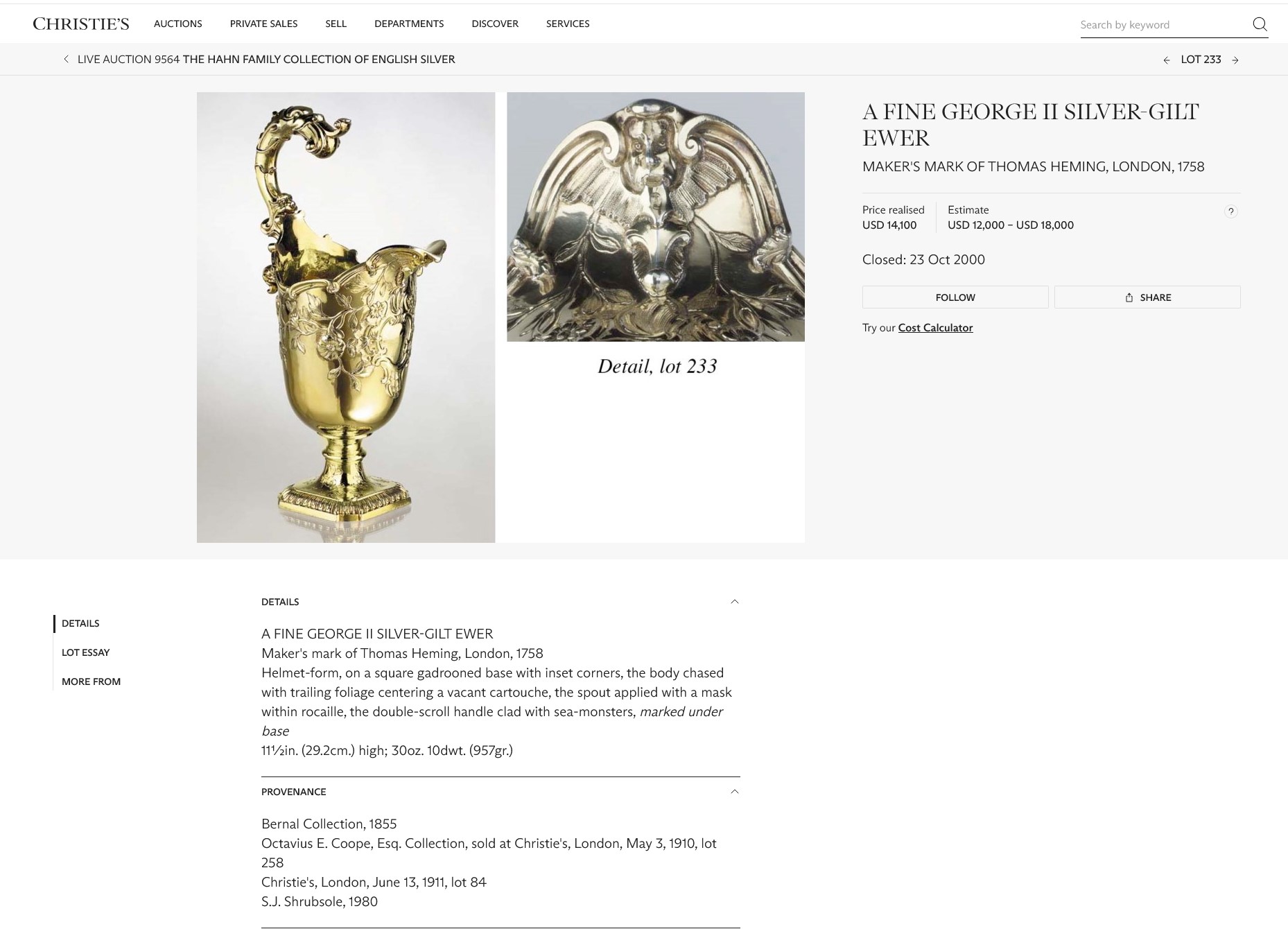
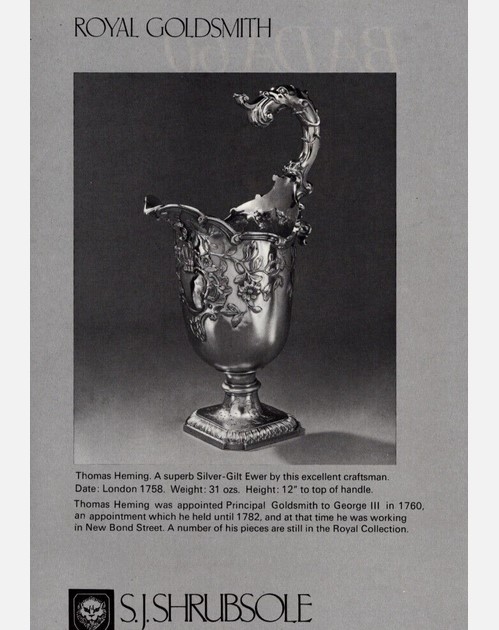
Due to its special nature, this piece will be featured in the Antiques Trade Gazette in January 2026 and we also attach an advertisement of S.J. Shrubsole, in New York, from 1978 which shows an identical silver gilt Ewer made by Heming also in 1758 which was sold at Christies in 2000, being part of the Haan family collection. The Christie's catalogue entry is also attached.
RELATED ITEMS








.This present ewer was most likely part of a toilet service produced after the Danish Royal service and the Williams-Wynne service. An almost identically decorated silver-gilt vase-shaped powder pot by Heming, 1758, engraved with the Royal Crown and cypher of George II, sold at Christie's, London, March 20, 1963, lot 57. Another silver-gilt ewer by Heming, circa 1755, similarly decorated but only 11in. high, was in the Bernal Collection and sold at Christie's, London, May 3, 1910, lot 259.As you will appreciate toilet services were not made in great numbers which would account for the very few known Ewers, made in this design, by Thomas Heming. With this one, we can only find four in existence. The crest on this ewer is that of Moreton beneath a Baron's coronet. The Moreton family married into the more prominent Ducie family in the 17th family. The Moreton family received Baronies of Ducie in 1720 and 1770 and they were further promoted to the Earldom of Ducie in 1837. At this time they also received the Barony of Moreton (to be used as a courtesy title by the Earl's eldest son in his father's lifetime). This crest therefore relates to one of the family Baronies, most likely that of Moreton. This Ewer was sold at Phillips, London, on 11th November 1977 was most recently in the collection of the late actor, Julian Sands Esq. Due to its special nature, this piece will be featured in the Antiques Trade Gazette in January 2026 and we also attach an advertisement of S.J. Shrubsole, in New York, from 1978 which shows an identical silver gilt Ewer made by Heming also in 1758 which was sold at Christies in 2000, being part of the Haan family collection. The Christie's catalogue entry is also attached. )