
An outstanding George III Neo Classical Epergne made in London in 1784 by James Young.
An outstanding George III Neo Classical Epergne made in London in 1784 by James Young.
375772
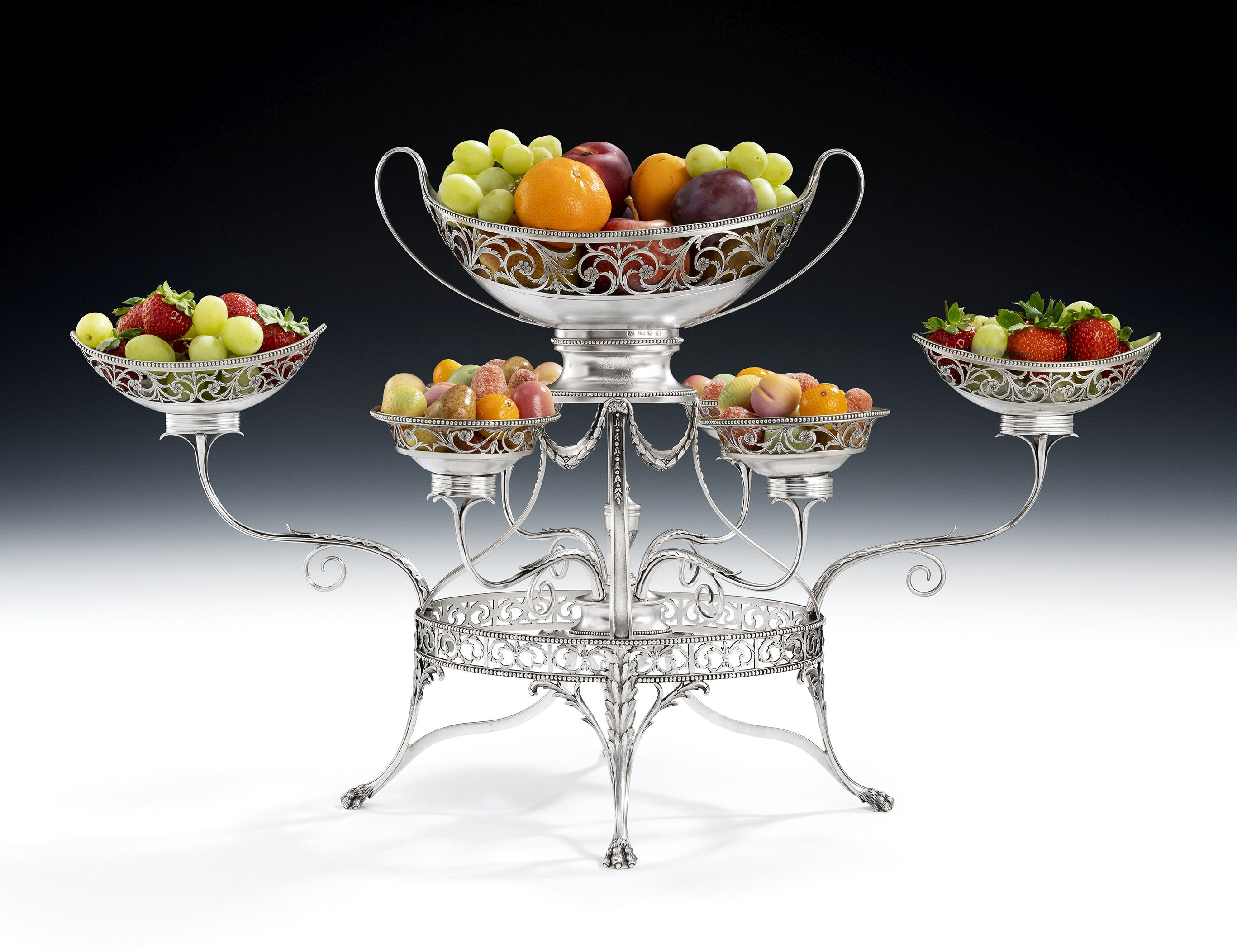
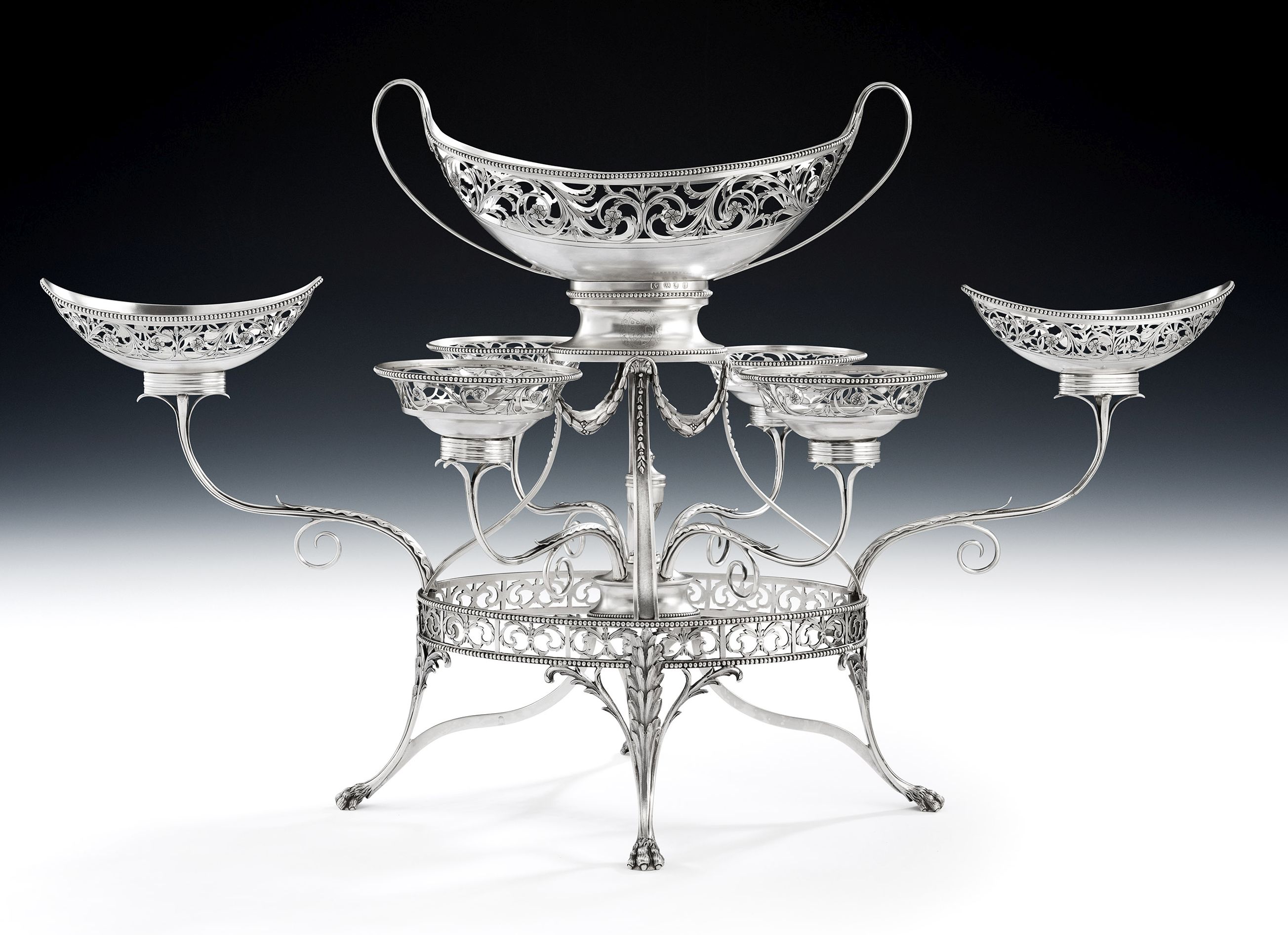
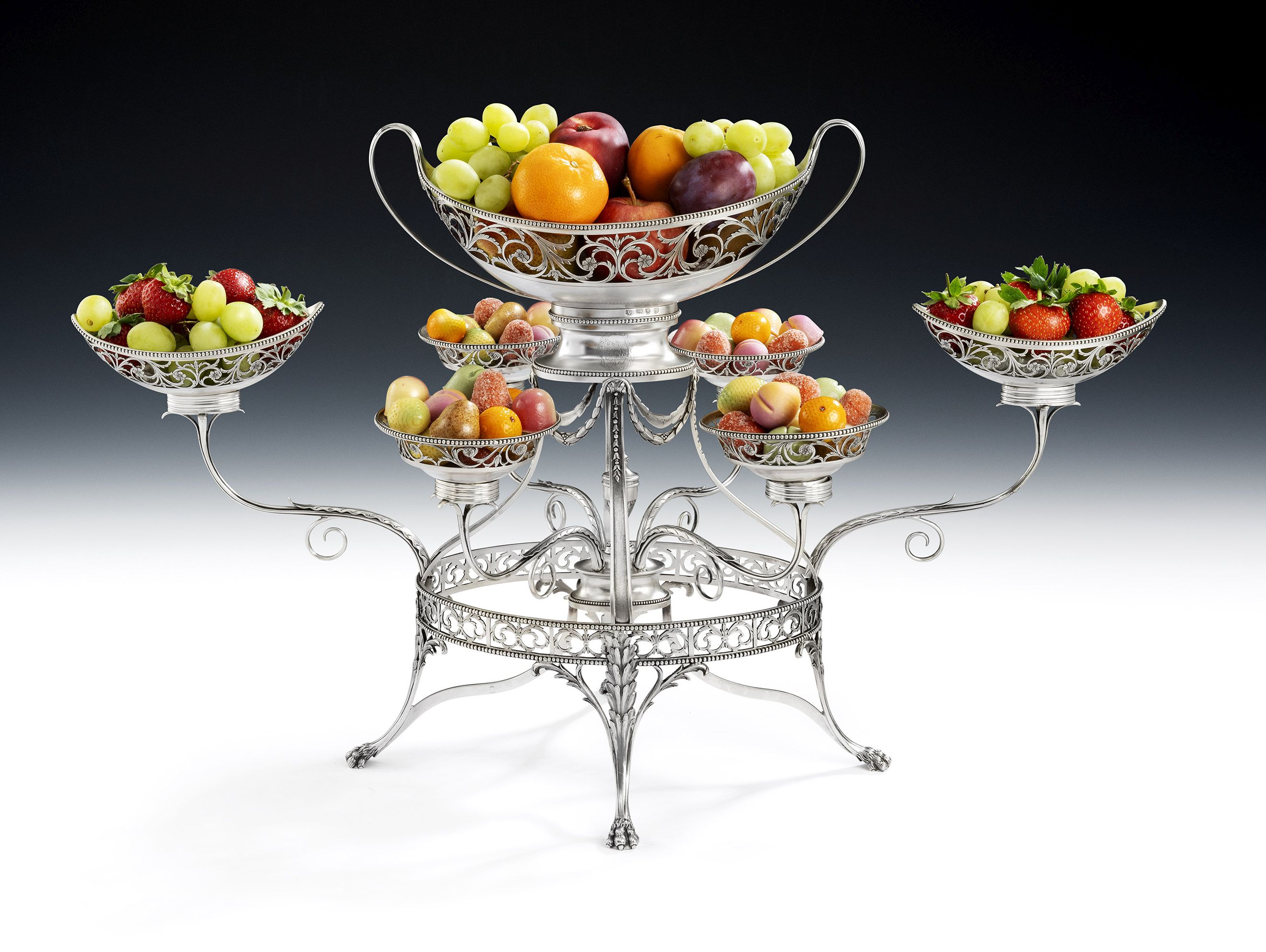
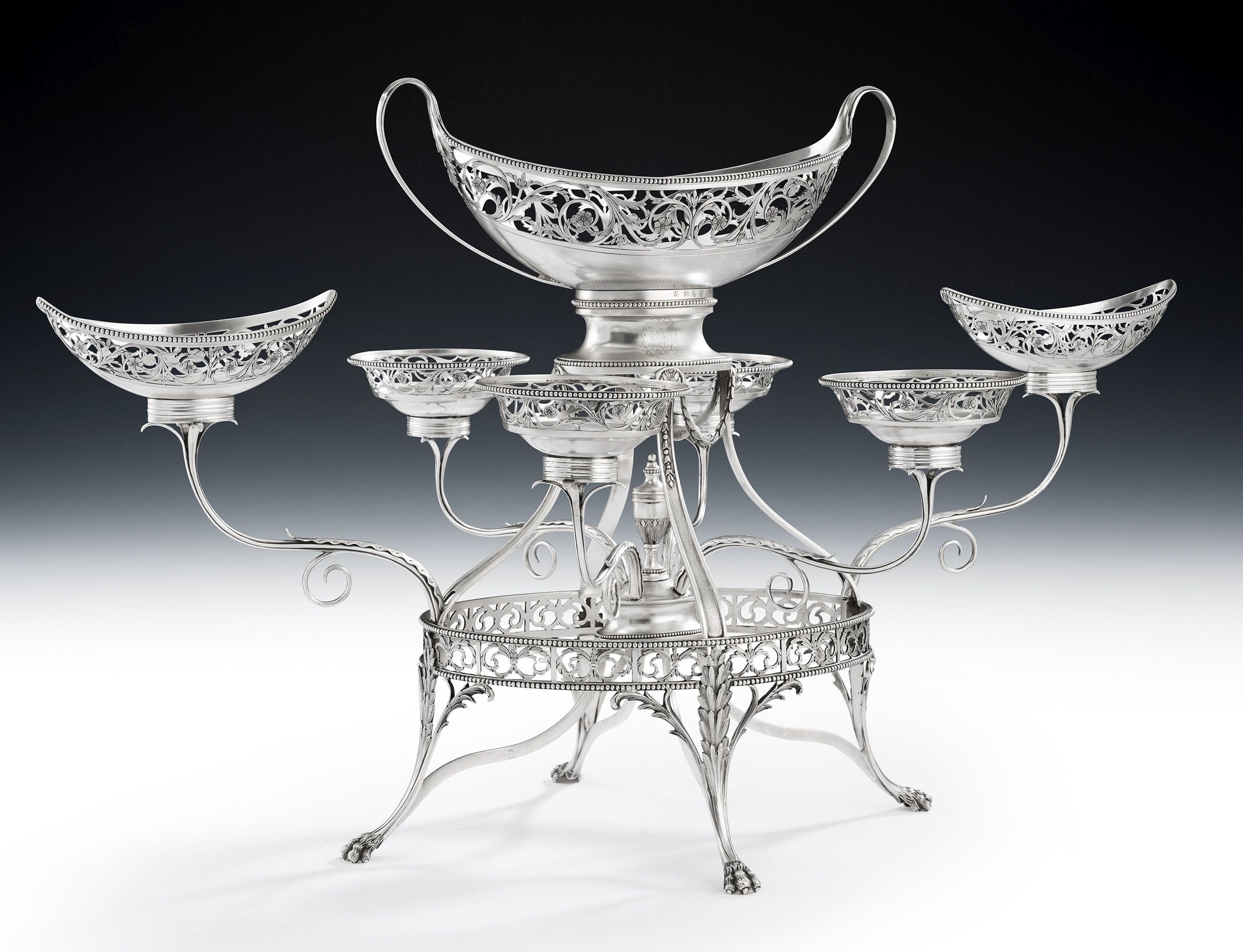
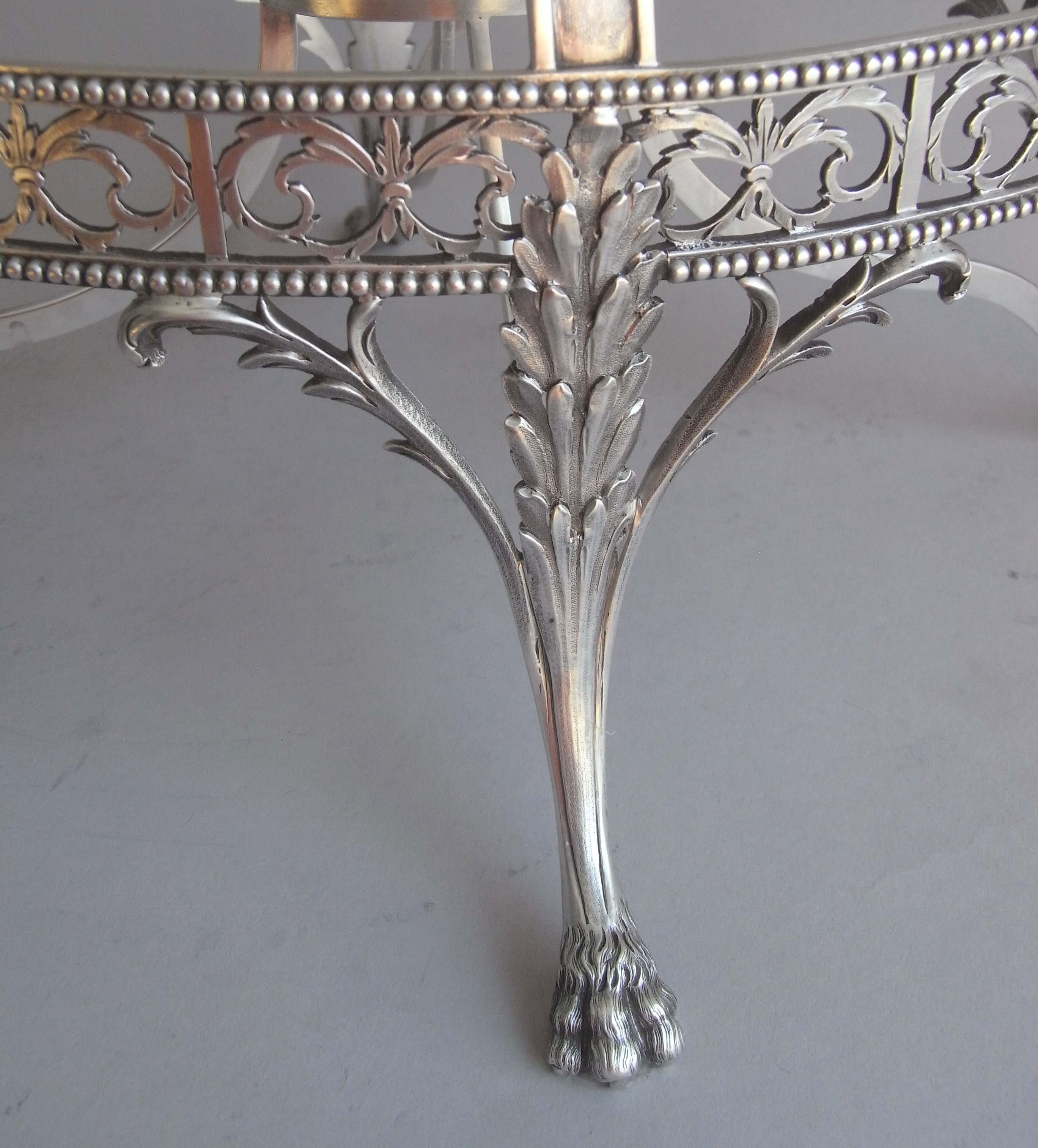
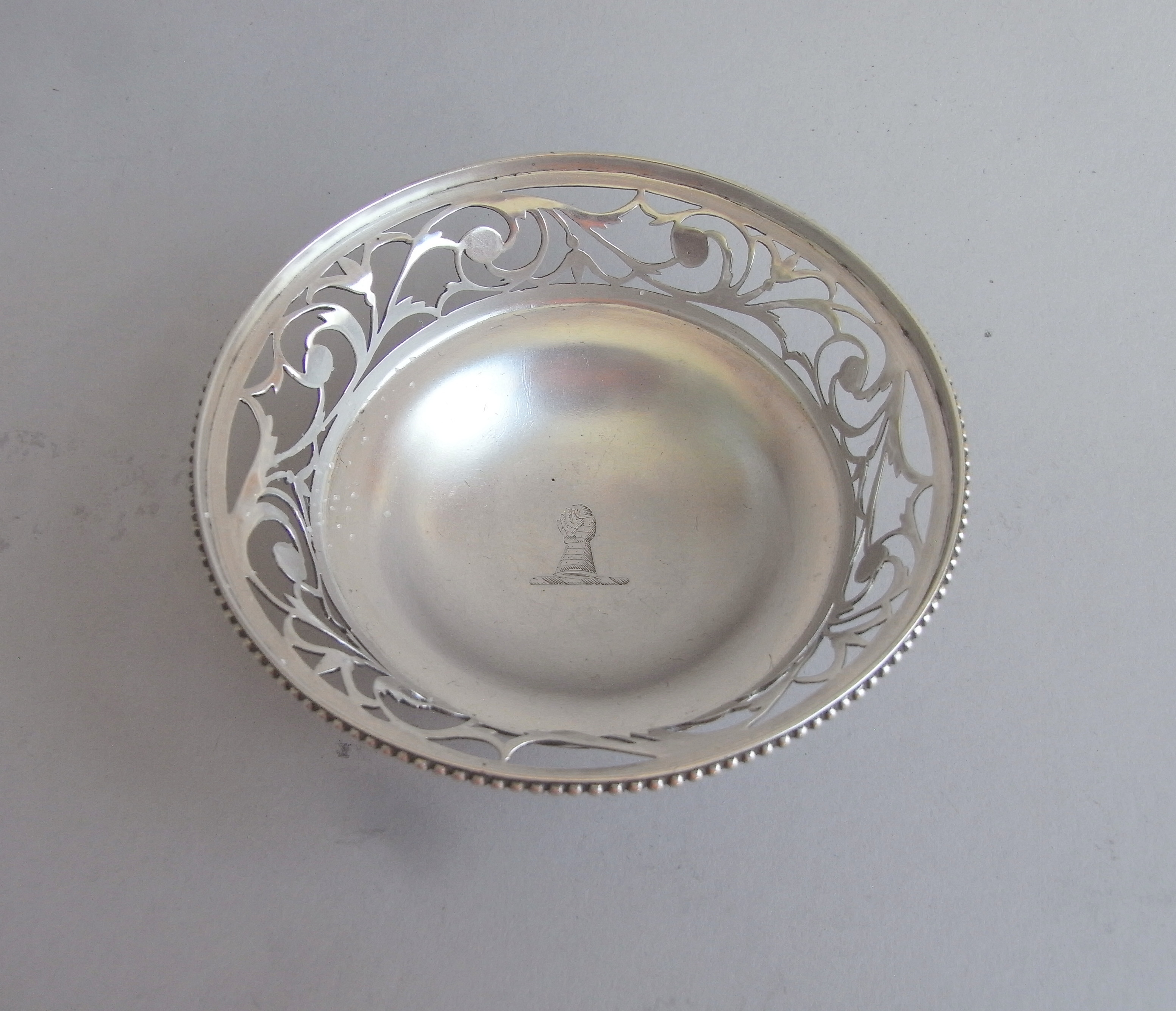
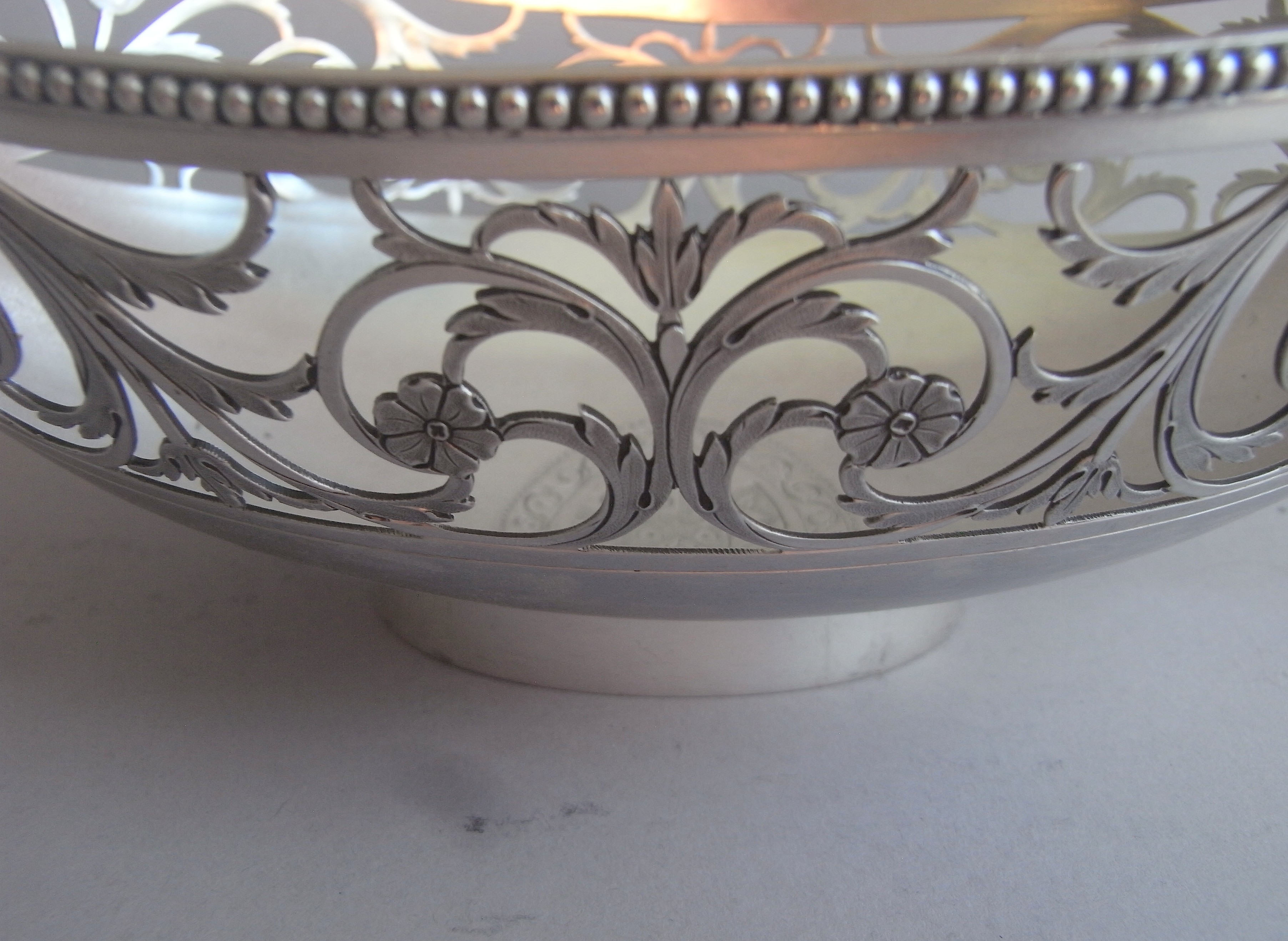
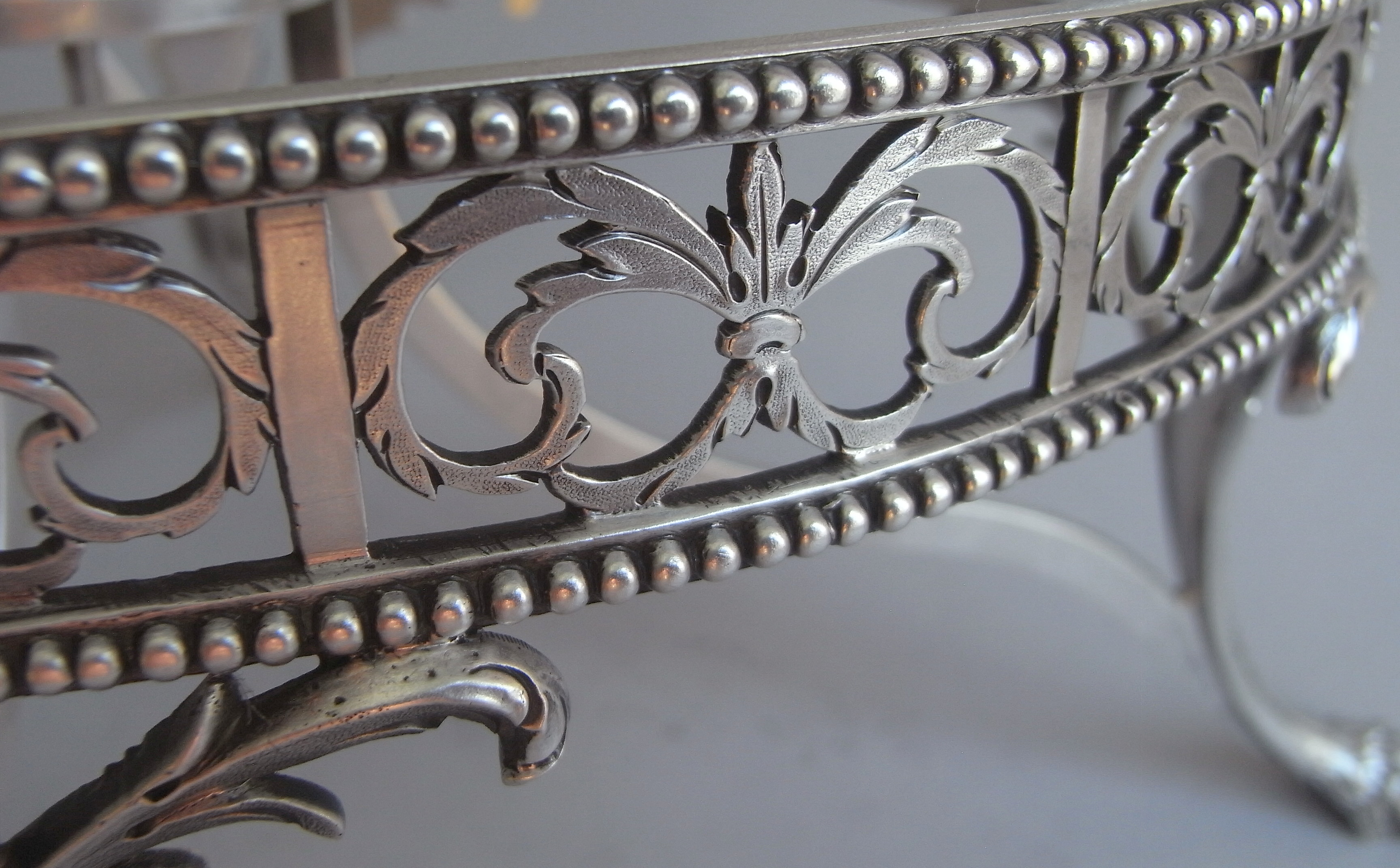
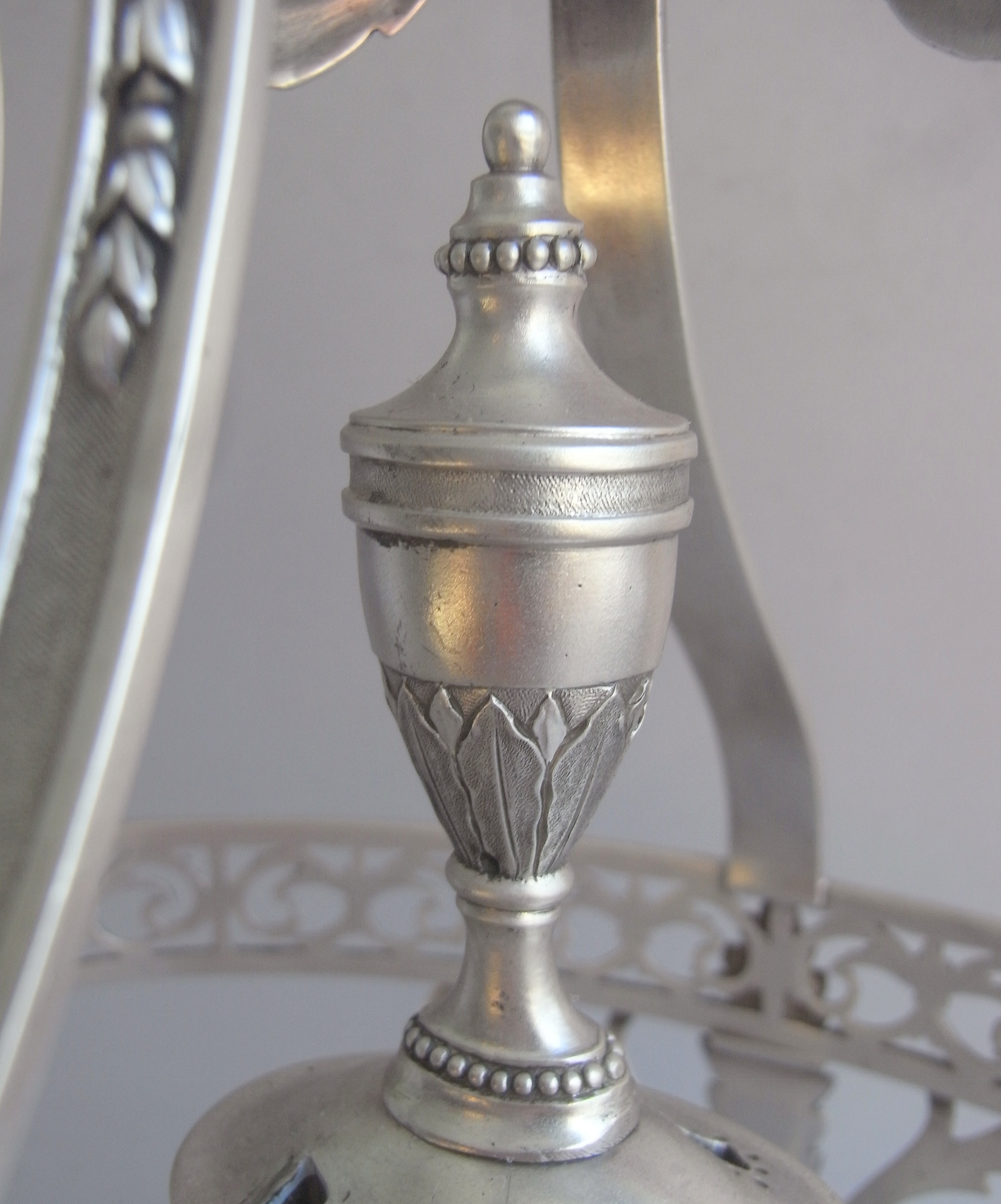
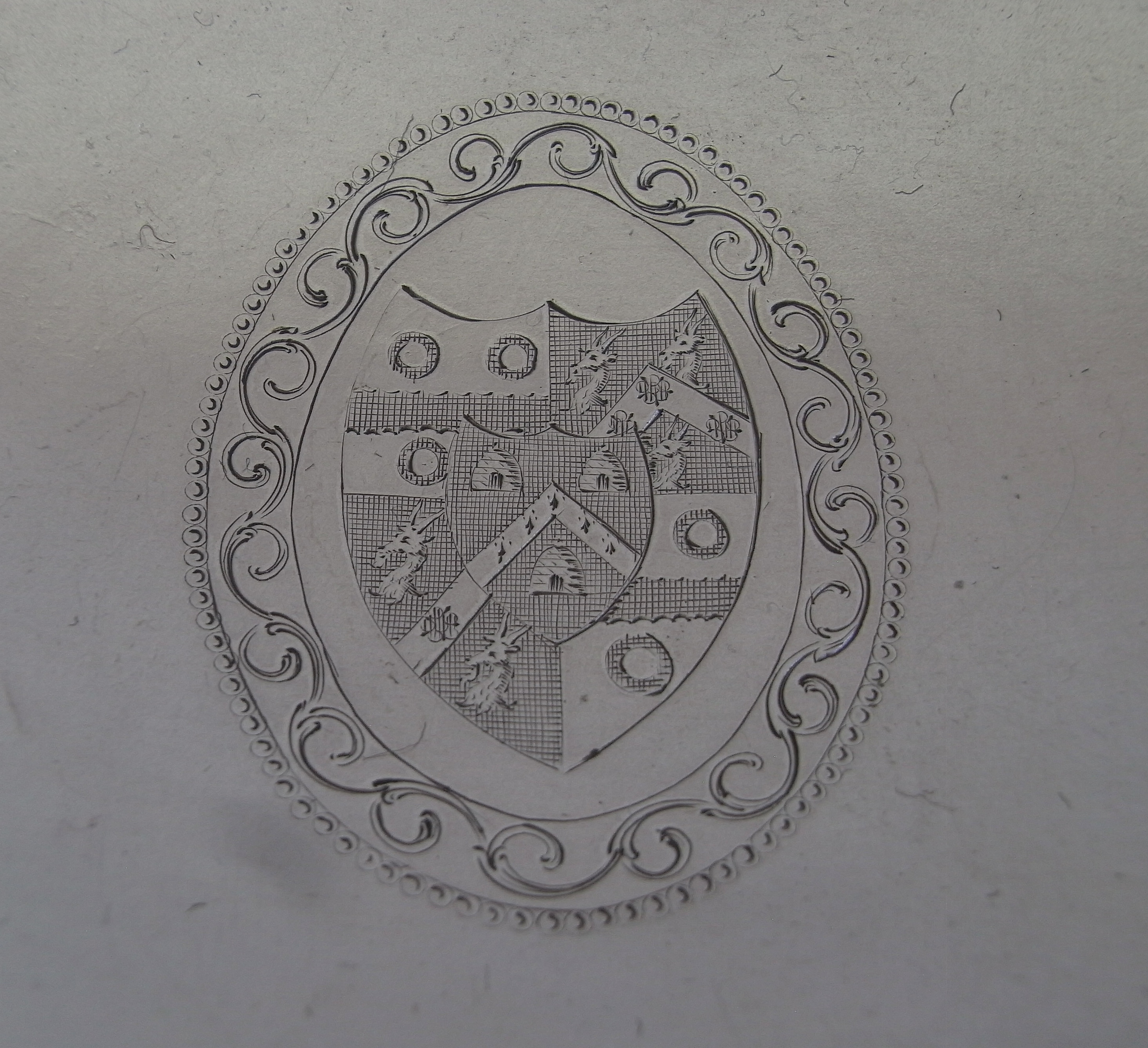
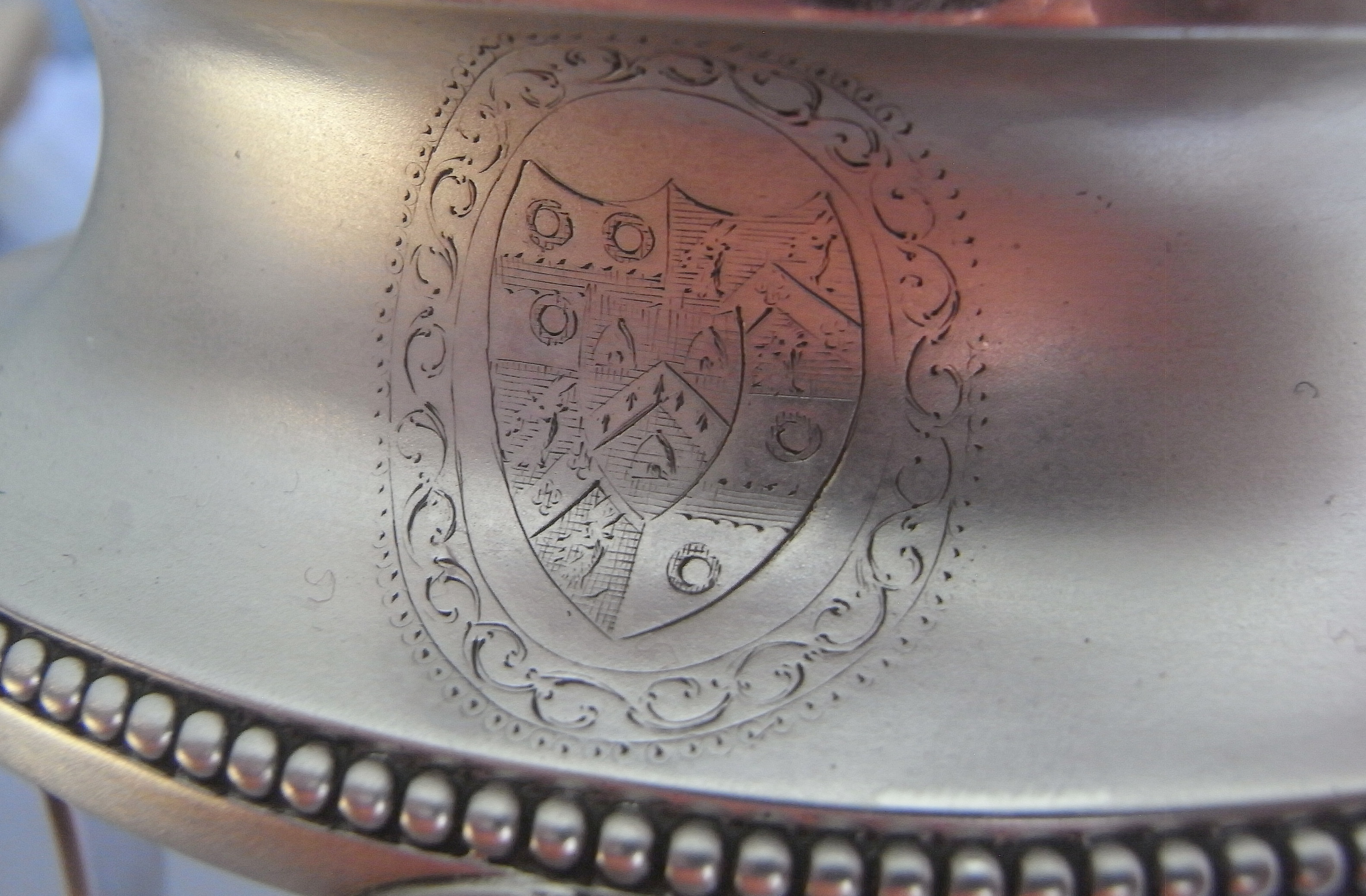
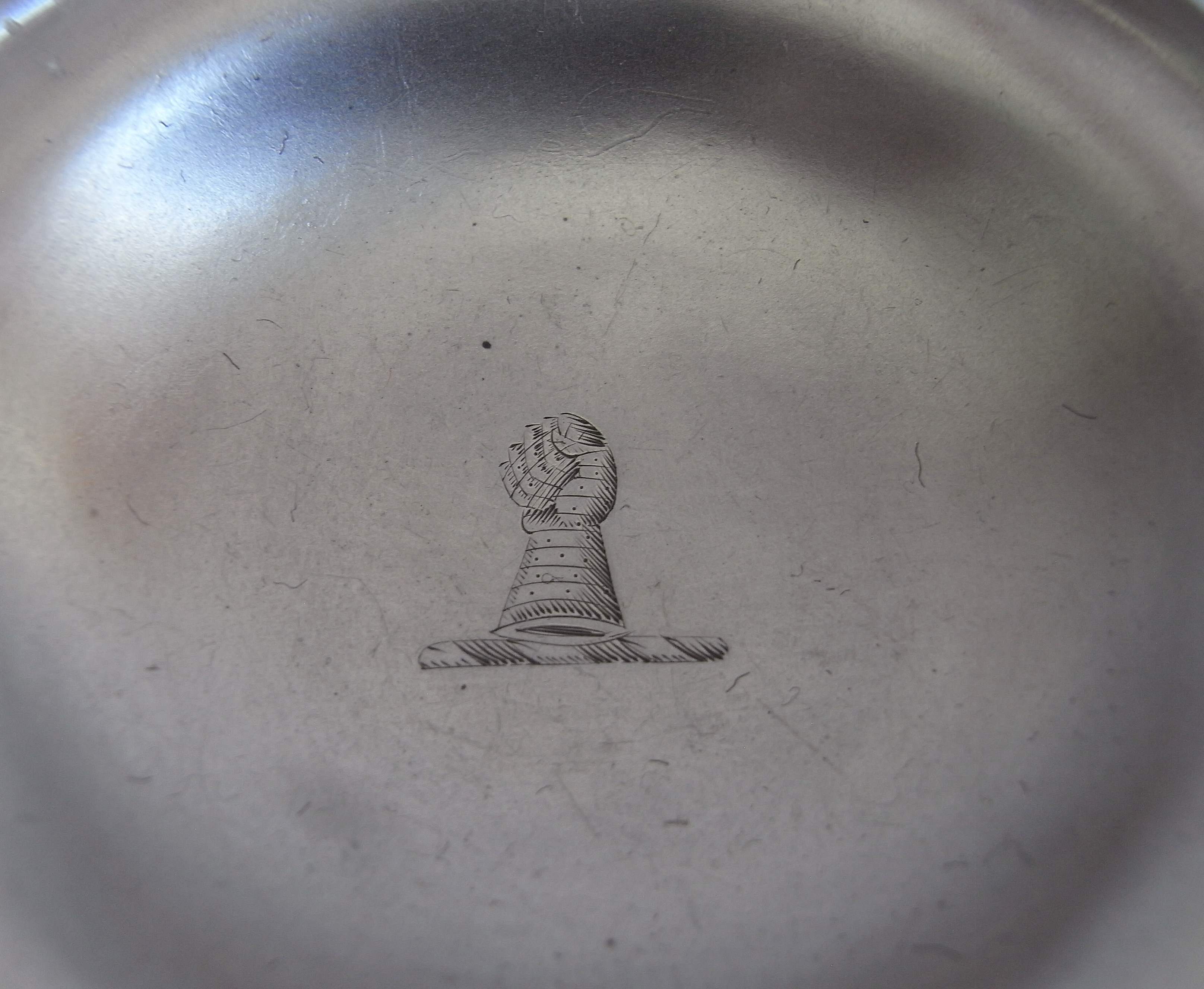
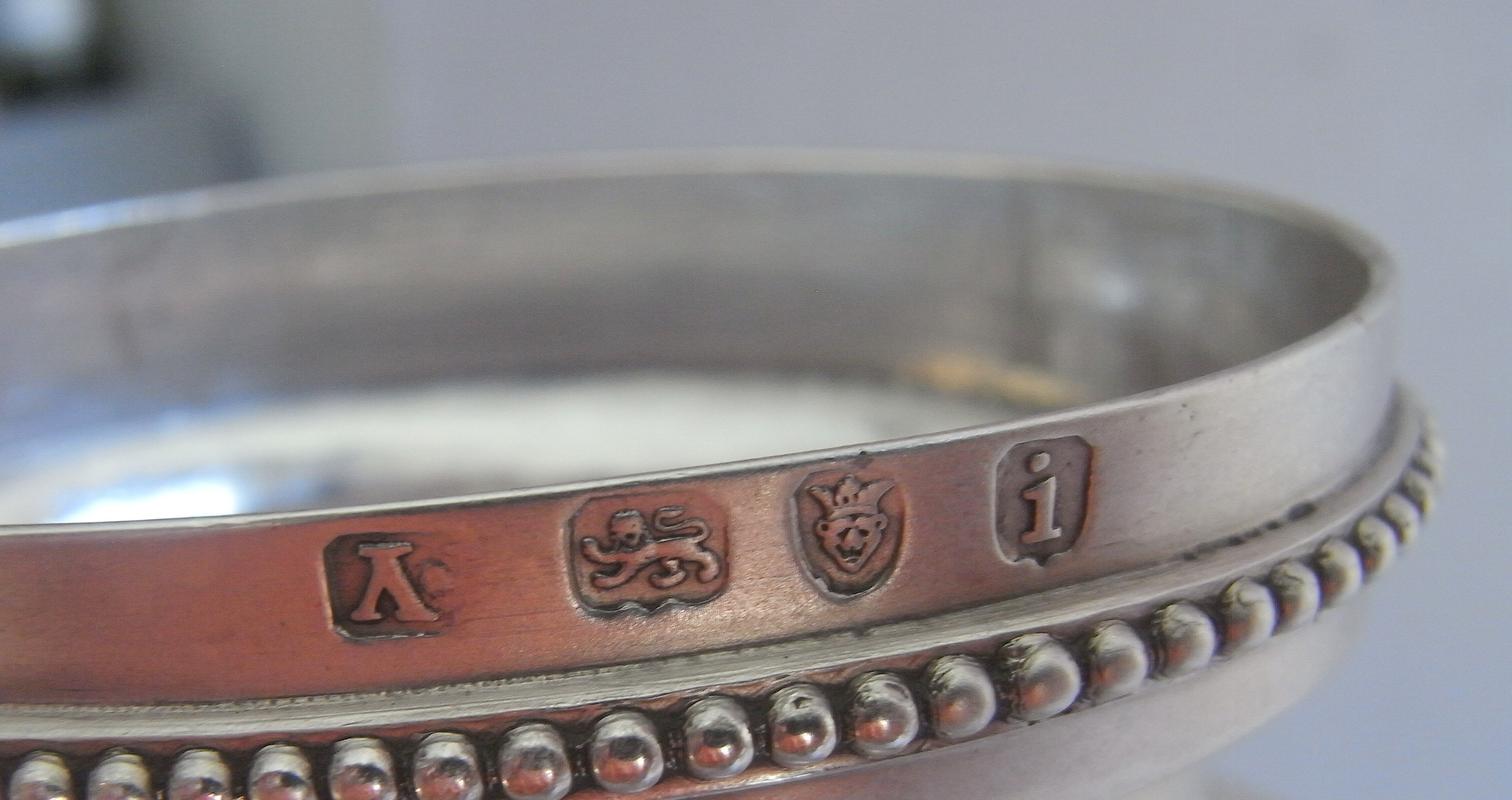
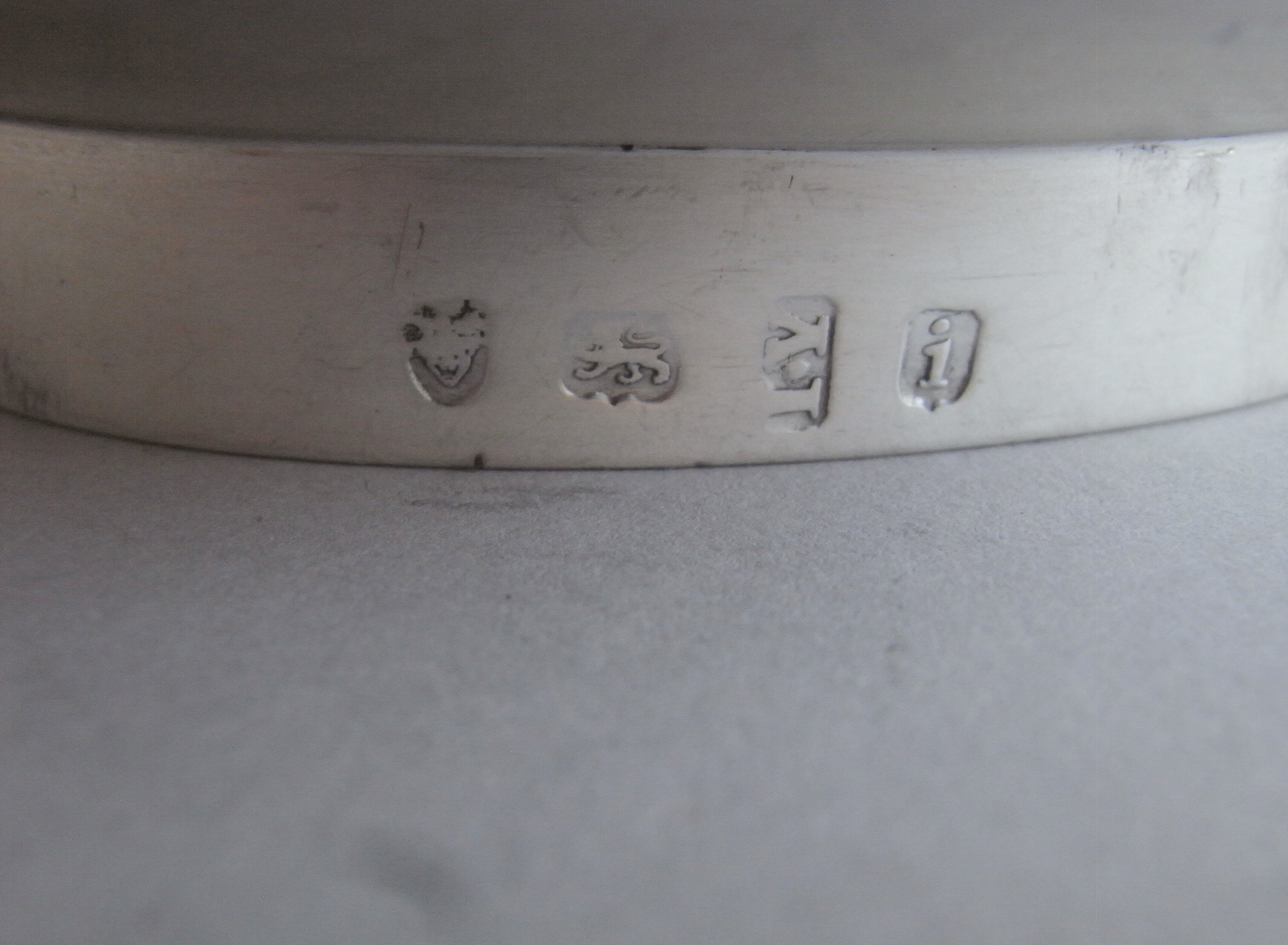
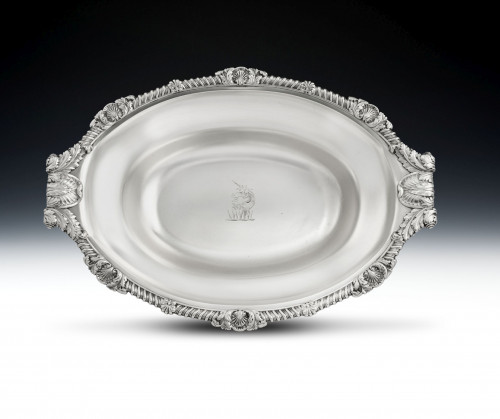
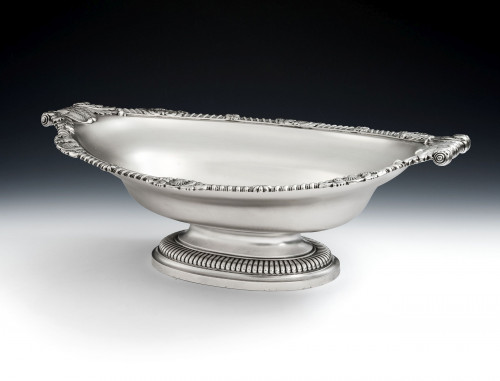
The openwork frame stands on slender acanthus paw feet below a pierced horizontal frieze of interlocking foliate scrolls, within a double beaded frame. The frame rises to a beaded oval platform where the central "boat" shaped basket sits. This displays a pierced border of foliate scrolls and flowerheads, a beaded rim and two reeded scroll handles. The six leaf capped arms fit into the central frame and each is fitted with an additional basket, two larger oval ones on each side and four smaller round detachable baskets in the centre. All of the smaller baskets have a beaded rim and all are pierced with the same foliate scroll and flower head band. The centre displays a Neo-Classical Urn decorated with beading and acanthus spears. The neck and bowl of the large basket are engraved with a contemporary shield shaped Armorial contained within a bright cut oval cartouche. Each of the smaller baskets are engraved in the bowl with a contemporary Crest. The Epergne is in quite excellent condition and is marked in no less than fourteen different locations.
The arms are those of the Wegg family (of Colchester, Essex) quartering another (Sable on a chevron Argent 3 cinquefoils between 3 antelope's heads erased not in Papworth but probably a slight variant on Cowper) with (Sable a chevron Ermine between 3 beehives for Lehook). The crest is also Wegg.
Samuel Wegg (1723-1802) was the son of George Wegg and Anna Maria Cowper. He married Elizabeth Lehook (d. 1799). Samuel Wegg was the second son of George Wegg of Cochester, Essex, a merchant tailor, born on 17 November 1723. His mother was Anna Maria Cowper, daughter of John Cowper of Cornhill, London; she was the third wife of George Wegg. He attended schools at Colchester and Bury St. Edmunds before being admitted to St. John’s, Cambridge. He was admitted to Gray’s Inn in 1741 and admitted to the Bar in 1746. Samuel Wegg received his first stock in the Company at the age of 25, on the death of his father in 1748. He was elected a member of the Committee of the Hudson’s Bay Company in 1760; and served as Governor from 1782-1799. Wegg was elected a Fellow of the Royal Society in 1753 and played an important role in the relationship between the Society and the Company. He died at his own in Action in December 1802.
James Young was an exceptional silversmith, whose work does not survive in great quantity. He was apprentice to John Muns and had workshops at 32, Aldersgate Street, when this piece was made. A.G. Grimwade in “London Goldsmiths, 1697-1837” emphasises that Young’s work alone or jointly is of elegant Neo-Classical design and fine finish, particularly his epergnes.”
The Epergne Centrepiece was introduced into English silver in the mid-eighteenth century. These pieces were used in the centre of the dining table for holding fruit and petit fours and for decoration when they were not in use. As you will appreciate they would make a definite statement on the table with exotic fruits cascading from the baskets.
Length: 26.5 inches, 66.25 cm.
Width: 17 inches, 42.5 cm.
Height: 17 inches, 42.5 cm.
Weight: 82oz.
RELATED ITEMS






 quartering another (Sable on a chevron Argent 3 cinquefoils between 3 antelope's heads erased not in Papworth but probably a slight variant on Cowper) with (Sable a chevron Ermine between 3 beehives for Lehook). The crest is also Wegg.Samuel Wegg (1723-1802) was the son of George Wegg and Anna Maria Cowper. He married Elizabeth Lehook (d. 1799). Samuel Wegg was the second son of George Wegg of Cochester, Essex, a merchant tailor, born on 17 November 1723. His mother was Anna Maria Cowper, daughter of John Cowper of Cornhill, London; she was the third wife of George Wegg. He attended schools at Colchester and Bury St. Edmunds before being admitted to St. John’s, Cambridge. He was admitted to Gray’s Inn in 1741 and admitted to the Bar in 1746. Samuel Wegg received his first stock in the Company at the age of 25, on the death of his father in 1748. He was elected a member of the Committee of the Hudson’s Bay Company in 1760; and served as Governor from 1782-1799. Wegg was elected a Fellow of the Royal Society in 1753 and played an important role in the relationship between the Society and the Company. He died at his own in Action in December 1802. James Young was an exceptional silversmith, whose work does not survive in great quantity. He was apprentice to John Muns and had workshops at 32, Aldersgate Street, when this piece was made. A.G. Grimwade in “London Goldsmiths, 1697-1837” emphasises that Young’s work alone or jointly is of elegant Neo-Classical design and fine finish, particularly his epergnes.”The Epergne Centrepiece was introduced into English silver in the mid-eighteenth century. These pieces were used in the centre of the dining table for holding fruit and petit fours and for decoration when they were not in use. As you will appreciate they would make a definite statement on the table with exotic fruits cascading from the baskets.Length: 26.5 inches, 66.25 cm.Width: 17 inches, 42.5 cm.Height: 17 inches, 42.5 cm.Weight: 82oz.)