
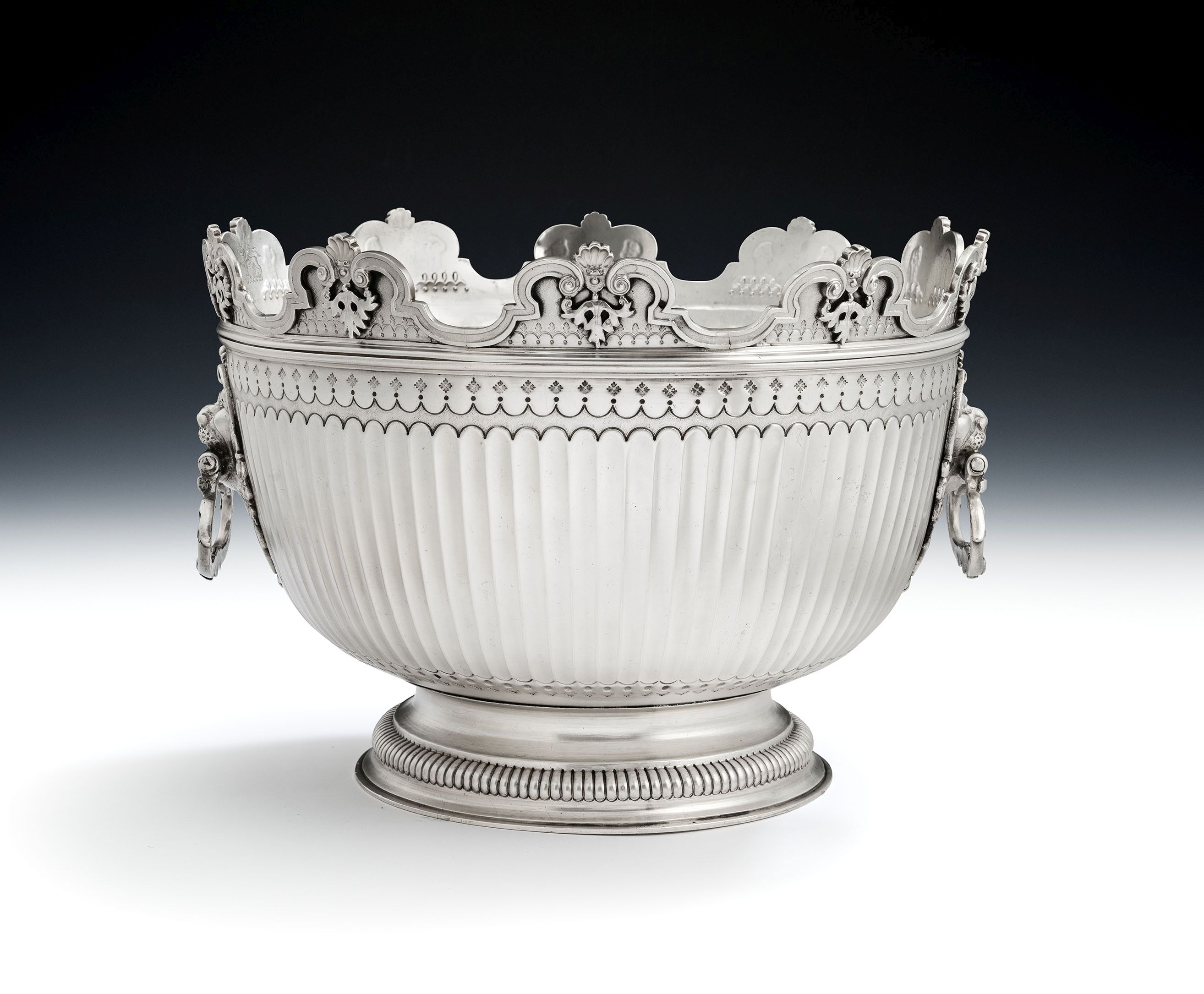
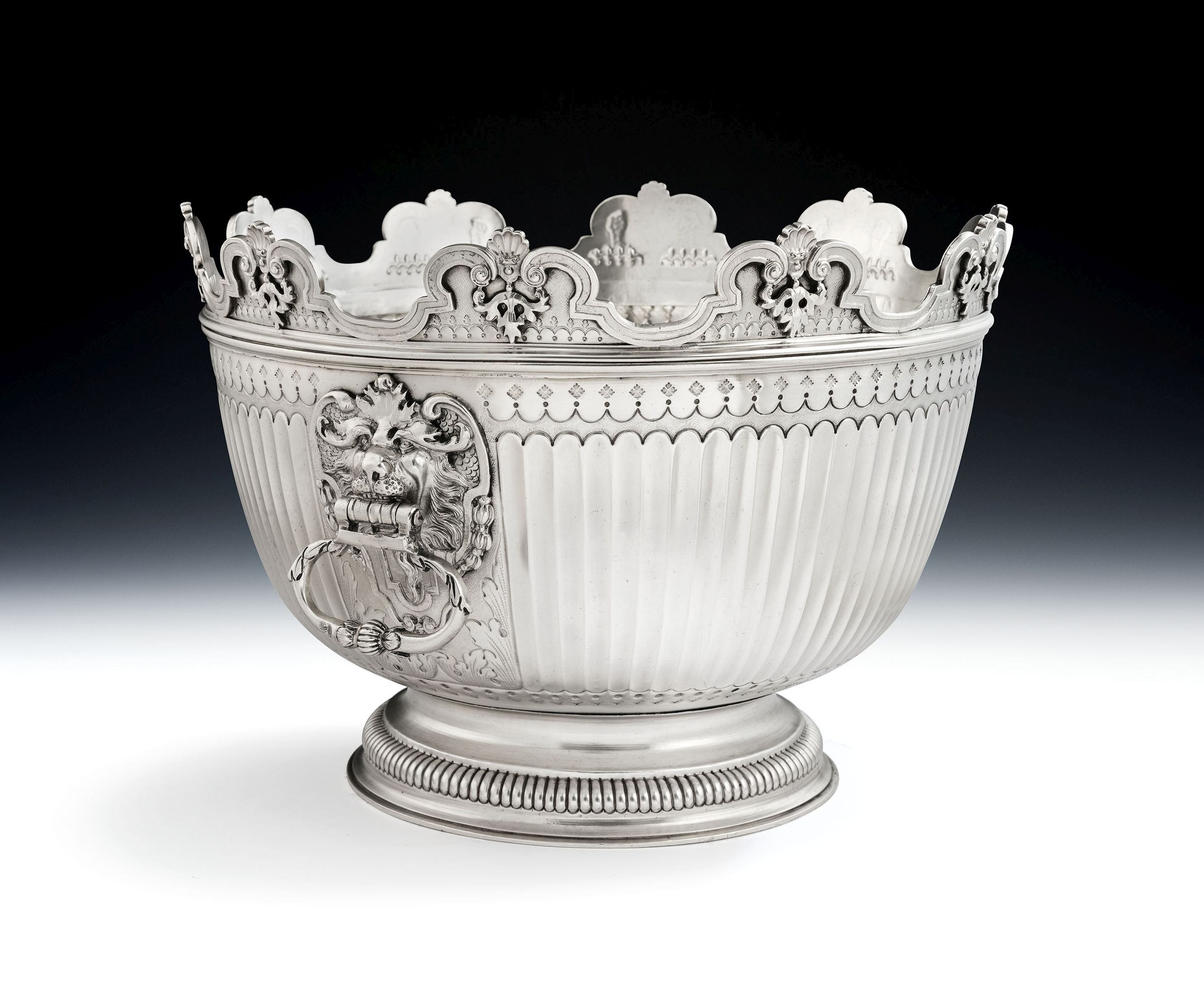
The Baron Guernsey Combination Monteith/Punch Bowl. An important early Queen Anne Britannia Standard Combination Monteith/Punch Bowl made in London in 1703 by Isaac Dighton.
The Baron Guernsey Combination Monteith/Punch Bowl. An important early Queen Anne Britannia Standard Combination Monteith/Punch Bowl made in London in 1703 by Isaac Dighton.
375747
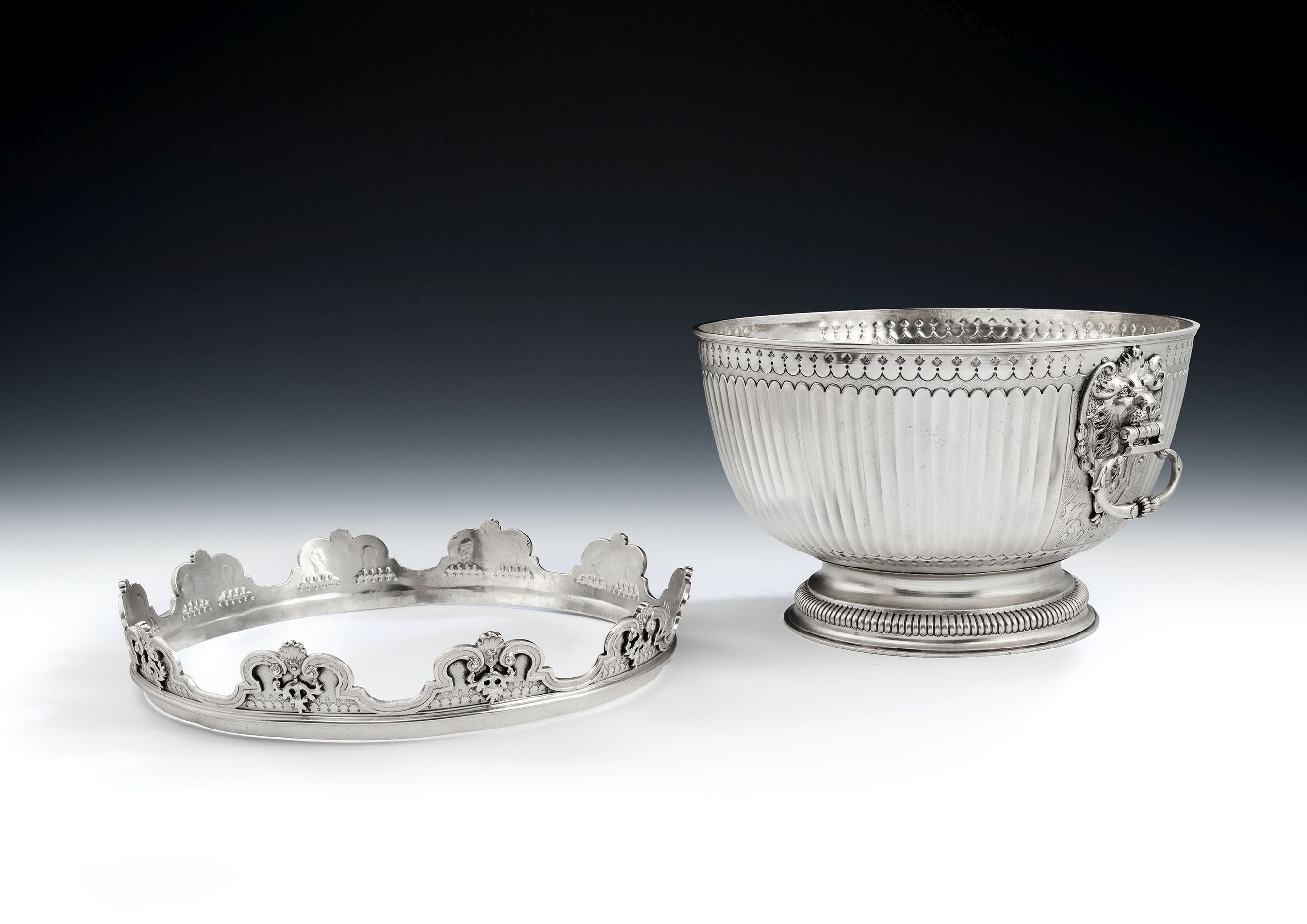
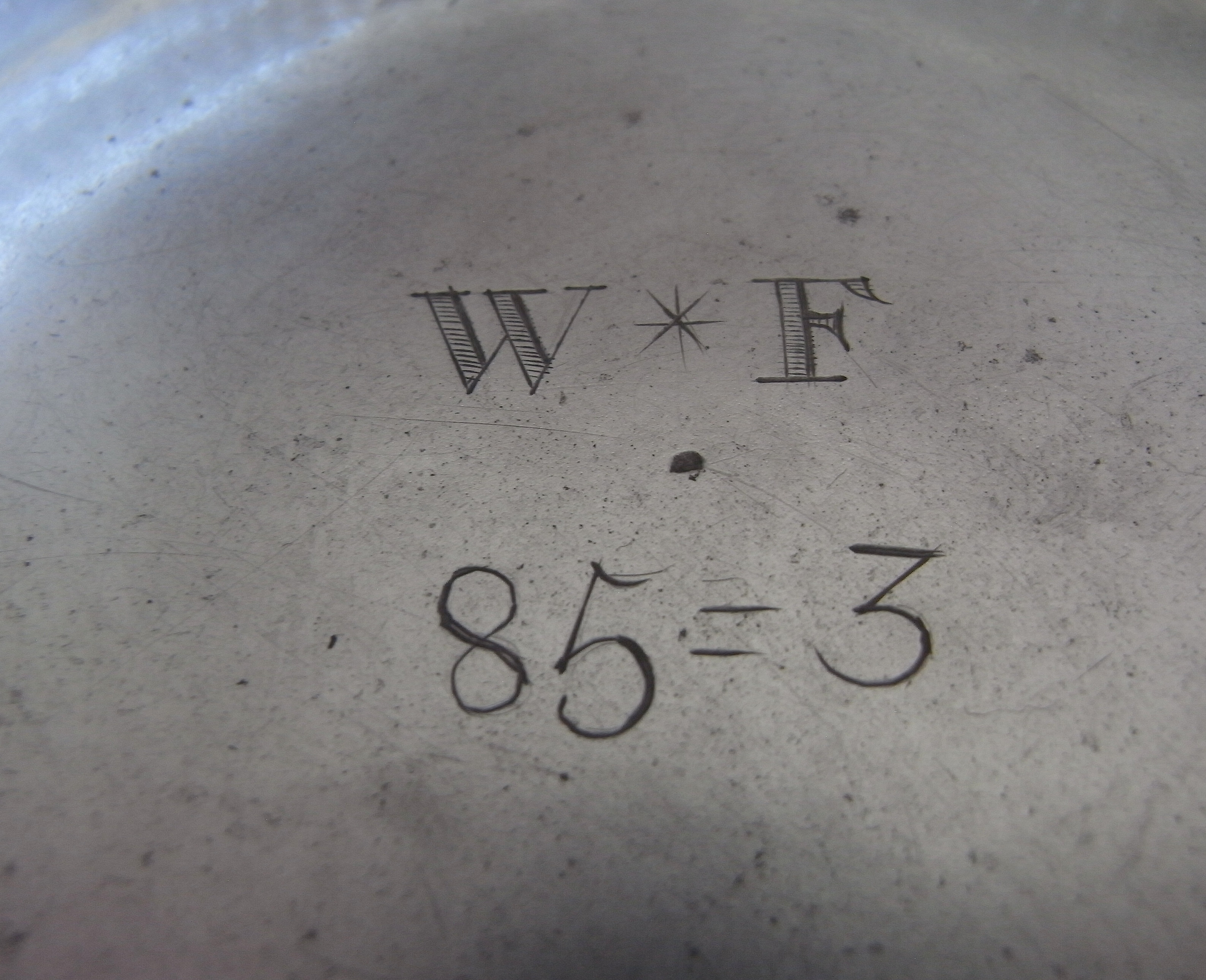
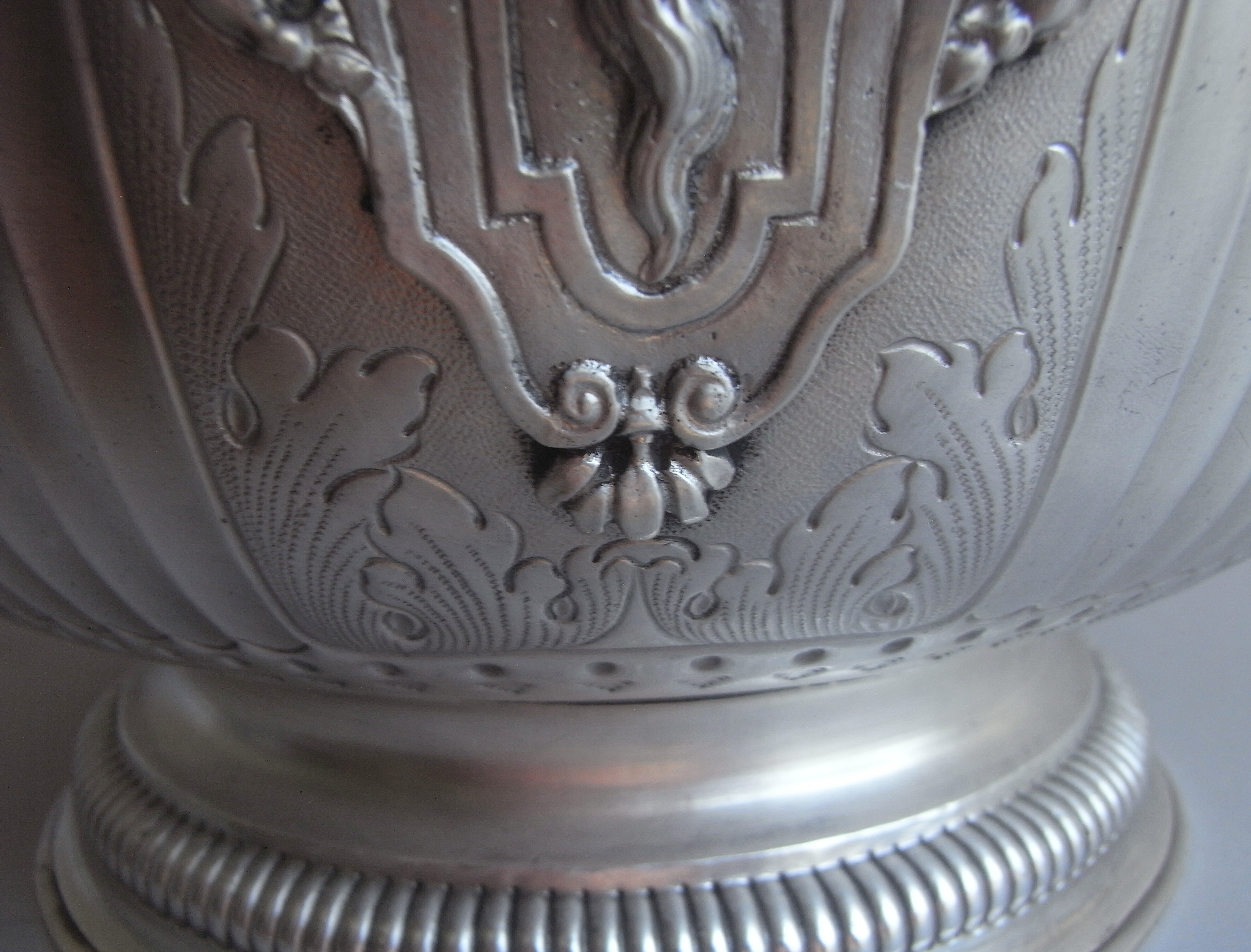
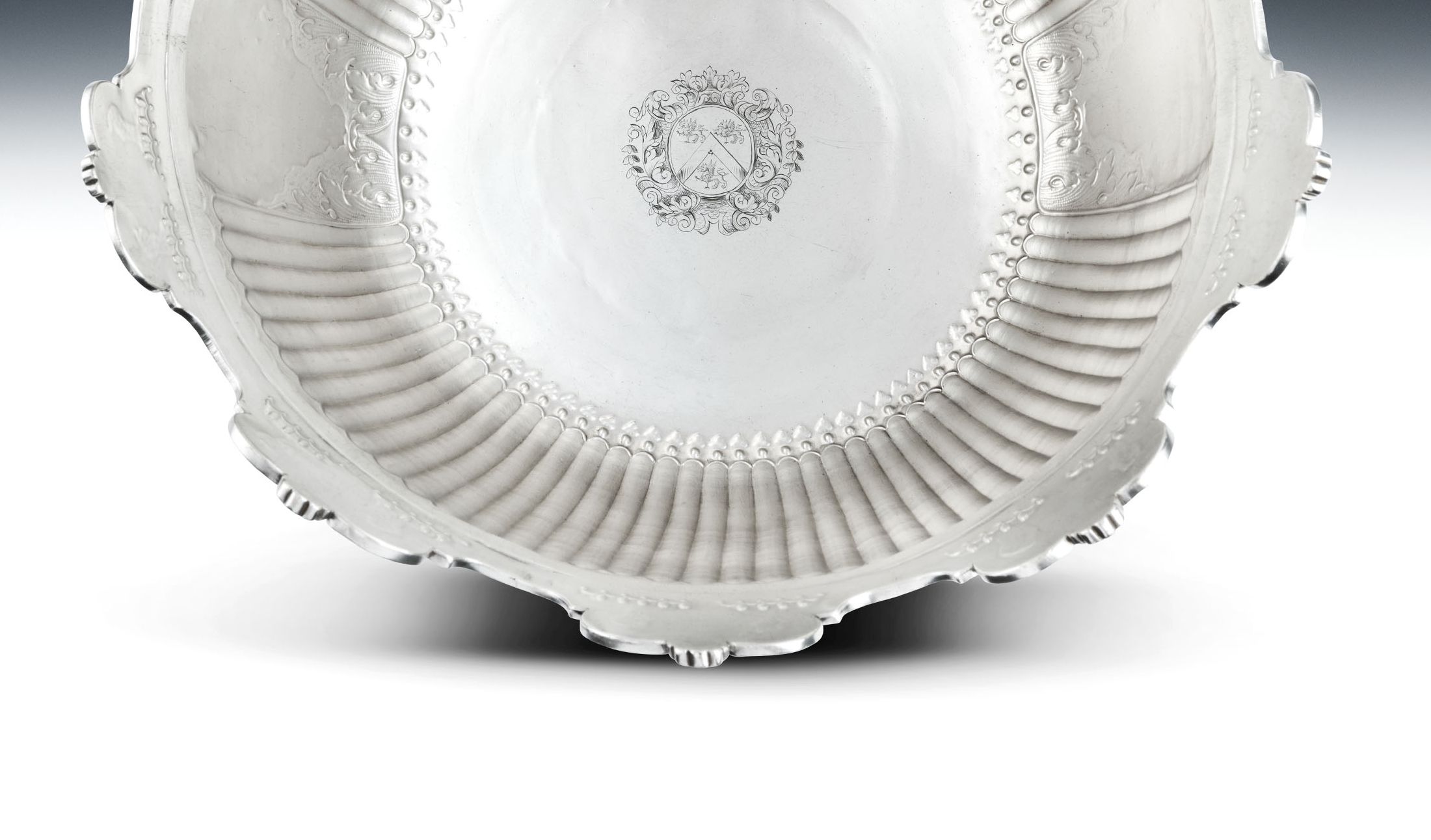
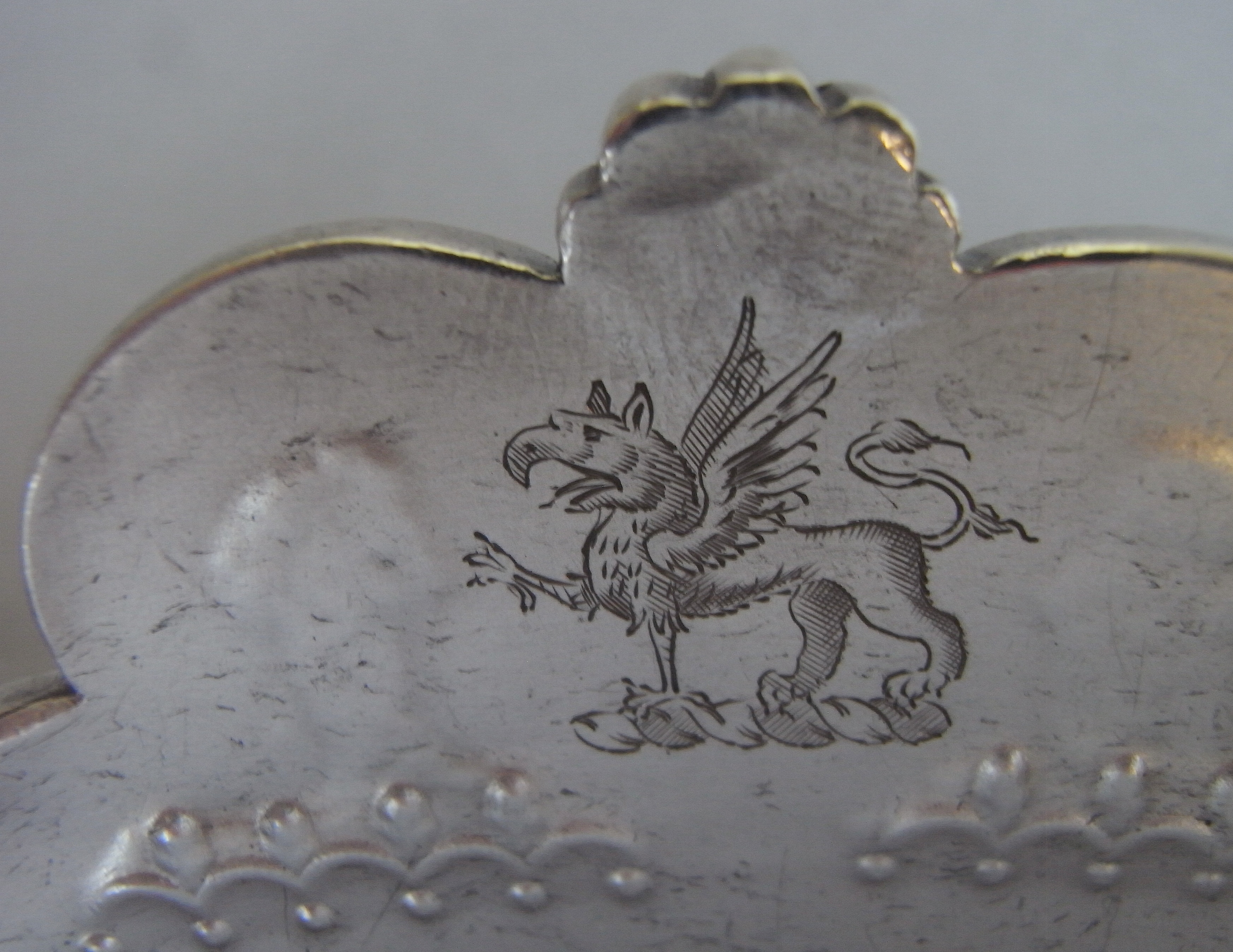
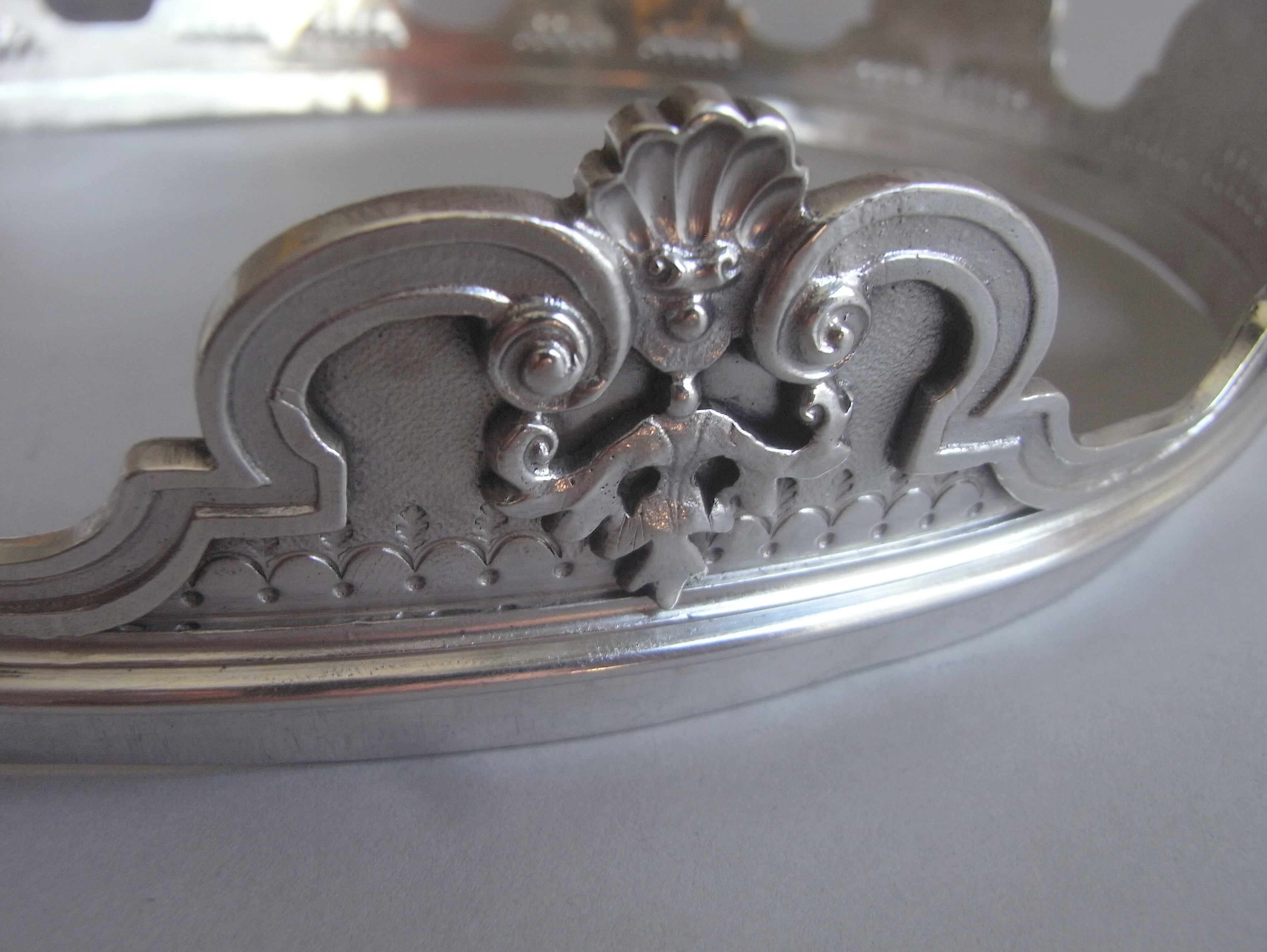
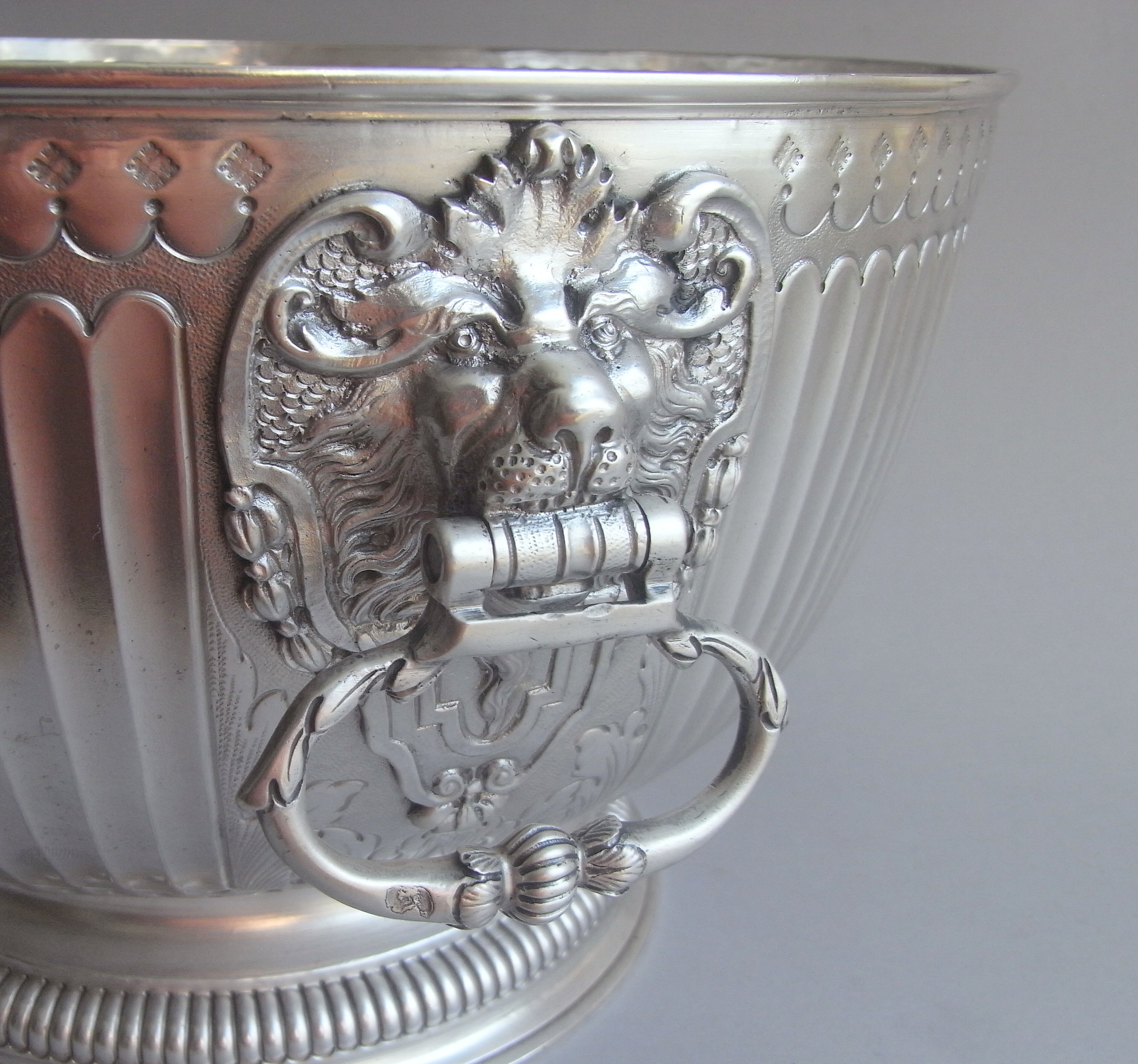
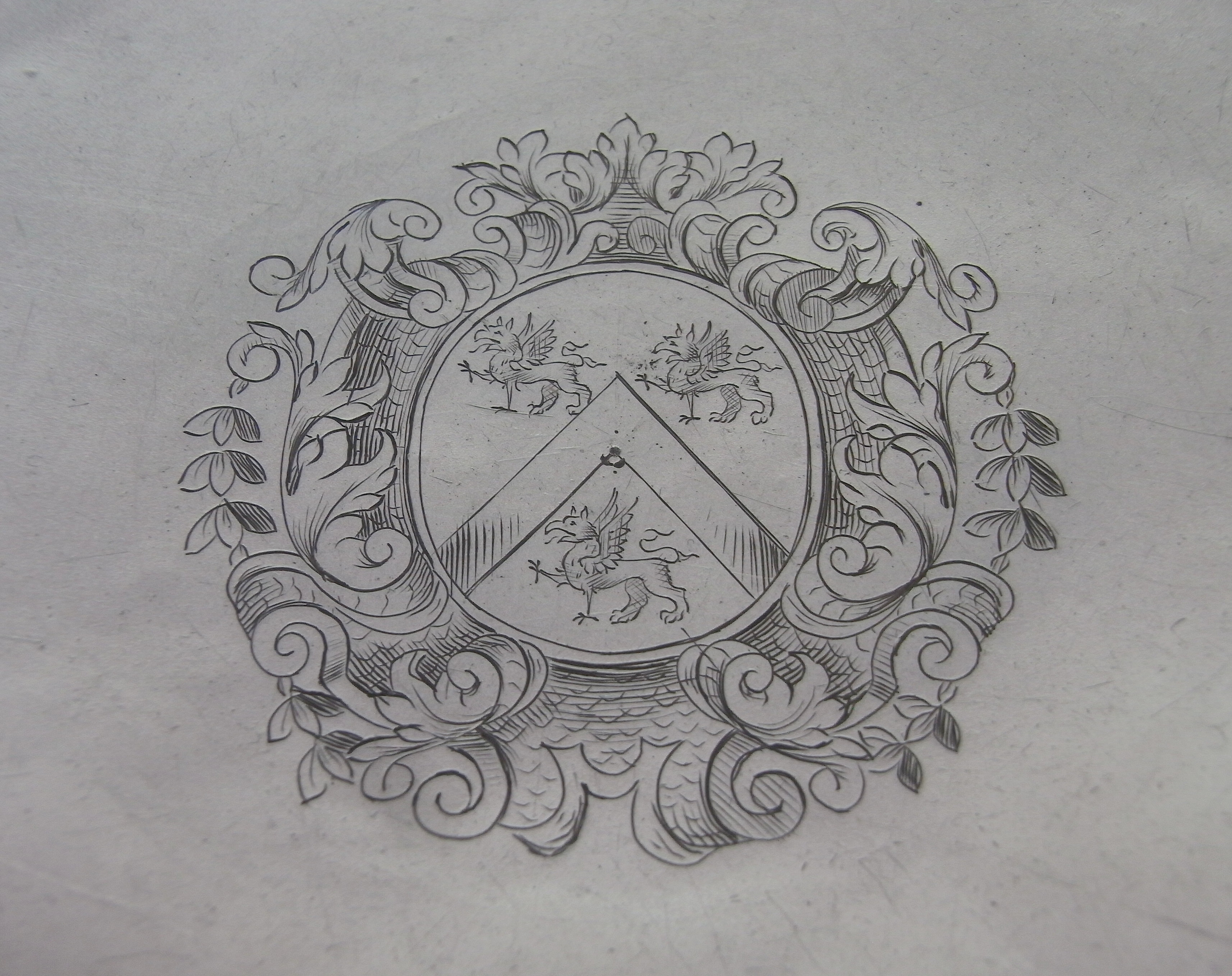
This wonderful piece stands on an applied, stepped, spreading foot decorated with a band of lobing. The large circular, baluster, main body is decorated with flat fluting and rises to a horizontal matted band below a scalloped band decorated with stylised foliate motifs. Each side displays an oval drop handle decorated with leaf capping, which is attached to the main body with a detailed lion mask moulding textured to simulate the fur of the lion. The area below displays stylised foliate motifs on a matted ground. The beautiful collar is made as a separate piece, in sections, and can be fitted firmly onto the top of the bowl. The shaped top is decorated with raised scrolls, raying shells and stylised foliate motifs. The base of the bowl is beautifully engraved with a contemporary Armorial surrounded by a foliate scroll, scale work and blue bell drop cartouche. The inside of the collar is also engraved with a contemporary Crest. The underside is engraved with its original scratch weight and the initials W*F.
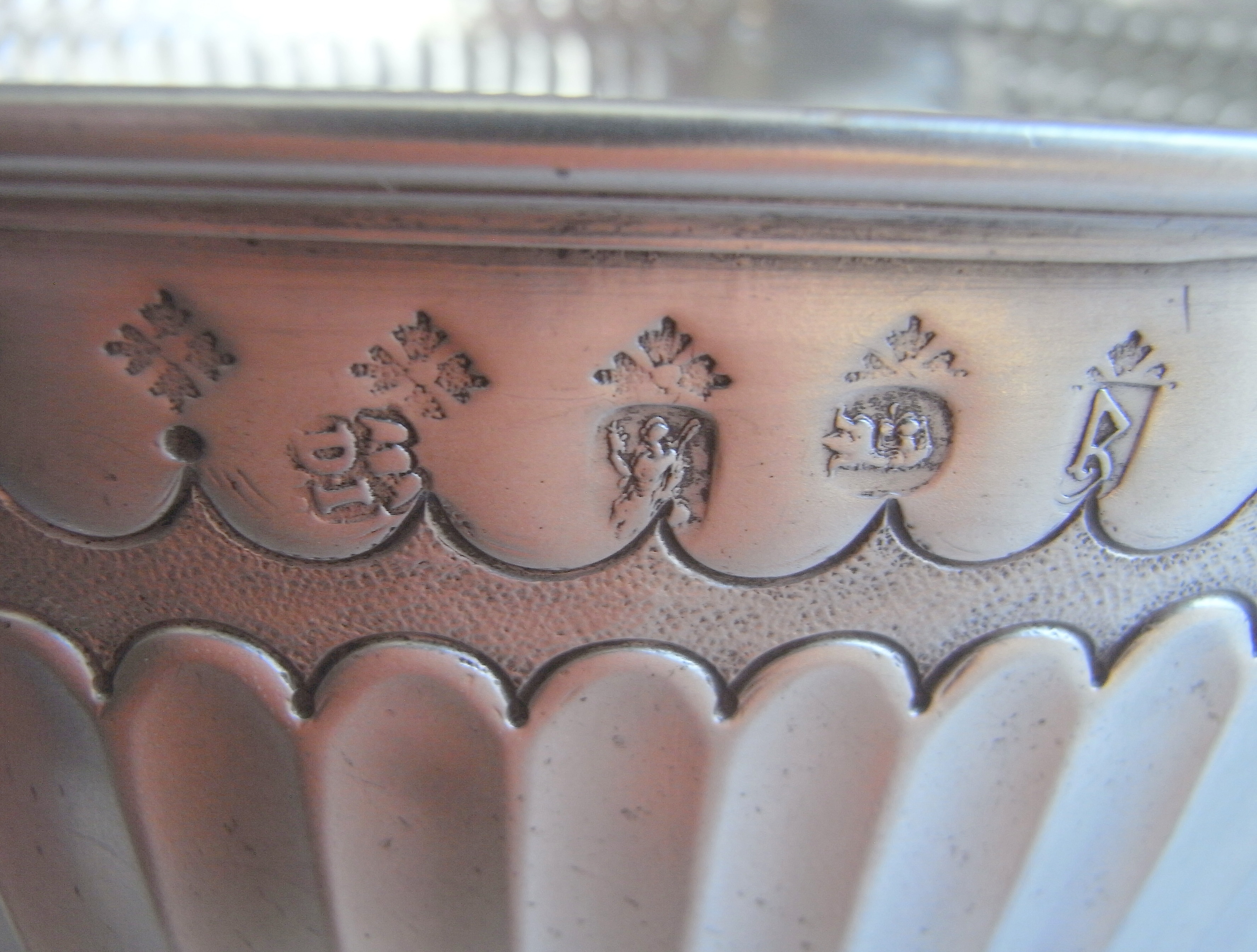
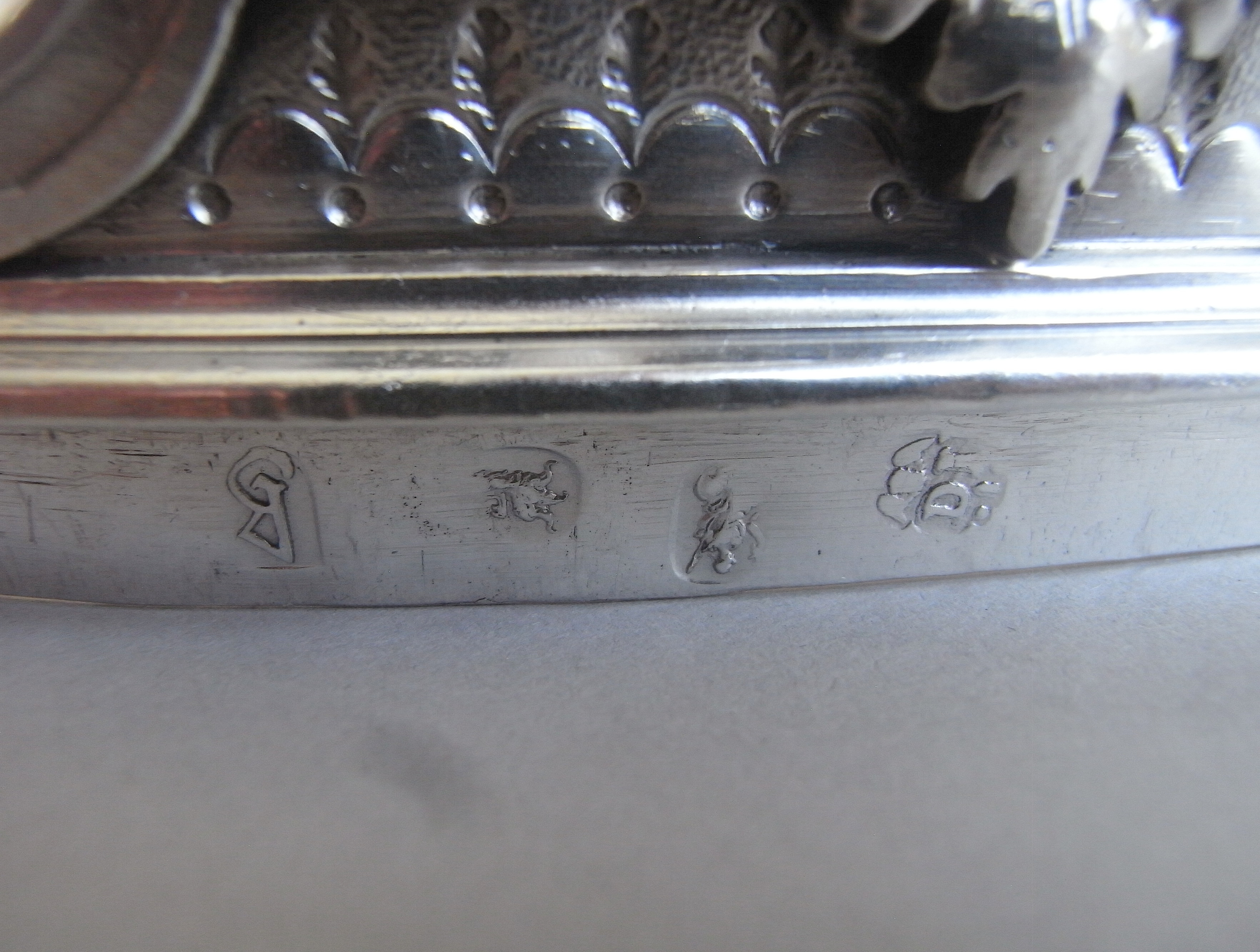
This piece is in excellent condition, with only a small amount of wear commensurate with its age and use. The main body is fully marked, as is the collar. A full set of marks should be seen on the collar to be sure that it was not added at a later date and was made at the same date as the bowl. Most Monteiths have a fixed rim, however this is most unusual, as the rim can be removed so that it can also be used as a punch bowl.
The Monteith was the height of luxury, emphasising the status of the owner. It was used for cooling wine glasses. The bowl was filled with iced water and the glasses could be chilled upside down, with their stems nestled in the notches of the rim. The ice would have been gathered throughout the winter from frozen lakes and rivers and placed underground in specially made ice houses, often located within the parks of the country house.
Punch remained the tipple of choice for English Aristocrats for hundreds of years. The ingredients, especially Lemons, were costly and became status symbols in Northern Europe. In late 17th century London, a three-quart bowl of punch cost the equivalent of half a week’s living wage. The earliest punch bowls were made of delftware or silver, the latter particularly favoured by the upper classes.
Height: 9 inches. 22.5 cm
Diameter at the rim: 12 inches, 30 cm.
Weight: 85oz.
ARMORIAL RESEARCH
HENEAGE FINCH (1664-1719), 1ST BARON GUERNSEY & 1ST EARL OF AYLESFORD
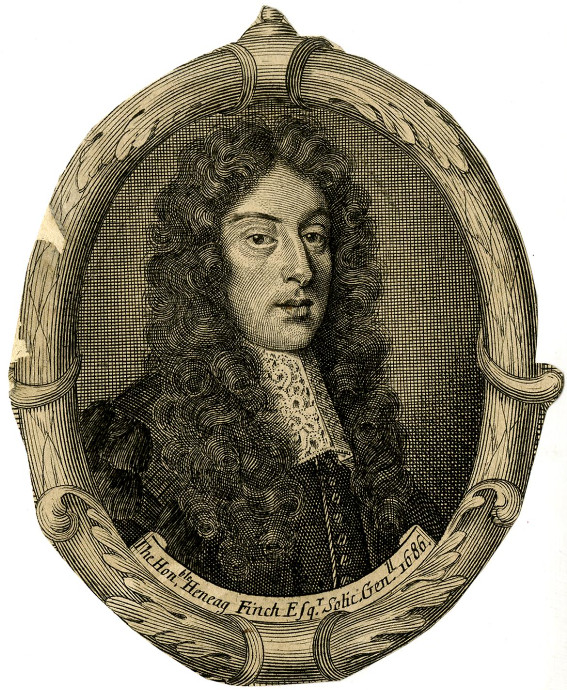
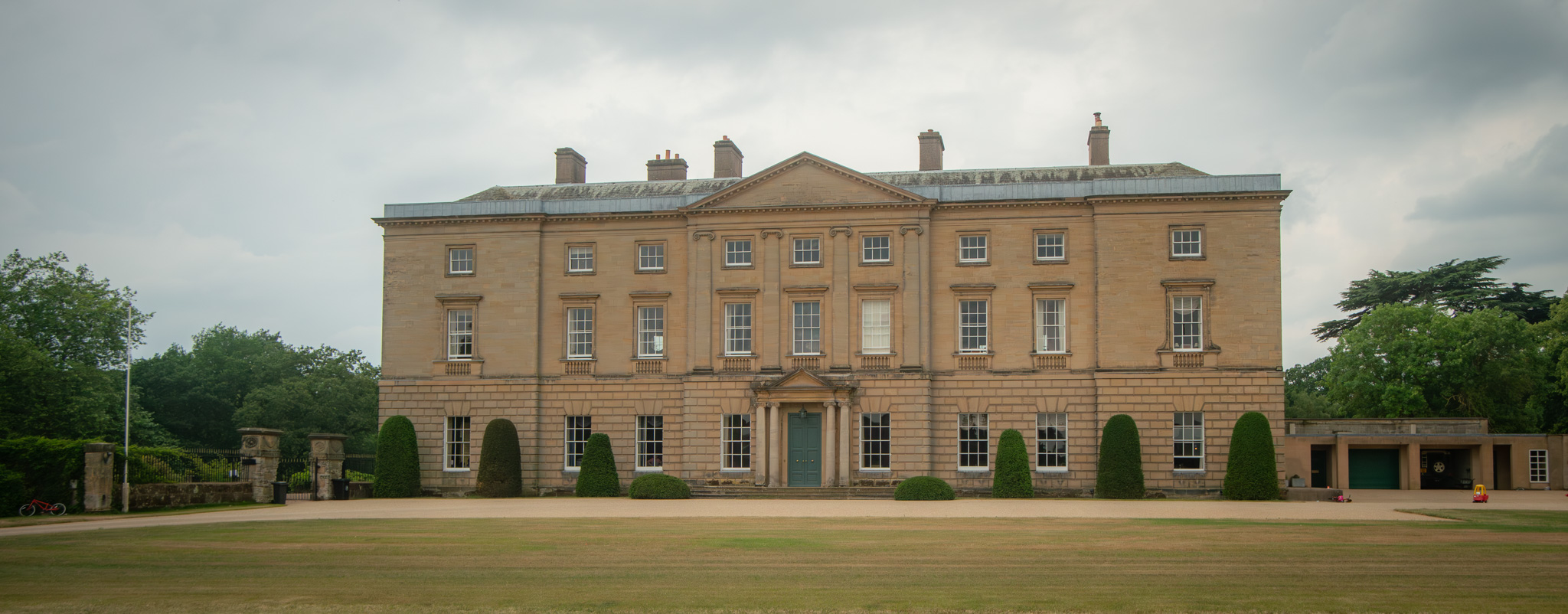
The Armorial (a chevron between three griffins passant sable) and Crest are those of Heneage Finch (1664-1719) who was the second son of the 1st Earl of Nottingham and was named after him. His paternal grandparents were the Hon. Sir Heanage Finch, Speaker of the House of Commons and Elizabeth Heneage, 1st Countess of Winchilsea. The younger Heneage matriculated at Christchurch, Oxford in 1664 and then became a barrister of the Inner Temple (where he was called "silver tongued Finch") and gained the rank of King's Council in 1677. This was closely followed by being made Solicitor General in 1678 (in which role he prosecuted Lord Russell for treason in 1683) but he was removed from this post for his Protestantism by James II in 1686. In 1688 he was one of the lawyers who defended the Seven Bishops against the Crown. Finch served as Member of Parliament for Oxford University in 1679, 1689-1698, 1701-1703 (he also represented Guildford from 1685 to 1687). In 1702 Finch was chosen by the University of Oxford to welcome Queen Anne on their behalf. This year also saw him created 1st Baron, Guernsey and a Privy Councillor. He was further promoted to the Earldom of Aylesford (along with the Chancellorship of the Duchy of Lancaster) in 1714. He died in 1719 and was survived by his widow Elizabeth (nee Banks) until 1743. The initials WF in the base most probably relate to a successive owner, this being Admiral Hon. William Clement Finch (1753-1794) who was the younger son of the 3rd Earl of Aylesford and Heneage's great grandson). The seat from which the family took their title was at Aylesford, acquired by the 1st Earl, but their main seat was at Packington in Warwickshire (inherited in 1729 through the wife of the 2nd Earl). An image of Heneage Finch is shown, as well as Packington Hall.
ISAAC DIGHTON - SILVERSMITH
Isaac, son of Henry Dighton of Bristol was apprenticed to William Browne, a Citizen and Haberdasher, on 26th May 1665. He became a Freeman by service on 7th June 1672. Throughout his career, he does not appear to have been fined by the Goldsmiths' Company for substandard goods. For the 1692 Poll Tax, he was assessed in Saddlers Hall and Gutter Lane Precinct, with a wife, two menservants, a maidservant, and a further unidentified servant. He paid the excess of 10s per quarter, as his estate was worth more than £300. For the 4s Aid of 1694, Captain Isaac Dighton had a rack rent of £24 and stocks of £100. He was clearly successful as both a silversmith and businessman and from the quantity of plate surviving bearing his hallmark you can see that the quality of his work is always superior.
In 1697, he registered a largeworker's mark for the Britannia Standard with an address in Gutter Lane. In 1703, he signed the Petition against Foreigners seeking freedom by redemption. Such was the competition from the Huguenot influx into the Soho area. He was buried at St Vedast, Foster Lane on 28 February 1707. Isaac Dighton bound five apprentices in the Haberdashers' Company between 1673 and 1684. Two of them became free, Henry Denham and John Smithsends, with the latter registering a largeworker's mark in 1697.
RELATED ITEMS








, 1ST BARON GUERNSEY & 1ST EARL OF AYLESFORDThe Armorial (a chevron between three griffins passant sable) and Crest are those of Heneage Finch (1664-1719) who was the second son of the 1st Earl of Nottingham and was named after him. His paternal grandparents were the Hon. Sir Heanage Finch, Speaker of the House of Commons and Elizabeth Heneage, 1st Countess of Winchilsea. The younger Heneage matriculated at Christchurch, Oxford in 1664 and then became a barrister of the Inner Temple (where he was called "silver tongued Finch") and gained the rank of King's Council in 1677. This was closely followed by being made Solicitor General in 1678 (in which role he prosecuted Lord Russell for treason in 1683) but he was removed from this post for his Protestantism by James II in 1686. In 1688 he was one of the lawyers who defended the Seven Bishops against the Crown. Finch served as Member of Parliament for Oxford University in 1679, 1689-1698, 1701-1703 (he also represented Guildford from 1685 to 1687). In 1702 Finch was chosen by the University of Oxford to welcome Queen Anne on their behalf. This year also saw him created 1st Baron, Guernsey and a Privy Councillor. He was further promoted to the Earldom of Aylesford (along with the Chancellorship of the Duchy of Lancaster) in 1714. He died in 1719 and was survived by his widow Elizabeth (nee Banks) until 1743. The initials WF in the base most probably relate to a successive owner, this being Admiral Hon. William Clement Finch (1753-1794) who was the younger son of the 3rd Earl of Aylesford and Heneage's great grandson). The seat from which the family took their title was at Aylesford, acquired by the 1st Earl, but their main seat was at Packington in Warwickshire (inherited in 1729 through the wife of the 2nd Earl). An image of Heneage Finch is shown, as well as Packington Hall.ISAAC DIGHTON - SILVERSMITHIsaac, son of Henry Dighton of Bristol was apprenticed to William Browne, a Citizen and Haberdasher, on 26th May 1665. He became a Freeman by service on 7th June 1672. Throughout his career, he does not appear to have been fined by the Goldsmiths' Company for substandard goods. For the 1692 Poll Tax, he was assessed in Saddlers Hall and Gutter Lane Precinct, with a wife, two menservants, a maidservant, and a further unidentified servant. He paid the excess of 10s per quarter, as his estate was worth more than £300. For the 4s Aid of 1694, Captain Isaac Dighton had a rack rent of £24 and stocks of £100. He was clearly successful as both a silversmith and businessman and from the quantity of plate surviving bearing his hallmark you can see that the quality of his work is always superior. In 1697, he registered a largeworker's mark for the Britannia Standard with an address in Gutter Lane. In 1703, he signed the Petition against Foreigners seeking freedom by redemption. Such was the competition from the Huguenot influx into the Soho area. He was buried at St Vedast, Foster Lane on 28 February 1707. Isaac Dighton bound five apprentices in the Haberdashers' Company between 1673 and 1684. Two of them became free, Henry Denham and John Smithsends, with the latter registering a largeworker's mark in 1697. )