
BRISTOL MAKER. An extremely rare James I West Country Dish made by Edward Harsell of Bristol circa 1620.
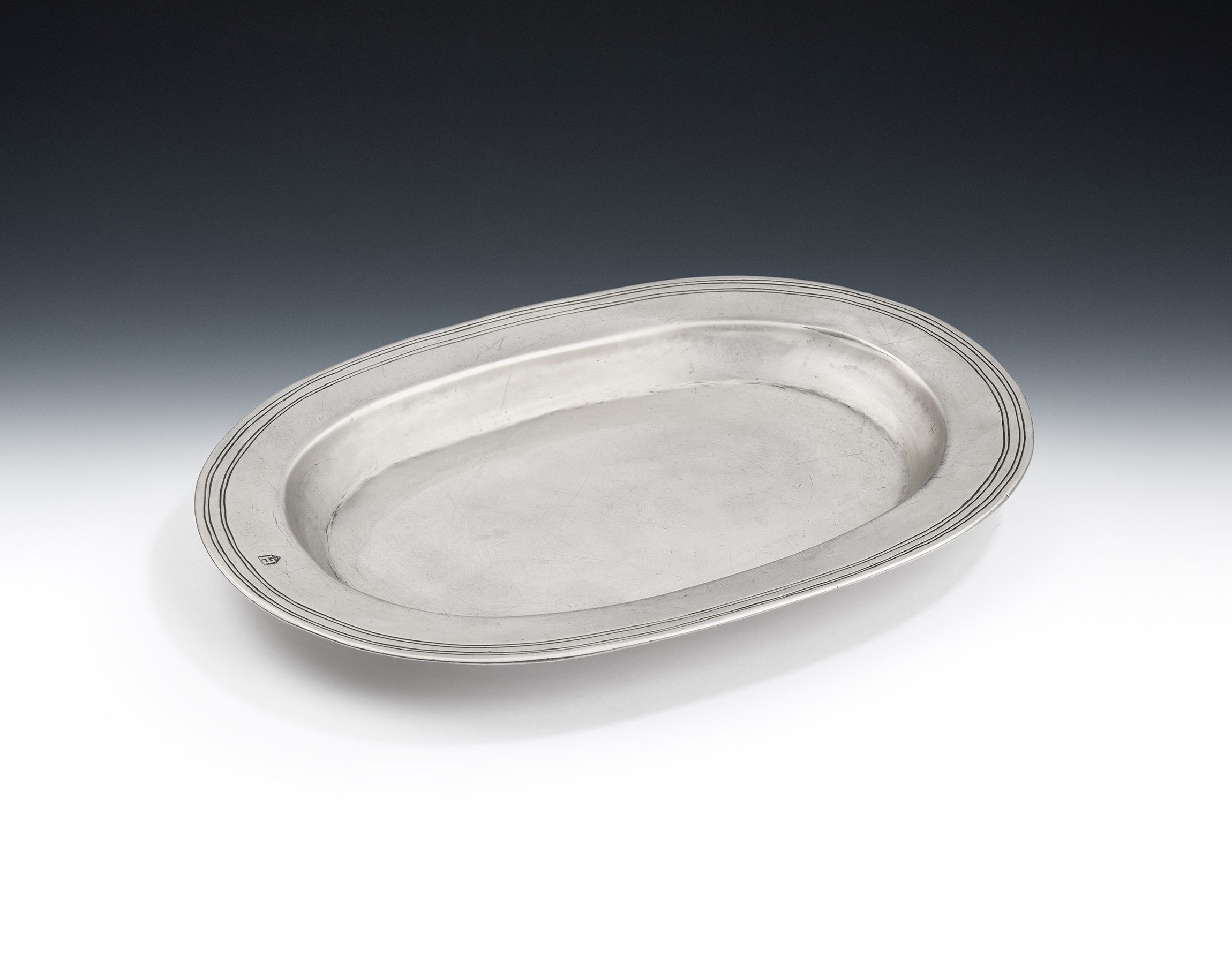
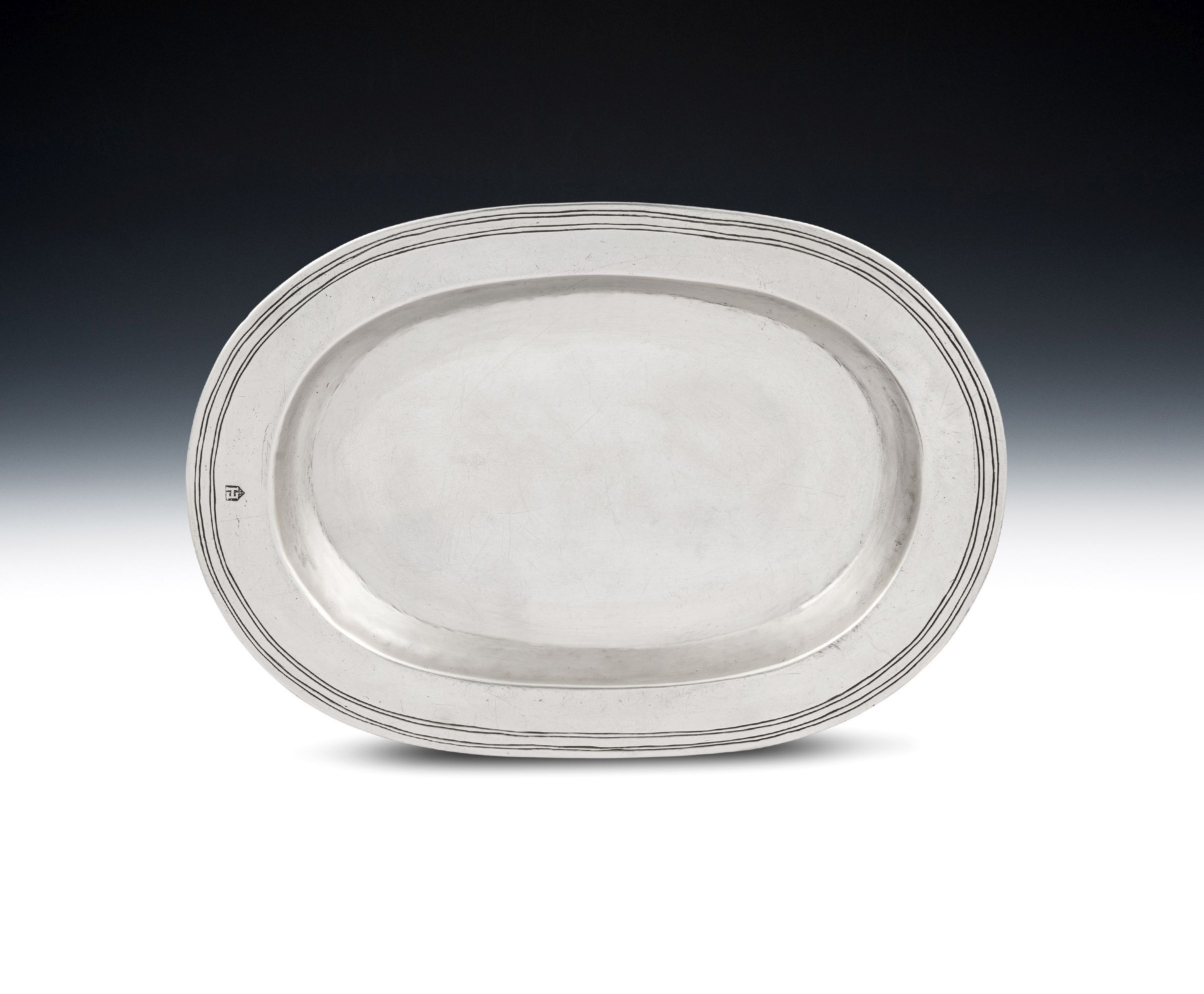
BRISTOL MAKER. An extremely rare James I West Country Dish made by Edward Harsell of Bristol circa 1620.
375629
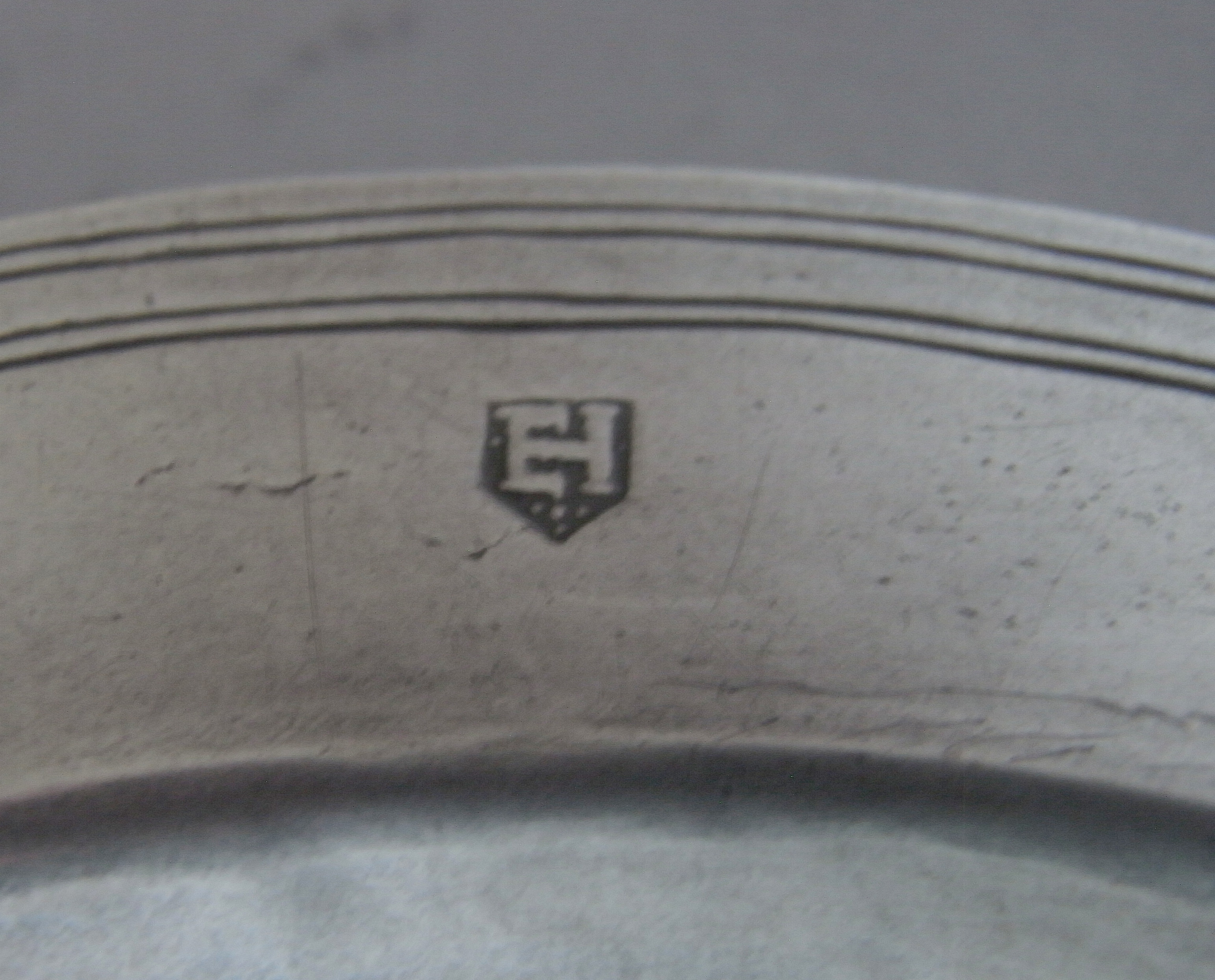
The Dish is of an unusual shallow rectangular form with rounded ends. The central bowl rises to a wide rim engraved with two double reeded bands. The Dish was most probably made for serving sweetmeats and is marked on the rim with a clear maker's mark. This piece is in excellent condition, with a fine colour. The maker's mark is illustrated in "West Country Silver Spoons and Their Maker's" , by Timothy Kent, page 97. Pieces of this early date, from the West Country, are exceptionally rare and seldom appear on the market.
Edward Harsell was born in 1583 and was the son of Silversmith, Richard Harsell. On 7th July, 1600 he was apprentice to James Insall. He gained his freedom in September 1609. Two of his children also became silversmiths, Robert & John, and he was master of Robert Wade II, also an important Spoon maker.
In 1620, Bristol was a bustling port city, pivotal in English exploration and trade. In the centre, and along one of the river Avon tributaries, was Wine Street, a hub of activity, from retail to a playhouse.
The neighbours who occupied these properties around this time included Humphrey Clovell and Richard and Edward Harsell, prominent goldsmiths whose goods epitomised south-west metalwork of the period; Henry Yate, a soapmaker who went on to become mayor of Bristol (1631) and who bought and leased properties across the city centre and at one point had charge of the playhouse; and Isacke Bryan, an instrument-maker whose family were resident in the vicinity of Wine Street’s local parish church, Christ Church.
Number 6, owned and leased out by the church, was occupied by the goldsmith, Edward Harsell born in 1583 and, before that, his father who had been living there from at least Edward's birth.
Edward Harsell's father, Richard Harsell was a member of a small dynasty of Bristolian goldsmiths, he became a Burgess in 1580. Richard had been apprenticed to Thomas Goodyear, and Richard in turn trained his own sons, Edward and Robert junior. In 1600 Edward was apprenticed to James Insall and his wife Mary. He became a Burgess 1609.
Length: 8.25 inches, 20.63 cm.
Width: 5.75 inches, 14.38 cm.
Weight: 7.3 oz.
RELATED ITEMS







 and who bought and leased properties across the city centre and at one point had charge of the playhouse; and Isacke Bryan, an instrument-maker whose family were resident in the vicinity of Wine Street’s local parish church, Christ Church.Number 6, owned and leased out by the church, was occupied by the goldsmith, Edward Harsell born in 1583 and, before that, his father who had been living there from at least Edward's birth.Edward Harsell's father, Richard Harsell was a member of a small dynasty of Bristolian goldsmiths, he became a Burgess in 1580. Richard had been apprenticed to Thomas Goodyear, and Richard in turn trained his own sons, Edward and Robert junior. In 1600 Edward was apprenticed to James Insall and his wife Mary. He became a Burgess 1609.Length: 8.25 inches, 20.63 cm.Width: 5.75 inches, 14.38 cm.Weight: 7.3 oz.)